Punjab Agricultural University (PAU) has developed an Integrated Farming System (IFS) for small and marginal farmers.
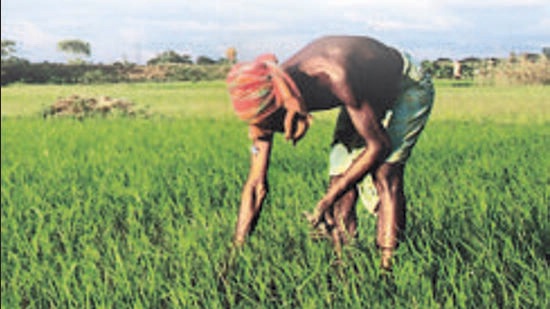
Director of research Ajmer Singh Dhatt disclosed that the Integrated Farming System model launched at the research farm of the School of Organic Farming, PAU, under ‘All India Coordinated Research Project on Integrated Farming Systems (ICAR)’ provides income round the year in addition to meeting the domestic needs (cereals, vegetables, oilseeds, pulses, fruits, and milk). The combination of crop cultivation, dairy farming, kitchen gardening, and other secondary components can be adopted depending on the location.
Urging the small and marginal farmers to adopt IFS developed by PAU, vice-chancellor Satbir Singh Gosal said that it will go a long way in enhancing their income and providing balanced nutrition. Sustained production, cost-effectiveness, meeting diverse requirements of farm households, optimal resource utilisation, waste material recycling, sufficient remuneration, and livelihood security of resource-deficient farmers are the added bonus, he said.
An economically viable option, IFS is an adequate blend of crops, livestock, aquaculture, agroforestry and agri-horticulture, ensuring sustainability, profitability, balanced food availability, and employment generation.
Giving details about landholdings’ distribution in the state, Gosal informed that Punjab has 10,92,713 holdings shared by 14.13% small (below 1 ha), 18.98% marginal (1-2 ha) and 33.67% semi-medium (2-4 ha) farmers. He added that Punjab’s crop income share is 90.5 percent, while non-farm sources contribute 9.5 per cent to the farmer’s income.
Explaining the project, Sohan Singh Walia, director, School of Organic Farming, mentioned that an experiment, which was initiated during kharif 2010, covered an area of 1.0 ha (2.5 acres) under field crops, horticulture, aquaculture, dairy, agroforestry, and goatry components. The kharif crops paddy, maize, and turmeric were grown on a 6,400 sq m area and, in the following rabi and summer season, potato, berseem, wheat, gobhi sarson, onion, pearl millet, and spring maize were produced. As a horticulture component, guava and citrus plantation was done on around 1,600 sq m area; vegetable crops in inter-row spacing were raised in 1,500 sq m, and; 200, 1,000, and 300 sq m were used for dairy (cattle+goats), aquaculture and agro-forestry components respectively.
{{/usCountry}}Explaining the project, Sohan Singh Walia, director, School of Organic Farming, mentioned that an experiment, which was initiated during kharif 2010, covered an area of 1.0 ha (2.5 acres) under field crops, horticulture, aquaculture, dairy, agroforestry, and goatry components. The kharif crops paddy, maize, and turmeric were grown on a 6,400 sq m area and, in the following rabi and summer season, potato, berseem, wheat, gobhi sarson, onion, pearl millet, and spring maize were produced. As a horticulture component, guava and citrus plantation was done on around 1,600 sq m area; vegetable crops in inter-row spacing were raised in 1,500 sq m, and; 200, 1,000, and 300 sq m were used for dairy (cattle+goats), aquaculture and agro-forestry components respectively.
{{/usCountry}}The data from the study indicated that the adoption of IFS by inclusion of crop-based enterprises, horticulture, dairy, and aquaculture recorded an overall average net returns of ₹4,95,810/ha with the contribution by dairy ( ₹2,86,201) followed by crop ( ₹1,25,070), horticulture ( ₹30,156), aquaculture ( ₹24,891), boundary plantation ( ₹19,341), kitchen gardening ( ₹8,048), and agro-forestry ( ₹2,104), Walia reported.