
 E-Paper



Nagaland: Commission on register of indigenous inhabitants submits recommendations
The commission on RIIN held a series of consultations with tribal organisations, the civil society and NGOs, and submitted its report to the state government in 2019. However, the report was only presented in the assembly on the persistence of the Opposition now


Two years after the Nagaland government’s proposed enumeration of the state’s indigenous population viz. Register of Indigenous Inhabitants of Nagaland (RIIN) drew flak from various quarters, including tribal bodies and the civil society, forcing the government to immediately constitute a commission to examine the issues and submit recommendations, the commission’s report was finally tabled during the recently concluded Monsoon Session of the state assembly.
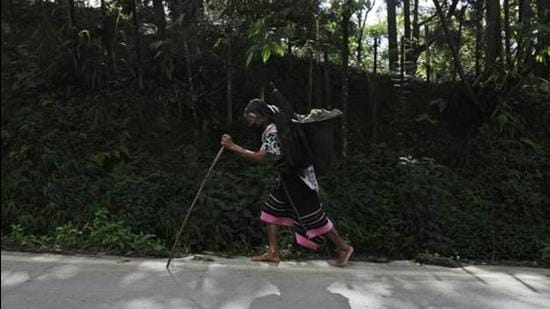
The commission on RIIN, led by former chief secretary Banuo Z Jamir, held a series of consultations with tribal organisations, the civil society and NGOs, and submitted its report to the state government in 2019. However, the report was only presented in the assembly on the persistence of the Opposition Naga People’s Front members.
What is RIIN?
RIIN has its roots in the state government’s decision in 2019 to implement Inner Line Permit (ILP) under the Bengal Eastern Frontier Regulation Act of 1873 throughout Dimapur district, which was erroneously or ignorantly overlooked for over 40 years. The ILP is an official travel document issued by the state government, which allows inward travel of foreigners and Indian citizens of other states into Nagaland for a limited period.The state government issued a notification on November 21, 1979 declaring the then Dimapur sub- division under Kohima district a tribal belt, making Dimapur eligible for ILP, but this fact curiously surfaced only after the state government decided on November 1979 as the cut-off month and year for identification of indigenous inhabitants for RIIN. as it recognises the state to adopt protective measures for its indigenous inhabitants (viz. Naga tribes, Kuki, Kachari, Garo and MIkirs).
Also Read | Nagaland Oppn, ruling PDA to come together for united government
RIIN was initiated in 2019 after a state government committee recommended the creation of such a registry primarily to prevent issuance of fake “indigenous inhabitant” certificates, which is one of the main reasons for influx of illegal immigrants in the state. Also, due to wrongly issued indigenous inhabitant certificates meant for recognised scheduled tribes of the state, many ineligible persons were reported to have enjoyed privileges that were meant for indigenous inhabitants, such as availing job opportunities based on 100% reservation of all non-technical and 80% reservation of all other posts in the state, availing scholarships and seats for professional and technical studies, loans etc.
Claims that some illegal immigrants took citizenship by other means gradually ushered in a general feeling of xenophobia, particularly towards illegal immigrants from Bangladesh. While the government decided to find out who is indigenous and who is not; what was thought to be a simple exercise--RIIN--once it was notified on 29th June 2019 along with proposed process, instantly became a topic of public debate.
Taking note of the issues raised in subsequent consultative meetings with the stakeholders, the government set up the Banuo Z Jamir commission on July 27, 2019, which was given three months time to submit its findings and recommendations.
The commission asserted that while it took consideration of diverse opinions on the matter, it was its firm stand that December 1, 1963--the date Nagaland gained statehood--was to be taken as the cut-off date to decide the eligibility of a person to be an inhabitant of Nagaland, whether the person is indigenous, a tribal non-indigenous to Nagaland or a non-tribal.
Who is eligible to be an indigenous inhabitant of Nagaland?
Any person belonging to one of the notified 18 tribes of Nagaland – 14 Naga tribes and four non-Naga tribes (Kuki, Kachari, Garo and Mikir) residing in his/her native village or in any other village or town in Nagaland or elsewhere, provided he or she has not acquired citizenship of another country. Also, the person’s antecedent in the native village should be traced back for not less than two generations beyond December 1, 1963.
With the view to ensure that authentication of the identity of an individual is carried out without influence or manipulation, the commission recommended that information furnished for each individual should be first verified at the family level in the village, followed by confirmation from clan and khel, before the village council certifies the document, which would further be submitted to the deputy commissioner.
Who is eligible to be a Permanent Resident of Nagaland?
The state government projected that the RIIN master list, once created, will ensure that no one will be able to manipulate the system to create fake and fraudulent indigenous inhabitant certificates. Side by side, the government, while ensuring identification of all the genuine indigenous inhabitants of the state, will also compile a list of those who have settled in Nagaland pre-statehood ( December 1, 1963) and recognise them as “permanent residents” of the state, with few other criteria.
The commission recommended that a panel be made responsible for authenticating the members belonging to various other communities.
Legislation
The commission recommended that the state government consider enactment of a legislation so as to bring the entire exercise and execution of RIIN and issuance of indigenous inhabitant certificate (IIC) and permanent resident certificate (PRC) to genuine persons, through a statutory law.
Other recommendations
In the process of interactions, consultations and study of issues, the commission stated to have observed several areas of concern, though they relate to matters outside the terms of reference, it nonetheless made few recommendations to be taken into consideration. These include the need for the state government to prepare a brief write up on RIIN and registry of permanent resident (RPR) for general information to enhance the transparency of the entire exercise. It also maintained that the government needed to come clean on the position of RIIN/RPR set against the Citizenship Amendment Bill and the National Register of Citizens in Assam.
It also asserted that the government ought to make it clear that the objective of RIIN is an exercise to authenticate the identity of a person belonging to a village that is already established/recognised and not to authenticate or accord recognition to a community.
The commission further recommended that land laws need to be tightened as the practice of transfer of land and mutation of patta in favour of non-tribals on the basis of indigenous inhabitants certificates were detected and speak of either ignorance or land laws of the state.
The commission specifically noted an instance of a chairman of a village council belonging to a tribe not indigenous to Nagaland. Therefore, it recommended that the prescribed qualification to be a member of a village council under the Nagaland Village and Tribal Councils Act 1978 be suitably amended by incorporating “indigenous inhabitant” as an additional condition.
For tribals not indigenous to Nagaland, the commission is of the view that it is necessary to define the status of persons belonging to any tribe other than the 18 recognised tribes of Nagaland, who are citizens of India, settled and own land in Nagaland prior to statehood (December 1963)--they may come under the category of Permanent Resident.
The state government in 1974 notified around 180 families of the Gorkha community and their descendants who settled in Nagaland prior to December 31, 1940 in three districts of Kohima, Mokokchung and Wokha as Non-Naga indigenous inhabitants of Nagaland and accorded them with certain rights and privileges. While the Nagaland Gorkha Association did not insist that its members be brought under RPR with other non-Naga communities, the association requested that status quo be maintained for the families listed under the 1974 notification.
While the commission asserted that it did not intend to de-recognise the special status given to the community, on examining the question of “who is indigenous”, it is of the view that it would not be justifiable to declare Gorkhas as indigenous to Nagaland. It therefore recommended that they be categorised as permanent residents, along with other non-tribal groups that settled in Nagaland before 1963. It added that the families notified by the state government in 1974 may be identified as Gorkhas and others as Nepali, but the change in nomenclature shall not deny or deprive them of benefits.


