E-Paper



SC extends deadline for Himachal Pradesh local body polls till May 31
The Himachal Pradesh HC had, on January 9, directed the state government and the SEC to conduct elections to Panchayati Raj Institutions before April 30.

 Prefer HTon Google


The Supreme Court on Friday extended the deadline for conducting elections to gram panchayats and urban local bodies in Himachal Pradesh till May 31, 2026, while making it clear that no further extension would be granted.
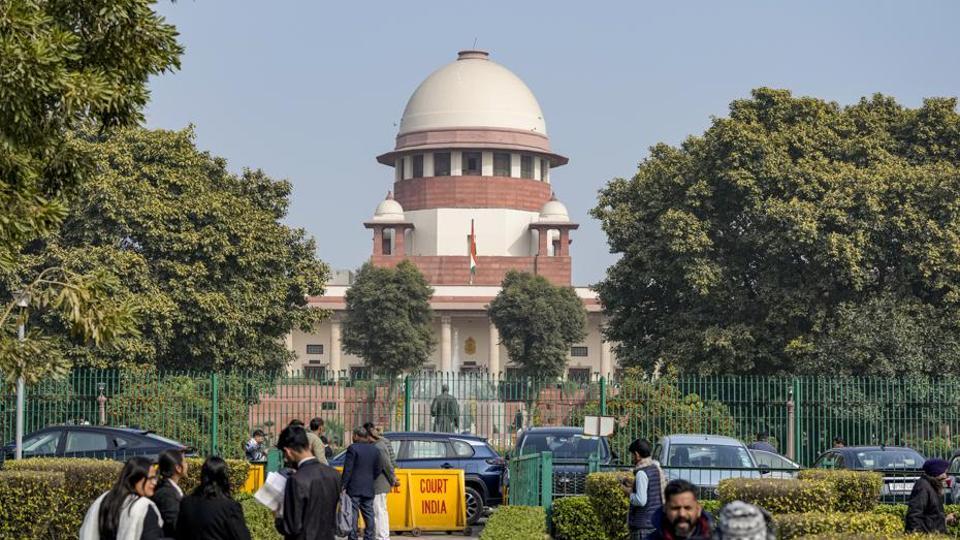
A bench comprising Chief Justice of India Surya Kant and Justice Joymalya Bagchi slightly modified an earlier direction of the Himachal Pradesh high court, which had asked the state government and the state election commission (SEC) to complete all processes by February 28, 2026 and hold elections by April 30, 2026.
While upholding the high court’s ruling on the constitutional necessity of timely elections, the apex court granted limited additional time in view of logistical difficulties cited by the state.
“The direction issued by the high court that elections to municipal corporations/panchayats/urban local bodies are required to be held after expiry of the term of elected bodies are over is a correct expression of law and does not warrant any interference by this court,” the bench noted in its order. It also agreed with the high court’s finding that the delimitation exercise could not be used to indefinitely delay elections.
However, the court modified the deadlines set in high court judgment, directing that the SEC, Panchayati Raj Department and other concerned departments must complete all pending processes by March 31, 2026, instead of February 28, and thereafter conduct elections within eight weeks, “positively by May 31, 2026.”
“No further application for extension of time shall be entertained,” the bench ordered.
The order came on an appeal filed by the Himachal Pradesh government through its chief secretary, principal secretary and panchayati raj secretary challenging the high court’s January 9 ruling. Senior counsel V Giri appeared for the state government, while senior counsel Maninder Singh represented the writ petitioners on whose plea the high court had issued the directions.
The Himachal Pradesh HC had, on January 9, directed the state government and the SEC to conduct elections to Panchayati Raj Institutions (PRIs) before April 30, 2026, disposing of PILs filed by advocate Mandeep Chandel, Dikken Kumar Thakur and others. A division bench had rejected the state’s plea seeking a six-month deferment of polls, citing the Natural Disaster Act and logistical challenges following extensive damage to infrastructure, including rural roads.
The government had argued that at least 90 days would be required even if the reservation roster was issued immediately and that the delay was not deliberate. It maintained that the process of constituting new panchayats, gram sabhas and zila parishads was underway.
The petitioners, however, contended that the government had over a year to complete the delimitation process and was deliberately delaying elections. They argued that constitutional institutions could not be kept in abeyance and that elections should be conducted on the basis of the existing census.
Rejecting the state’s stand, the high court had emphasised that under Articles 243-E and 243-U of the Constitution, elections must ideally be completed before the expiry of the five-year term of local bodies. It directed the SEC, Panchayati Raj Department, Urban Development Department and State Disaster Management Authority to “sit together, decide together and march together” to complete all processes by February 28, 2026 and conduct elections within eight weeks thereafter.
Himachal Pradesh has 3,577 gram panchayats, 90 panchayat samitis, 11 zila parishads and 71 urban local bodies. The five-year term of most rural bodies ended on January 31, while 50 urban local bodies completed their tenure on January 18.