E-Paper



UP govt primary schools: How well-rounded are students? 360-degree report cards to evaluate
1 lakh primary and composite schools to implement the new assessment system for students from Classes 1 to 5

 Prefer HTon Google


Students of government-run primary schools in Uttar Pradesh will soon receive comprehensive 360-degree report cards that go beyond academics to assess their overall development. More than one lakh primary (Classes 1 to 5) and composite schools (Classes 1 to 8) under the state’s Basic Education Council will implement the new assessment system for students from Classes 1 to 5.
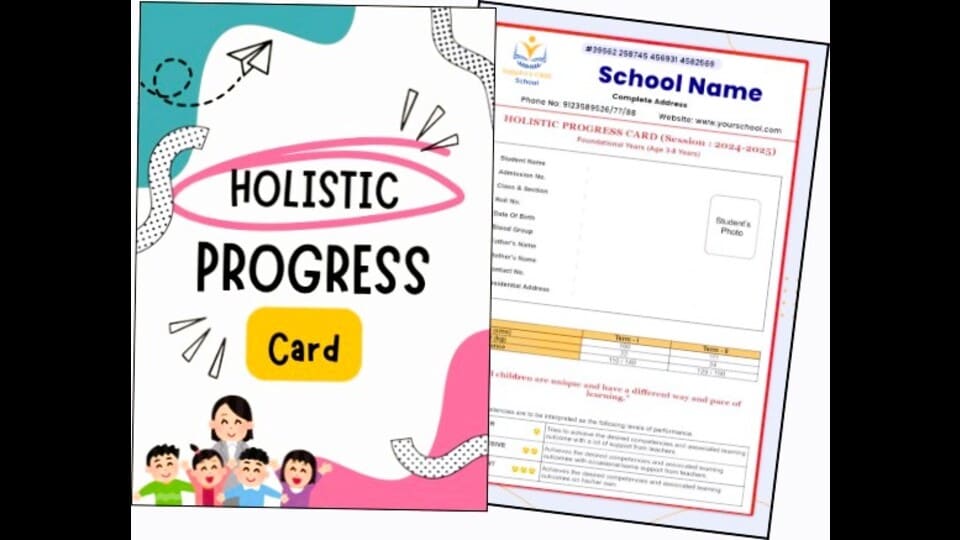
Developed by the State Council of Educational Research and Training (SCERT) in collaboration with state education experts, the report cards are based on a proposal by the National Council of Educational Research and Training (NCERT). Officials from the state secondary education department said the initiative aims to provide a holistic evaluation of students’ academic, cognitive, and psychological development.
The new assessment system is expected to be rolled out across the state after the end-of-session examinations in March 2026.
Officials said the initiative aligns with the National Education Policy (NEP) 2020, which lays stress on creative thinking, logical decision-making, and innovation among students.
Confirming the development, Rajendra Pratap, principal of the State Institute of Education, Prayagraj—a unit of SCERT-UP—said a detailed proposal has been submitted to SCERT.
“Comprehensive assessment is essential for the all-round development of children. In line with the NEP 2020 vision, the holistic progress report card will include students’ academic performance, skills, cognitive development, social-emotional growth, creativity, and physical health,” he said.
To support the 360-degree assessment, the question paper pattern for Classes 2 to 8 will also be revised. For Classes 2 to 5, 40% of the questions will be knowledge-based, 30% comprehension-based, 20% application-based, and 10% focused on analysis, evaluation, and creativity.
For Classes 6 to 8, 30% of the questions will be knowledge-based, 40% comprehension-based, while the remaining will follow the same pattern as the lower classes.
In terms of difficulty level, 30% of the questions will be easy, 50% moderate, and 20% difficult, Pratap added.
Key features of the 360-degree report card:
Comprehensive assessment: Evaluates academic performance along with life skills, mental health, and artistic interests.
Multi-dimensional evaluation: Covers cognitive, affective, and psychomotor domains.
Self and peer assessment: Students will assess their own progress, while classmates will also provide feedback.
Competency-based approach: Focuses on analytical ability, problem-solving, creativity, and critical thinking instead of rote learning.