E-Paper



Perseid meteor shower 2026: When and where to see the dazzling display across the US
The Perseid meteor shower peaks Wednesday night into Thursday morning, with a new moon and mostly clear skies promising some of the best viewing conditions.

 Prefer HTon Google


The best annual meteor shower has once again returned to our skies, and the Perseids dazzling display is set to peak on Wednesday night into Thursday morning. Under ideal conditions, skywatchers could see as many as 50 to 100 meteors per hour.
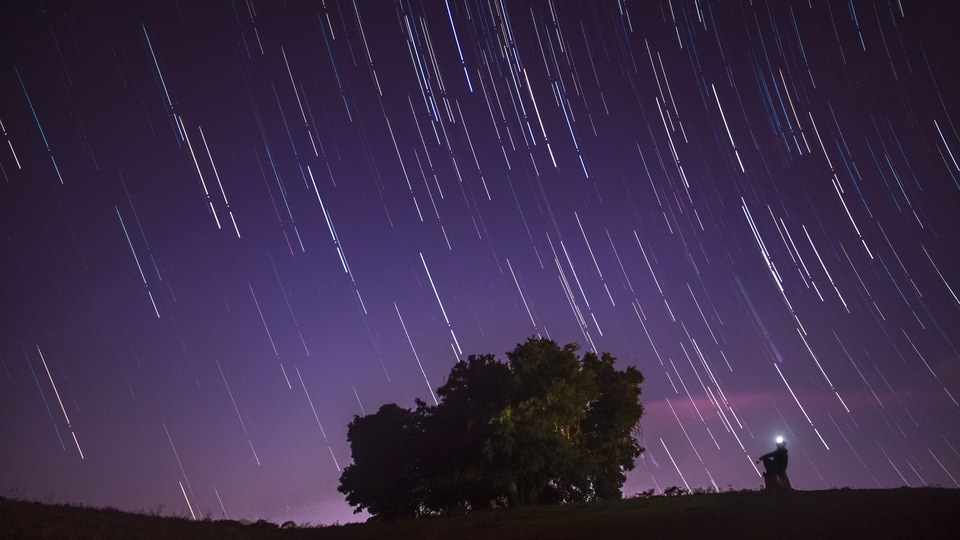
The shower is especially promising this year because the Moon will be in its new moon phase, meaning there will be no bright moonlight to hide the fainter meteors.
What is the Perseid meteor shower?
As per BBC, meteor showers happen when the Earth passes through trails of debris from asteroids or comets. As that debris enters our planet's atmosphere, it burns up and creates spectacular streaks of light called meteors. Royal Astronomical Society Research Fellow Dr Becky Smethurst described the Perseids as “one of the best nights for astronomy all year.”
Becky Smethurst described the Perseids as "one of the best nights for astronomy all year." The meteor shower is caused by debris left behind by the Swift-Tuttle comet, which has a large core measuring 16 miles (26km) across.
According to NASA, astronomer Giovanni Schiaparelli identified the comet as the source of the Perseids in 1865. The comet itself was discovered in 1862 by Lewis Swift and Horace Tuttle. It takes 133 years to complete one orbit around the Sun and last visited the inner solar system in 1992.
Also Read: A rare convergence is happening in the sky on August 12. An astrologer shares what it could mean
When and where can you see it?
The Perseids are active from mid-July to Aug 23 this year, but on most nights the shower will only display a few meteors each hour. The best time to watch is during the peak nights, in the early morning hours between midnight and dawn on August 12 and 13.
At this time there will be many more meteors, and if you are really lucky, you could see more than 100 shooting stars per hour. This year could offer especially good viewing conditions because there is a new moon, meaning there will be no bright moonlight.
As per NASA, the Perseids are best viewed in the Northern Hemisphere during the pre-dawn hours, though it is possible to view meteors as early as 10pm.
The American Meteor Society estimates 30 to 50 meteors per hour could be seen from rural regions in the US.
Also Read: Jake Whisenant update: GoFundMe launched after record-breaking speed climber’s death
Best US Spots to see the Perseids
Here are few spots as per WNPA,
Great Basin National Park in Nevada is consistently ranked as one of the best stargazing parks in the country, offering Bortle 1 skies (as dark as it gets) along with regular ranger-led astronomy nights. Wheeler Peak's elevation gives visitors a wide-open, unobstructed view.
Death Valley National Park in California is also rated Bortle 1 and is a certified Dark Sky Park. Badwater Basin and Dante's View are the go-to spots locals recommend, mainly because there's nothing around to block the horizon.
Zion National Park in Utah has slightly more light pollution than the two above, but it's much easier to combine with an actual vacation, and the park runs dozens of stargazing events between July and December.
Big Bend National Park in Texas is one of the most remote parks in the Lower 48, which is exactly why it works so well for viewing. It holds certified Dark Sky Park status and sees minimal crowds even during peak season.
Great Sand Dunes National Park in Colorado has been a Dark Sky Park since 2019, and watching meteors streak over the dunes is reason enough to make the trip.
Cherry Springs State Park in Pennsylvania is the East Coast's answer to the desert parks above. For those not near the West, this is the closest thing to those Bortle 1 skies without needing a cross-country flight.