
 E-Paper



U.P. no stranger to wolf attacks, over 50 children fell prey in 1996-97 and 2003
This year, 10 people, including nine children, have been killed and 50 injured in wolf attacks in Bahraich since March 18.

 Prefer HTon Google


The current spate of wolf attacks in Bahraich is probably the third most noticeable streak of such incidents in Uttar Pradesh in the past 27 years.
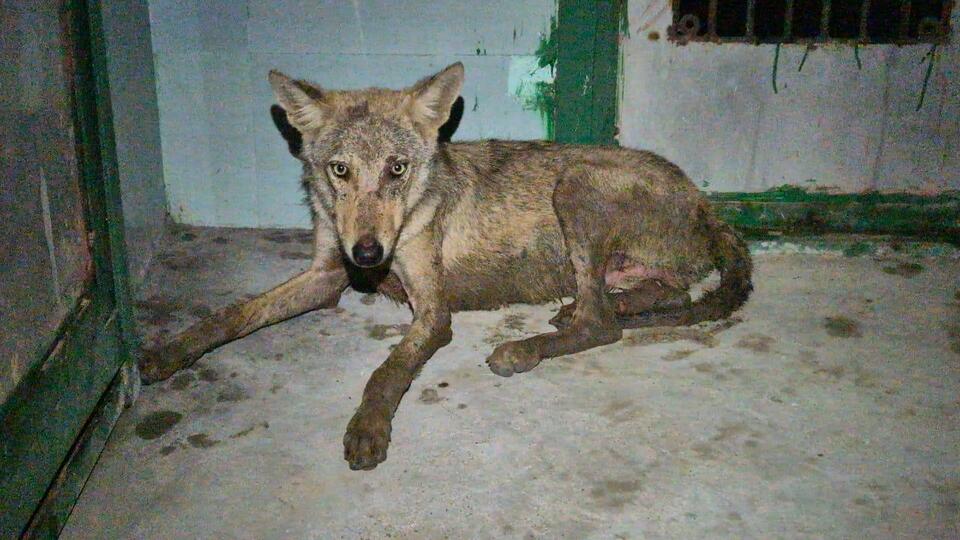
In 1996 and 1997, wolves killed 42 children in Jaunpur, Pratapgarh, Sultanpur and their adjoining areas.
In 2003, wolves claimed the lives of 10 children in Balrampur in a six-month span. Four killings were reported in August 2003.
This year, 10 people, including nine children, have been killed and 50 injured in wolf attacks in Bahraich since March 18.
The forest department has captured four wolves and is trying to rescue an elusive duo.
V.K. Singh, former wildlife warden of the Allahabad (now Prayagraj) region, who had headed the eight- month-long wolf operation in Jaunpur in 1997, said 110 employees were deployed on the mission back then.
A total of 42 children were killed and forest team had gunned down 13 wolves during the operation to tackle the menace, he recalled.
VK Singh recalled the whole operation continued along the Sai river which shares the border in Jaunpur, Pratapgarh and Sultanpur. He said wolves and jackals both lived on the fringes of villages in the area.
Explaining why wolves begin targeting humans, he said this happens when a female wolf becomes pregnant or gives birth and more food is required.
As the female wolf or the cubs can’t go hunting, the male wolf goes out in search of food and the human child is the easiest prey. He said humans are the only species in the animal kingdom who bleed even due to a minor scratch. After killing a child, if the male wolf is hungry and needs 250 grams of meat, he eats 500 grams and then goes back and vomits it before the female wolf and the cubs. The female wolf and the cubs consume this meat. Once they eat human flesh, the pack slowly gets addicted to it and they start hunting down children.
“We had collected about 42 mutilated bodies of small children during the operation (in 1996-97). There was strong resentment among the people,” he recalled.
On the order of the then chief wildlife warden Ashok Singh sharp shooters of Dudhwa National Park, Jim Corbett and Rajaji National Park were deputed to stay at the site of wolf attacks.
While observing the pattern of wolf attacks, it was learnt that after an incident, no attack was reported for the next three days. On the fourth day, there would be an attack again, but at a new place.
Such incidents continued at an interval of three to four days. The flesh eating animals or the carnivores eat only when they are hungry, he said.
“In today’s context, you can see the animal through a drone or can trap an animal, but there is no confirmation that you have trapped the culprit wolf. Hence, until the culprit is trapped, the incidents will continue,” VK Singh added.
“We are well equipped now. Hence, killing wolves is not a good idea. Besides, the animal is categorised as Schedule-I under the Wildlife Protection Act 1972,” he added.
Former divisional forest officer GP Singh, who was then posted at Azamgarh and assigned to Jaunpur to deal with the wolf attacks, said initially officials could not understand what was going on.
“People thought kidneys were being stolen after killing the children as, in most of the cases, only mutilated bodies could be recovered,” he said, adding that a few beggars and mentally challenged people were beaten up by mobs on suspicion of kidney theft.
Later, it was revealed that wolves were killing the children in the area.
GP Singh, who is now an executive consultant with Wildlife Trust of India (WTI), said, “We used to stay at primary school buildings in the affected village. As no latest equipment like drones, infrared or thermal cameras were in use at that time, we started tracking pug marks. Examining the pug marks, it was revealed that only two wolves, a male and a female, were attacking in the area. Wolves are highly intelligent, and it is very difficult to trace them. Besides, wolves rarely strike in the same village twice.”
While many wolves were killed, the attacks stopped after the alpha male and female, who were the group leader of the pack were killed, he added.
He said wolf attacks are often reported in July and August.
GP Singh said wolves mainly hunt rabbits, rats and other smaller creatures.
In the rainy season, it becomes easy for rabbits and other small animals to hide amid lush green vegetation.
Due to rain, the wolves’ lairs get flooded, which makes it difficult for them to get food. This could be also one of the reasons for the aberrant behavior during this season, GP Singh added.


