
Writ of habeas corpus can’t be issued to trace missing persons: Orissa HC
A bench of justices Sangam Kumar Sahoo and Sibo Sankar Mishra said the writ of habeas corpus cannot be issued in a casual and routine manner
BHUBANESWAR: The Orissa high court has ruled that the writ of habeas corpus cannot be issued to trace ‘missing persons’ and proving ‘illegal detention’ is a pre-condition.
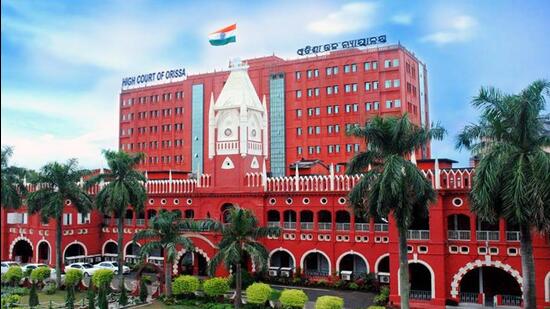
Refusing to grant relief to a petitioner who filed the habeas corpus plea to trace her missing daughter, the division bench of justices Sangam Kumar Sahoo and Sibo Sankar Mishra said the writ of habeas corpus cannot be issued in a casual and routine manner.
“Though it is a writ of right, it is not a writ of course. The writ of habeas corpus is festinum remedium and power can be exercised in clear case. Illegal confinement is a pre-condition to issue a writ of habeas corpus,” the high court said.
The petitioner approached the high court to seek orders to trace his daughter who went missing last year and produce her before the court.
The court said issuance of writ of habeas corpus was not maintainable since this was a case of a ‘missing person’.
“No material was produced to show that the daughter of the petitioner has been illegally detained by anyone. It is needless to say that the court has to be satisfied about the factum of ‘illegal detention’ before it proceeds to entertain a petition seeking issuance of the writ of habeas corpus,” the court said.
“The petitioner could not establish a prima facie case of ‘unlawful detention’ of his daughter by any particular person, rather it was submitted that his daughter has been missing.”

ABOUT THE AUTHORDebabrata MohantyDebabrata Mohanty is a senior assistant editor of Hindustan Times who works as state correspondent from Odisha covering the state's politics, governance, public policy, natural disasters, environment and its society for close to three decades. With his long years of reporting from the state capital of Bhubaneswar, Mohanty has been known as one of the most experienced and credible journalists covering Odisha for the national English dailies. His reporting combines on-ground detail with deep institutional knowledge detailing the state's changing politics, governance issues, administrative reforms and the functioning of its public institutions. He has regularly reported on issues ranging from legislative developments and public policy implementation. Politics is his core areas of expertise as he closely tracks Odisha's political landscape, including the rise and transformation of the Bharatiya Janata Party (BJP), the Biju Janata Dal (BJD), the two principal political parties in Odisha. His long association with the state's political establishment enables him to write on contemporary developments in a larger political context. Mohanty takes a deep interest in writing human interest stories, environmental issues and documenting the impact of cyclones, floods, heatwaves, and other climate-related events in one of the most disaster-prone states. His coverage extends to public health, governance reforms and stories on accountability of government institutions. Before joining Hindustan Times, Mohanty worked with The Indian Express, Mail Today, and The Telegraph, where he covered at least six general elections and as many assembly elections. In 2007, he was selected for the prestigious Chevening Young Indian Print Journalist Programme at the University of Lincoln, United Kingdom, where he received advanced training in print journalism. In 2009 he won the Press Institute of India-International Committee of Red Cross award on conflict reporting for his on-ground reportage of 2008 Kandhamal riots.Read More

E-Paper


