PUNE: The 17-day indefinite hunger strike by tribal students at the Manjari tribal hostel ended on Saturday after tribal development minister Ashok Uike met the protesters and provided written assurances on their demands.
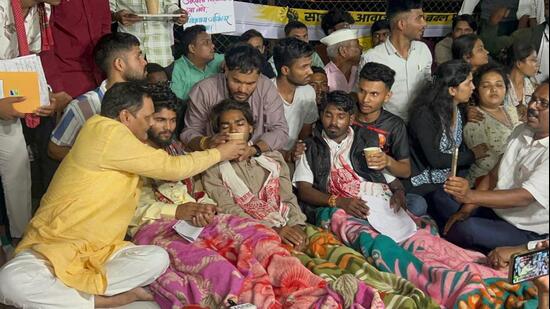
Students from Pune, Nagpur and Nashik had begun the agitation on August 13 over changes to government tribal hostel rules. Their demands subsequently expanded to include hostel facilities and safety, tribal reservations, recruitment to vacant posts, appointments under the Panchayats (Extension to Scheduled Areas) Act (PESA), caste validity certificates and compensation for the families of three tribal girls who died of snake bites at an ashram school in Gadchiroli.
Shweta Irnak, one of the students who was on hunger strike, said the minister met the protesters on Saturday and presented a written draft of the government’s assurances.
“Today is the 17th day of our hunger strike. The minister met us and gave us a written draft. We are ending the hunger strike,” Irnak said.
Nisha Sable, who raised the issue with Congress leader Rahul Gandhi during his Pune visit, told HT, “The government has agreed to fulfil our demands. Our demand for a central hostel will take more time, but we have been assured that it will be addressed within a month. We are therefore ending our 17-day-long strike today.”
{{/usCountry}}Nisha Sable, who raised the issue with Congress leader Rahul Gandhi during his Pune visit, told HT, “The government has agreed to fulfil our demands. Our demand for a central hostel will take more time, but we have been assured that it will be addressed within a month. We are therefore ending our 17-day-long strike today.”
{{/usCountry}}Minister Uike said the government had held a positive discussion with chief minister Devendra Fadnavis on the students’ demands on Saturday.
“These are children of a cultured society, a society with a rich culture and glorious history. We have had a positive discussion with the CM. The matter was taken positively,” Uike said.
From one GR to a wider movement
The agitation initially focused on an August 5 government resolution (GR) by the Tribal Development Department governing admission and administration of government tribal hostels. Students opposed provisions they said could hurt tribal students, particularly those from remote areas dependent on hostels for higher education and competitive-exam preparation.
They demanded that the November 15, 2011 framework remain the base policy, updated for current conditions and inflation. Their objections included age restrictions, curbs on students taking up employment and a provision reserving 70% of hostel seats for students from the same district. Though the government raised the hostel admission age limit from 26 to 30 on August 14, students continued protesting, saying the change addressed only one concern.
“Safe and clean accommodation, adequate facilities, insurance, regular pest control and access to career and personality-development programmes should not be treated as privileges. After what happened in Gadchiroli, student safety cannot be addressed only after a tragedy,” Irnak said during the agitation.
Recruitment, PESA and caste certificates
The students demanded recruitment to 12,500 vacant posts reserved for tribal communities, along with a time-bound process to fill other pending vacancies across Maharashtra.
Student Suraj Kokani called the assurance an important development, while Nitin Pawra said protesters were satisfied but would monitor its implementation.
The students also sought reinstatement and permanent appointment of PESA employees relieved from service, protection of tribal reservations and action against candidates allegedly using bogus caste certificates.
490 government hostels across Maharashtra
The Tribal Development Department runs 490 government hostels across Maharashtra, accommodating around 58,000–60,000 students annually, according to minister Uike. The government has said issues such as direct benefit transfer (DBT) and the centralised kitchen system require further discussion.
The agitation also drew support from political leaders across parties. Congress leader Rahul Gandhi met tribal students during his Pune visit for the ‘Chhatron Ki Goonj’ programme and wrote to CM Fadnavis seeking intervention. NCP (SP) MP Supriya Sule spoke to the students by video call. Vanchit Bahujan Aghadi leader Sujat Ambedkar visited the Manjari hostel and raised concerns over food, sanitation, beds and infrastructure.
The agitation intensified after students refused to end their hunger strike despite the government withdrawing the hostel age-limit provision.
“We have been fasting for so many days. We did not want verbal assurances. We wanted the government to take responsibility and give us written commitments,” Kokani said.
Prolonged agitation
The prolonged fast affected the protesters’ health, with three students earlier hospitalised. Students maintained that they would not withdraw the strike without a comprehensive response, despite the government’s concessions on some provisions.
Student leader Somnath Nirmal thanked the chief minister and political leaders who supported the movement, including Rohit Pawar and Rahul Gandhi.
With the hunger strike over, attention now shifts to implementation, particularly the promised recruitment timelines, hostel improvements, student-welfare measures, PESA appointments and other pending tribal issues.
However, the students who were on hunger strike, warned that if their demands are not fulfilled within the three-month timeline given by the government, they will launch a more aggressive agitation in Mumbai.