
 E-Paper



Centre views urban floods as national problem, allocates ₹3,000 crore to 7 cities
Mumbai and Pune were selected from Maharashtra and allocated ₹100 crore and ₹50 crore per year, respectively

 Prefer HTon Google


With urban flooding increasingly disrupting life in big cities, the central government is looking at it as a national problem and framing short- and long- term policies for the same. Recently, the 15th finance commission gave detailed thought to the matter, and earmarked reducing the impact of floods as critical for disaster management. The commission allocated a sum of ₹3,000 crore to seven cities in India, out of which the two cities of Mumbai and Pune were selected from Maharashtra and allocated ₹100 crore and ₹50 crore per year, respectively.
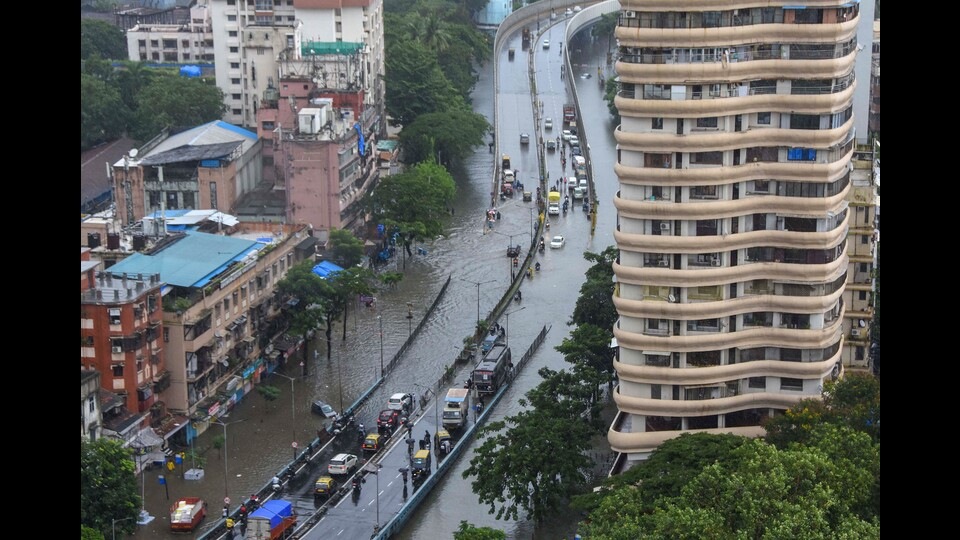
Head of the disaster management department, Ganesh Sonune, said, “Earlier, cities and state governments were managing floods. But in the last few years, all major cities are facing floods every year so much so that these cities are remaining waterlogged for long hours. There are different reasons for flooding in every city. Instead of carrying out urban flood management in an isolated manner, the central government is looking at it as a national problem. Recently on September 13, representatives from all the seven cities were invited to New Delhi to discuss urban flood management.”
“The Pune Municipal Corporation (PMC) had approved ₹50 crore this year and till 2026, Pune will get ₹50 crore every year. We have instructed that short- and long- term measures be proposed. The maximum funds will be utilised for long-term measures,” Sonune said.
An official from the National Disaster Management Authority on condition of anonymity said, “Due to climate change and variability, cyclonic activity is continuously increasing on both coasts. This activity is bringing excessive rainfall in short spells, inundating the cities. As cities are getting increasingly covered with infrastructure and residential developments, there is insufficient holding capacity for all the rainfall they receive. As a result, the level of inundation increases very fast with flash floods.”
“The growing urban agglomeration is not adequately supported by municipal laws and urban planning regulations. Although the length of roads and density of construction have increased in the cities, there is no corresponding increase in the length of storm water drainage. The rivers, lakes and other wetlands in cities are being increasingly encroached upon for construction, thus reducing the holding capacity for floodwaters. When excessive rainwater is not rapidly drained into the sea or river due to reduced drainage or encroachments, the low-lying areas get immediately flooded,” the official said.
Acknowledging the magnitude of urban flooding, the 15th finance commission made the following recommendations in its report: “While state governments have to address these issues, it requires an approach that brings together urban planning, ecological conservation and disaster management. The state government needs to support a set of interventions that are implemented by multiple urban agencies working together. In view of the regular incidence of flooding and heavy losses, we recommend that a targeted allocation be made to address urban flooding in the seven cities that have a metropolitan population exceeding five million. These cities are Mumbai, Chennai, Kolkata, Bengaluru, Hyderabad, Ahmedabad and Pune.”


