
 E-Paper



Taste of Life: Poona cream cheese and cross-cultural exchange of cuisines
The “cream cheese” mentioned in the report (and the “Poona cream cheese” from “Poona Observer”) was called “chakka” in Marathi

 Prefer HTon Google


Food is an important marker of cross-cultural exchanges. It is both global, as it is consumed worldwide, yet highly local, as there are significant variations in food across countries and cultures.
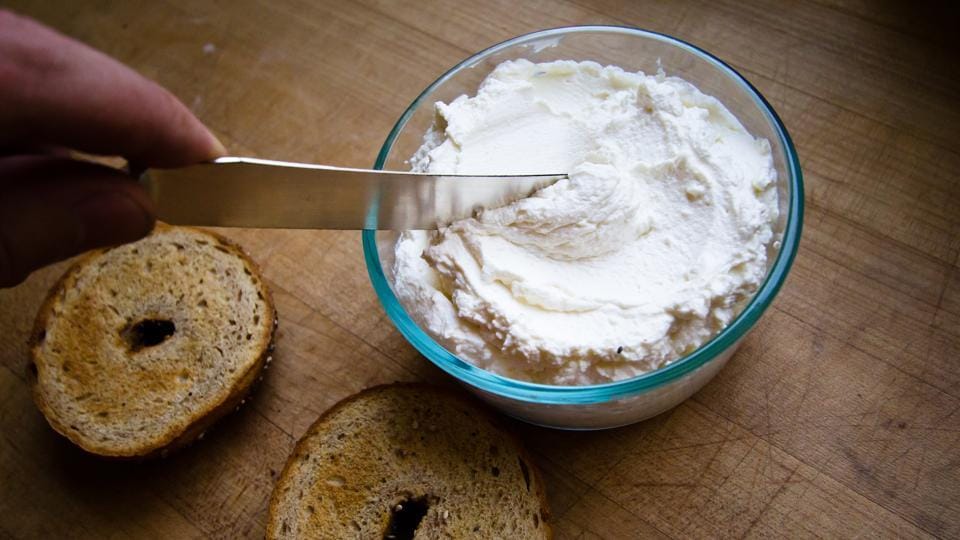
Towards the end of the nineteenth century in New York, a new dish became a part of the staple Jewish cuisine. It consisted of a bagel topped with cream cheese, lox (filets of brined salmon), capers, tomato, and red onion. It was often served for breakfast, sometimes for brunch.
The dish had come into existence owing to the popularity of a certain variety of cheese. In 1874, William A Lawrence from New York started mass-producing an unripened fresh cheese, known generically as cream cheese. A few years later, he created the first brand of cream cheese with the logo having a silhouette of a cow followed by the words “Neufchatel & Cream Cheese”.
Cream cheese is a soft, usually mild-tasting fresh cheese made from milk and cream. It is not naturally matured and is meant to be eaten fresh, so it differs from other soft cheeses such as Brie.
Cream cheese soon became popular in the Jewish community of New York, especially among the Polish immigrants, where it was commonly known as “schmear”. It soon became the basis of several common open-faced sandwiches.
Almost at the same time, in May 1879, a fascinating letter appeared in the “Poona Observer”. Poona was suffering a massive heat wave then. The anonymous letter urged the Europeans living in the city to combat the treacherous summer heat with certain “summer foods” like “native sherbets”, curd, watermelon and muskmelon, the Poona kheera (cucumber), unripe mangoes, “khus”, and the “Poona cream cheese”.
The writer had provided some recipes for the benefit of readers. The Poona cream cheese could be purchased from the native milkman and sugar be added to it. The mixture could be smeared on bread and had for breakfast. Thinly sliced cucumber, chopped coriander, and black pepper could be added to the cream cheese and used as a topping.
It is interesting to note that this letter appeared when cream cheese had just been made commercially available in the United States and was yet to gain popularity there.
For several years, I was puzzled by the mention of “Poona cream cheese”. The manufacture of European cheese was practically unknown in India till Keventer began his famous “Poona experiment” in the 1880s. So was there any other variety of European cheese that was made in the city before Keventer manufactured cheese? Or was it some other “native” cream cheese available in the city?
The eureka moment came when a couple of years ago, I came across a report detailing the prevalence of enteric fever and typhoid in the North-West Province. The report mentioned cream cheese. In the North-West Provinces in the early 1890s, typhoid bacilli were found by the sanitation department in the aerated waters and the “dahi” was supplied to the East Surrey Regiment. Manufacturers of aerated waters were then summoned by government officials and asked to maintain proper hygiene. A couple of months later, owing to precautions taken by the manufacturers, aerated waters were no longer open to suspicion. But bazaar “dahi” was eaten in the form of either cream cheese or sweetmeats and the authorities felt that there was a danger of introduction of the typhoid bacillus. It was advised by the government authorities that even though native doctors advised consuming “dahi” and cream cheese in the summer, it better be avoided.
The “cream cheese” mentioned in the report (and the “Poona cream cheese” from “Poona Observer”) was called “chakka” in Marathi. It was similar to strained yoghurt and was made by draining the “dahi” in a muslin cloth. “Chakka” had been used for centuries to make “shrikhand”, a very popular dessert in the western provinces of India. It was also a popular accompaniment to be eaten with lamb meat and “naan” in the Pashtun community of the western regions of the subcontinent.
“Dahi” is a kind of curd or rather coagulated milk. To prepare this, the milk is first boiled, then soured by being thrown into an unwashed vessel in which “dahi” had been previously kept. Many times, a “dahi starter”, (“virajan” in Marathi) is used. Anglo-Indians employed an acid to precipitate the solid ingredients of the milk, and rennet was used by some Indian Christian families. “Dahi” thus differed from curd as prepared in Europe in being practically sour boiled milk. The milk was boiled almost immediately after being obtained from the cow and thus contained all its fat.
“Dahi” was largely consumed without removing the “water”, called whey, it contained. “Dahi”, even if separated from the whey, contained too much fat to be made into cheese. It was, in fact, cream cheese, and on drying crumbled to powder. The whey was separated by pressing the “dahi” inside a muslin cloth. The cream cheese (“chakka”) was made in Western India in many homes on festive occasions. It was a delicacy and few could afford to consume it regularly.
The trade in “chakka” was very extensive, and within a radius around Poona large quantities were carried by train in the late nineteenth century – “chakka” being contained within a cloth and resting in open baskets.
“Dahi” was not usually eaten alone to any large extent since it was considered to cause severe constipation. Hence, water was removed from “dahi”, and the “chakka” thus formed was used to make several sweets in the summer. European doctors believed that the sweetmeats so largely consumed as a midday meal in the Bombay Presidency partook of all the ingredients of food and were not mere luxuries like the sweets of Europe. This might be the reason why the anonymous writer came up with the brilliant idea of using “chakka” as a topping to make open-face sandwiches.
The letter in “Poona Observer” detailing recipes for open-face sandwiches using “Poona cream cheese” depicts a delightful episode of cross-cultural exchange of cuisines. The Europeans found inspiration to come up with a recipe for open sandwiches with “chakka” in Poona, and in faraway New York, the Jewish community used cream cheese to make the same. Who inspired who? Or, did they come up with the ideas independently? We would never know.
Chinmay Damle is a research scientist and food enthusiast. He writes here on Pune’s food culture. He can be contacted at chinmay.damle@gmail.com


