
 E-Paper



Citizens petition PMC commissioner to curb daytime movement of heavy vehicles in Mohammadwadi
Data from recent years shows that heavy vehicles are consistently implicated in two-wheeler fatalities, emphasising an urgent need for action, the petition pointed out.

 Prefer HTon Google


PUNE: Following the tragic death of national-level footballer, Aariz Shaikh, 19, citizens of Mohammadwadi led by former chief commissioner of income tax (IT) Akramul Jabbar Khan have demanded urgent reforms to make the city’s roads safer. The citizens’ group is pushing for 24x7 reliable piped water supply across the area to reduce reliance on water tankers; and strict restriction on heavy vehicles including tankers, dumpers, JCBs, and construction trucks between 10 pm and 5.30 am during the night to prevent daytime accidents.
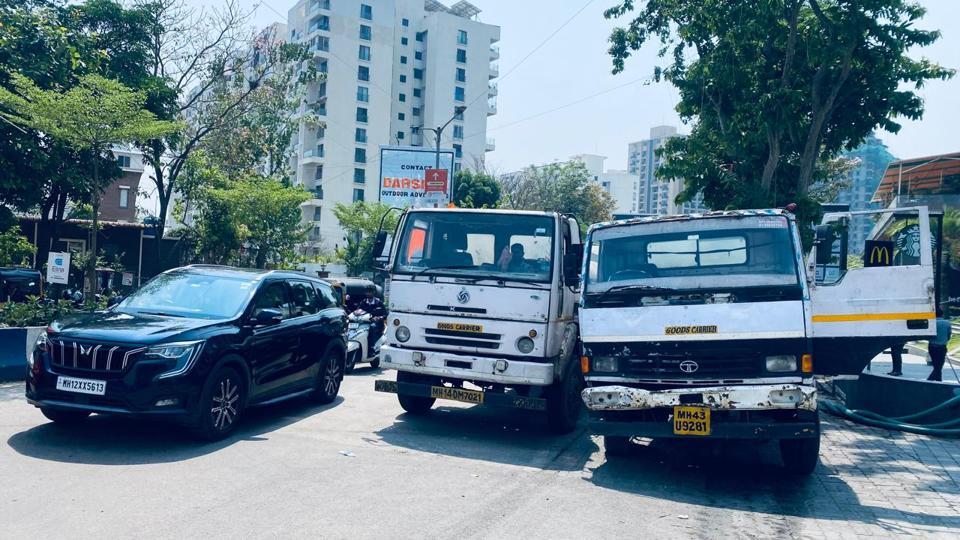
Aariz, a class 12 student of Bishop’s School, Camp, was crushed under a speeding water tanker number MH43-BG-6210 at around 5 pm on April 5 near Siddheshwar temple in the Mohammadwadi/NIBM Annexe area near Cloud Nine and Anandvan. The Kalepadal police arrested the tanker driver and owner under relevant sections of the Bharatiya Nyay Sanhita (BNS).
The petition submitted to the Pune municipal commissioner (PMC) Naval Kishore Ram; Pune police commissioner Amitesh Kumar; district collector Jitendra Dudi; and chief minister of Maharashtra stresses that enforcing heavy restrictions at night and ensuring reliable piped water supply are practical, immediate measures to prevent further tragedies.
Data from recent years shows that heavy vehicles are consistently implicated in two-wheeler fatalities, especially in developing areas in the suburbs of the city right from Kondhwa, Hinjawadi, Chinchwad, Pimpri, and along the Navale bridge corridor till NIBM Annexe-Mohammadwadi, emphasizing an urgent need for action, the petition pointed out.
The petition further stated that a young life, full of promise and talent, has been lost due to unchecked proliferation of heavy vehicles on roads in the area. The tragic death of Shaikh is not an isolated case; the city has seen a sharp rise in accidents involving water tankers, JCBs, construction material carriers, and other heavy vehicles running along congested roads during the daytime. Frequent water spillage from tankers makes streets slippery and extremely hazardous for two-wheelers, pedestrians, and other commuters. The ongoing construction boom has worsened the situation, with trucks and heavy machinery operating round the clock amid regular traffic.
The root causes are clearly identified as inadequate and unreliable piped water supply in many residential and developing areas which forces dependence on private water tankers, and unrestricted daytime movement of heavy vehicles leads to severe congestion, delays, pollution, and fatal accidents. A simple, practical solution is available and must be implemented urgently. Firstly, expedite and ensure 24×7 piped water supply across all areas, including Mohammadwadi, NIBM, Kondhwa, and beyond; and second, strictly confine all heavy vehicle tankers, tippers, JCBs, and construction carriers to the night-time window between 10 pm to 5.30 am. This will immediately reduce daytime congestion, prevent accidents and water spillage, and allow safer traffic flow for all, citizens pointed out.
Till early April this year, at least six two-wheeler riders have died in accidents involving heavy vehicles across different parts of the city. These include a water tanker crash on NIBM road in Mundhwa, a cement mixer collision in Chinchwad, and a concrete mixer overturning in Hinjewadi that killed two scooter riders, along with additional fatalities involving trucks at Navale Bridge (Sinhagad road corridor) and Pimpri. The distribution of these incidents shows that high-risk zones span both central and peripheral areas, especially in fast-developing corridors with ongoing construction and heavy vehicle movement, indicating that the danger is city-wide rather than localised.
In 2025, Pune recorded around 302 road deaths, with two-wheeler riders and pedestrians making up nearly 90% of the fatalities. Heavy vehicles—including water tankers, dumpers, RMC mixers, and trucks—were responsible for a large share of these deaths. Overall, 45 to 70 fatalities involved heavy vehicles, showing that they remain a persistent and serious threat to two-wheeler riders across the city.
DCP (traffic) Himmat Jadhav assured the city that strict action would be taken against reckless heavy vehicle operations. “We are aware that many accidents involve overloaded trucks, inadequate vehicle maintenance, brake failures, driver fatigue, and excessive speeding. The Pune traffic police is committed to enforcing regulations rigorously, conducting frequent inspections, and penalising violations to ensure the safety of two-wheeler riders and pedestrians across the city,” he said.
Civic rights activist Jaymala Dhankikar said,”Aariz Shaikh’s tragic death exposes the deadly negligence of the water tanker mafia. It’s high time authorities dismantle this network and ensure safe, legal access to water for every citizen. Lives should never be a commodity.” Ganga Florentina resident Sadik Khan said, “We have been pleading for regular water supply for months, yet nothing changes. Aariz’s death is a wake-up call and residents should not have to risk their lives for basic water.” Area resident Vinod James said, “This tragedy highlights systemic failure. There must be strict action against illegal water suppliers and accountability at every level. Citizens deserve safety and dignity in accessing such a basic necessity.”


