
 E-Paper



Once the pride of Pune, lakes lose beauty to sewage water
These lakes now have floating garbage, sewage and hyacinth; the long drawn civic neglect has lakes emanating a stench with hardly any aquatic life left


Once known to be a sought-after bird watching spot that also maintained the city’s temperature and added to its glory, lakes in the city are now nothing but an eye sore. These lakes now have floating garbage, sewage and hyacinth; the long drawn civic neglect has lakes emanating a stench with hardly any aquatic life left.
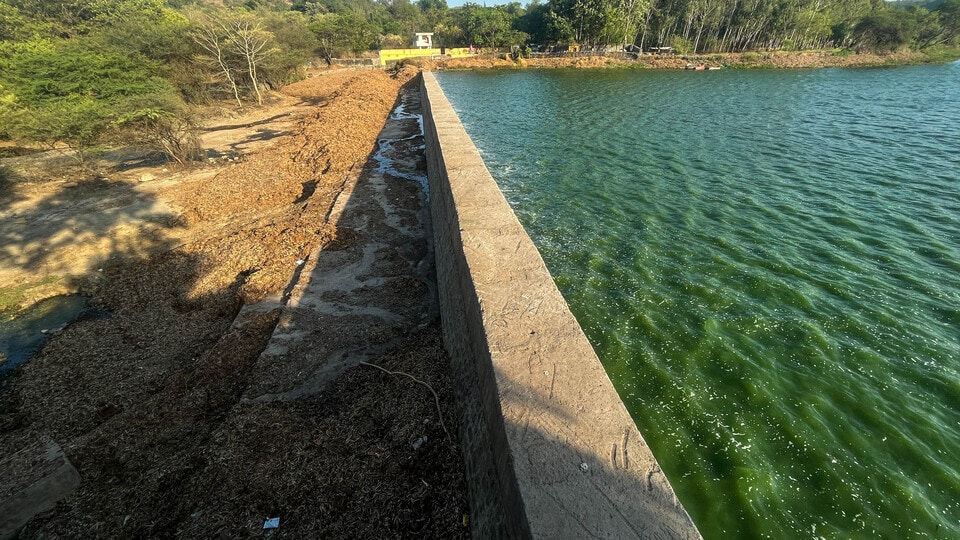
Drainage water has been flowing into the lakes located in Jambhulwadi, Pashan, Upper Katraj and other Peshwa-era lakes for nearby localities for years, while the Pune Municipal Corporation (PMC) has failed to act on it.
Dead fishes on the shore
This ignorance has led to hyacinth growth, causing a mosquito menace. Earlier, on May 15, mass mortality of fishes was reported at Jambhulwadi Lake, Ambegaon. A study conducted by the Modern College of Arts, Science and Commerce found that the mixing of sewage, washing of vehicles and deposition of building raw material is leading to degradation of the lake. According to the study, three-four tonnes of dead fish were seen floating on the banks due to low oxygen levels in the water.
PMC sewage department head Shridhar Yeolekar stated that the health of these lakes is deteriorating, however, he blamed it on the drainage and sewage water coming from nearby localities. “The sewage mixing in the lake water is mainly at both upper and lower Katraj lakes, Pashan and Jambhulwadi. We have received complaints of hyacinth growth, mosquitoes and an awful stench. This is due to the sewage deposited from nearby localities,” he said.
Deputy commissioner at PMC Jayant Bhosekar said, “Drainage and sewage water mixing in the lake is a huge problem and the civic body will ensure that some action is taken.”
Recently, the PMC issued 80 notices to housing societies located around Jambhulwadi Lake. However, no further action has been taken.
Suraj Dhamale an office bearer at Sai Society in Jambhulwadi said, “Along with housing societies, there are many independent homes around the lake. While societies have proper drainage lines, small independent homes and slums are releasing water openly in the lake. However, the PMC is conveniently blaming this on societies. It is the responsibility of the civic body to ensure that every locality has a proper drainage system.”
Satish Wanjale, a resident living near Jambhulwadi Lake said, “I have been living here for years. Earlier, this lake was beautiful, now the mosquito problem is a major menace making life hell.”
PMC plans
Besides the two lakes at Katraj, one each at Jambhulwadi, and Pashan, there are others including Lakaki Lake in Model Colony, the quarry at Vishrantwadi and Padmavati Lake at Gadgil garden.
To address the issue of pollution, PMC plans to construct sewage treatment plants at Katraj and Pashan lakes. The civic body has identified land and will receive financial assistance from the union government.
“PMC has prepared a plan to tap the drainage lines and bypass the Jambhulwadi and Katraj lakes. The civic body is also planning to install sewage treatment plant at Katraj as treated water can be released in the lake. The actual work on ground will start in a year,” said Yeolekar.
The blame games
The Peshwa-era lake inside Katraj Zoological Park once supplied water to the city in 18th and 19th century.
Sunil Kamble office bearer of Katraj Lake society said, “Why is the media and PMC blaming the housing societies? We are lower middle-class people and brought homes around lakes which were once the outskirt area. It was the responsibility of the PMC to check with builders as to how will they manage sewage. The developers sold the flats and left the place and now societies are being blamed.”
Rampant water pollution in upper and lower Katraj lakes, has in the past left PMC with a show cause notice from environment watchdog Maharashtra pollution control board (MPCB) for allowing drainage water into two water bodies. However, the PMC has not acted despite notice from MPCB.
Sarla More residing at Katraj said, “Earlier, I used to walk around the Katraj upper lake when it was an attraction. But now it is turned into filth with plastic bottles and raises a stink.”
A couple of years ago the PMC had discussed this issue. Elected members blamed the administration for no action. Administration at that time promised the general body that they would lay the sewage lines and bypass the sewage water from lake. But as upper parts were not within the PMC limit, the civic body was not able to carry the work.
In 2009, Katraj and Pashan lakes underwent major beautification as the PMC received ₹49.32 crore under the Jawaharlal Nehru National Urban Renewal Mission (JNNURM) with an aim to developing Pashan Lake into a Bird and Environment Centre and Katraj Lake into a place of historic importance.
However. the sewage flowing into the water at both places has killed their beauty.
A 2019 study by Renu Arora and Prof Milind Gidde from the department of environmental education and research, Bharati Vidyapeeth (deemed university), had stated that the lake needs proper management and a treatment process. “Removal of weeds by a natural process and diversion of the drainage line is important. There is a need to place aerators in the lake that may help to control the fish death rates. If precautions are taken, the aquatic life of the lakes will survive,” the study stated.
A dead lake
The situation is no different in Pashan Lake too. The PMC in March 2022 had constituted a 16-member “Pashan lake development and restoration committee” with a few residents and expert NGOs in the field as its members to rejuvenate the lake in the western part of the city. After formation of committee, work was carried out to remove debris choking the entrances of Pashan Lake. However, again in 2023, the hyacinth came up and the sewage issue still persists.
Once a major draw for tourists and bird watchers, Pashan Lake has now been reduced to a “dead lake”, which is spread over 144 acres, built in the British era having a catchment area of four-square km. It used to attract migratory birds, and has two inlets and two outlets. It is now filled with effluents flowing in from nearby drainages and is filled with sewage, said locals and PMC official requesting anonymity.


