With a budget of ₹5,469 crores over the last two years from both the Maharashtra Government and World Bank, the climate resilient agriculture project has made significant progress in the state. The climate resilient agriculture project actively addresses climate vulnerabilities in 5,220 villages across eight districts in Marathwada, six districts in western Vidarbha, and Jalgaon district in northern Maharashtra.
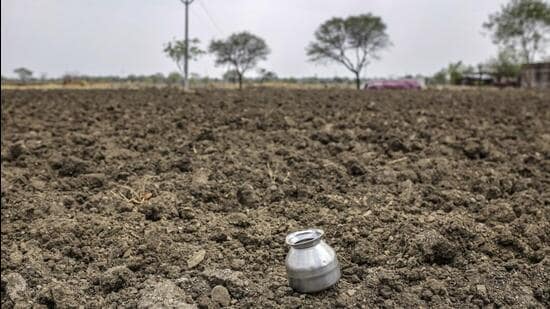
As of December 10, 2023, field bunds and in-situ water conservation have been completed on nearly 55,563 hectares of land in Maharashtra, leading to increased water security in vulnerable areas identified by an earlier study. After various successful efforts, the project beneficiaries have been able to absorb the shock of the dry spell during the Kharif season this year. Also, farmers who adopted Broad Bed and Furrow (BBF) and Zero Tillage technologies promoted by the climate resilient agriculture project could save their crops during wet spells in the last 10 days, claimed officials from the state agriculture department.
Also as of December 10, 2023, 1,229,818 farmers have registered on the portal made available by the state agriculture department, expressing their intent to enhance climate resilience. Notably, 473,045 farmers have opted for 673,364 interventions, with matching grants totalling ₹3,593.97 crores. Investments cover a range of practices, including farm ponds, micro-irrigation, shed nets, fruit orchards, sericulture, and climate-resilient seed varieties, said soil science specialist and agronomist, climate resilient agriculture project, state agriculture department, Vijay Kolekar.
The project has conducted 37,184 farm field schools, engaging over 400,000 farmers, with 16% women participants. Area treatment, including field bunds and in-situ water conservation, has been completed on 55,563 hectares of land, leading to increased water security in distressed areas. Agribusiness initiatives, supporting FPOs, have established 4,395 projects with an investment of Rs465.38 crores, Kolekar informed.
{{/usCountry}}The project has conducted 37,184 farm field schools, engaging over 400,000 farmers, with 16% women participants. Area treatment, including field bunds and in-situ water conservation, has been completed on 55,563 hectares of land, leading to increased water security in distressed areas. Agribusiness initiatives, supporting FPOs, have established 4,395 projects with an investment of Rs465.38 crores, Kolekar informed.
{{/usCountry}}A noteworthy feature of the project is its digital approach, facilitating a paperless process. End-to-end direct benefit transfer ensures transparency, accountability and speedy disposal of funds. The project has also contributed to the socio-economic development of the region by generating employment opportunities for youth and women and reducing migration to some extent, said Kolekar.
“Climate change has emerged as a significant threat to agriculture in Maharashtra, impacting various aspects of farming. The adverse effects include changes in temperature, precipitation patterns, and an increase in extreme weather events. These changes have led to the identification of several vulnerable districts in the state. After identifying the vulnerabilities in these districts, the state government has taken various steps. The interventions under the project focus on individual and community farmland, aiming to enhance water security, and carbon sequestration, and mitigate risks through crop diversification. Additionally, there is a strong emphasis on strengthening the value chain by involving farmer producer organisations (FPOs) to increase overall profitability,” Kolekar said.
Given the success of the project, the Government of Maharashtra and the World Bank have agreed in principle to launch the second phase. This phase will cover 21 districts in the state focusing on reducing carbon and water footprints, enhancing carbon sequestration, and promoting millet production, said Kolekar.
Bhivasan Thokal from Aurangabad, who has benefitted from the project, said, “I started following the practices suggested by the officers from the said project in 2019. Initially, I did it for 2 acres, where I used herbicide and stopped using instruments for farm grazing. It not only helped enhance the soil quality but also helped monetary savings. Apart from this, each farmer in our village has constructed a small pond around his farm that helps with water storage. These ponds helped farmers become self-sufficient in water availability. In the recent monsoon season, our district received less rainfall but we still got enough storage. Today, I am practising sustainable, climate resilient agriculture practices over 10 acres which have helped me save around Rs15,000 per acre.”
Earlier, a study carried out by central government institutes under the Indian Council of Agricultural Research (ICAR) found 14 out of 36 districts in the state to be highly vulnerable to climate-related agricultural distress. These included Aurangabad, Jalna, Beed, Osmanabad, Latur, Parbhani, Akola, Amravati, Jalgaon, Hingoli, Buldhana, Washim, Wardha and Yavatmal.