
 E-Paper



Forest dept begins groundwork for oxygen park in Punawale
The Pune forest department is developing an oxygen park in Punawale on 10 hectares of neglected reserve land to combat pollution and enhance green spaces.


PUNE: The Pune forest department has begun groundwork for the development of an oxygen park in Punawale, an area located on the outskirts of Pimpri-Chinchwad that has for long been neglected despite being classified as reserve forest land. The move comes after years of citizen complaints, political intervention and growing concerns over environmental degradation caused by rapid urbanisation of the region.
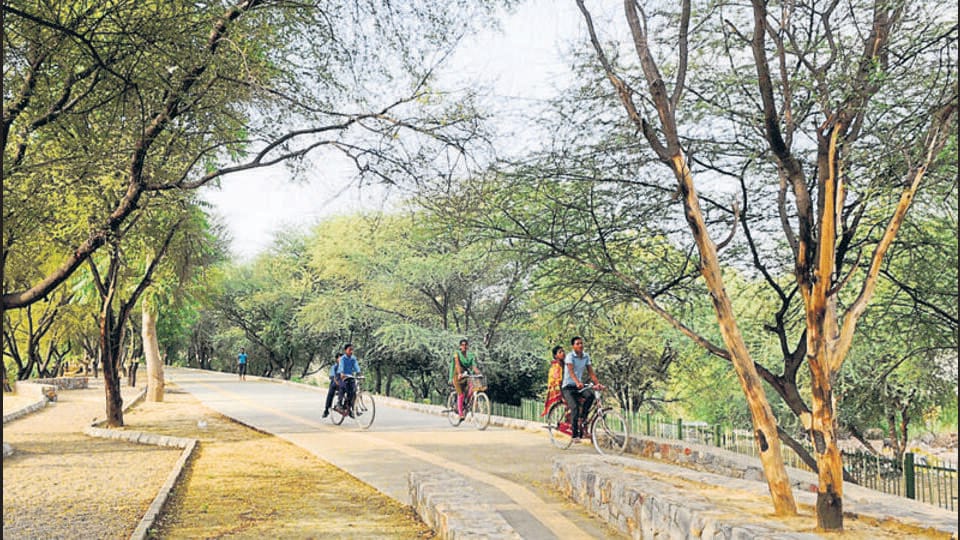
The proposed oxygen park will come up on 10 hectares of reserve forest land at survey number 23 in Punawale, which falls under the Paud forest range. Once developed, the park will be the green lung of Punawale and neighbouring areas that are witnessing intense construction activity, rising dust levels, and increasing vehicular movement.
According to Pratap Jagtap, range forest officer (RFO) of the Paud forest range, the department has started clearing the site, which had turned into an illegal dumping ground.
“We have received all the necessary permissions along with fund approval from the state government. The initial phase involves cleaning the area and removing waste that was illegally dumped here over the years. Once this is completed, further development work for the oxygen park will be taken up,” Jagtap said.
Meanwhile, the forest land on which the oxygen park will come up has a contentious history. Earlier, a waste processing plant was proposed on the same land, triggering strong opposition from the residents of Punawale and nearby localities. Following sustained protests and objections, the state government announced in 2023 that the waste processing project had been scrapped and that the land would remain under the control of the forest department. However, in the absence of active monitoring and development, the land became vulnerable to misuse. Residents complained about illegal dumping of construction debris and household waste, and incidents of tree cutting were also reported from the area.
The demand for developing an oxygen park gained momentum after MLA Shankar Jagtap took up the issue and formally urged the forest department to protect the land and develop it as a green public space. Acting on this demand, the forest department submitted a detailed proposal to the district collector in January 2025. While the necessary permissions from the district and state authorities were granted in November 2025, work on the ground began only recently in January. Forest officials aim to complete the work by the end of March 2026, provided there are no administrative or logistical delays. The oxygen park project has been approved at an estimated budget of ₹8 crore.
As per the preliminary plan, the oxygen park will include a Nature trail designed to allow visitors experience the forest without disturbing its ecological balance. Information signboards will be put up to educate the public about native bird and animal species found in the area as well as local plant life and micro-species. The project will include facilities such as a children’s play area, a fountain, and large-scale plantation of oxygen-generating and native tree species.
The larger reserve forest land at survey number 23 spans around 22 hectares and is known for its dense vegetation. The area is home to hundreds of fully grown native trees, a wide variety of plants, birds, and smaller organisms that play a vital role in maintaining the local ecosystem. Forest officials said that care will be taken to ensure that development activities do not harm existing trees or wildlife.
Residents of Punawale have welcomed the development and expressed relief that the long-pending demand for a public green space is finally being addressed. Locals pointed out that Punawale and the surrounding areas lack dedicated gardens or parks, despite a sharp rise in population due to new housing projects.
A resident said on condition of anonymity, “With so much construction happening around us, there is constant dust and pollution. Heavy ready-mix concrete (RMC) trucks move along the residential roads all day. We needed a place where families and children could go, spend time outdoors, and breathe cleaner air”. Citizens also hope that the oxygen park will act as a protective buffer for the remaining forest land and discourage further encroachment or misuse.


