As many as 233 highly sensitive villages across four tehsils of Pune district (Junnar, Ambegaon, Khed and Shirur) have been declared as ‘potential leopard disaster-prone areas’ on June 27.
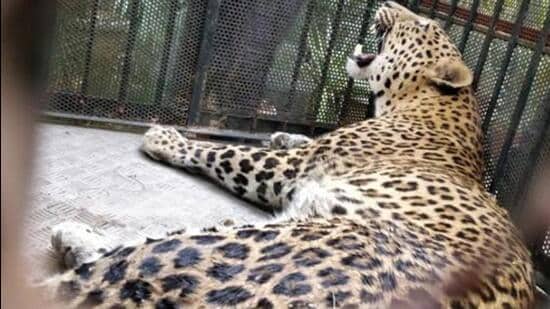
Considering the increasing incidents of human-leopard conflict where several human injuries and even deaths have been recorded in the past five years in Pune, Suhas Diwase, district magistrate and district disaster management authority chairman, has declared these villages as ‘potential leopard disaster-prone areas’ under section (30) (2) (iii) and (iv) of the Disaster Management Act 2005. An order has been issued on the same by the district authority.
As per the order, the said four tehsils in the north of Pune district fall under the Junnar forest division which is divided into seven forest ranges including Junnar, Otur, Manchar, Bodegaon, Khed, Chakan and Shirur. Most of the Junnar forest division is hilly and has seen an increase in irrigation facilities at Dimbhe, Manikdoh, Pipalgaon Joge, Badan, Chilhewadi and Chasakaman under the Ghod and Kukdi irrigation projects. Long-term horticultural crops such as sugarcane, banana, grape and pomegranate are grown in abundance here due to the availability of water. These perennial crops in turn provide shelter and abundant water for leopards. Also, agriculture has led to an increase in farm dwellers with domesticated animals. Leopards see these domesticated animals as prey and hence, their habitat has shifted to these areas. In Pune, particularly in Junnar and the adjoining areas, the human-leopard conflict has been going on for the last 23 years.
As per the order, there is a dense population of leopards per 100 square kilometres of the Junnar forest division. Going by the leopard attacks on humans and livestock, the total number of leopards in Junnar, Ambegaon, Khed and Shirur talukas is estimated to be around 400 to 450. A total 40 serious injuries and 16 deaths have taken place in the past five years in the Junnar forest division due to attacks by leopards. There has been an increase in the incidence of leopard attacks on humans in this area and the said area has become a disaster zone of human-leopard conflict. The order states that the area has been declared a ‘potential leopard disaster-prone area’ because of the extent of injuries and deaths due to leopard attacks.
{{/usCountry}}As per the order, there is a dense population of leopards per 100 square kilometres of the Junnar forest division. Going by the leopard attacks on humans and livestock, the total number of leopards in Junnar, Ambegaon, Khed and Shirur talukas is estimated to be around 400 to 450. A total 40 serious injuries and 16 deaths have taken place in the past five years in the Junnar forest division due to attacks by leopards. There has been an increase in the incidence of leopard attacks on humans in this area and the said area has become a disaster zone of human-leopard conflict. The order states that the area has been declared a ‘potential leopard disaster-prone area’ because of the extent of injuries and deaths due to leopard attacks.
{{/usCountry}}Aditya Paranjape, honorary wildlife warden, Pune forest department, said, “This is a most welcome decision by the district authority of Pune. This division will help the forest department get more funds from the district authorities to implement required conflict mitigation measures in villages under the Junnar forest division.”
Amol Satpute, deputy conservator of forests, said, “As of now, the wildlife conflict mitigation work has been carried out solely by the forest department. With this disaster-prone area status, we will now be able to get more funds and manpower from the district authority. On priority, we have asked them to provide 150 cages to capture the leopards, 50 staff for various ranges, and two vehicles for patrolling purposes.”
“Moreover, we have also demanded tents for shepherds staying on farmlands in Junnar, solar bulbs for their temporary settlements, and a safety fence along small human settlements in Junnar. It is necessary to study the disaster management norms in detail to know what more provisions are there for the people as well as for wildlife conflict mitigation. Overall, even though there might not be any immediate benefits of this status, in the long term it will be benefit more,” Satpute said.