
 E-Paper



Startup Mantra: Providing healthy, high-quality flour
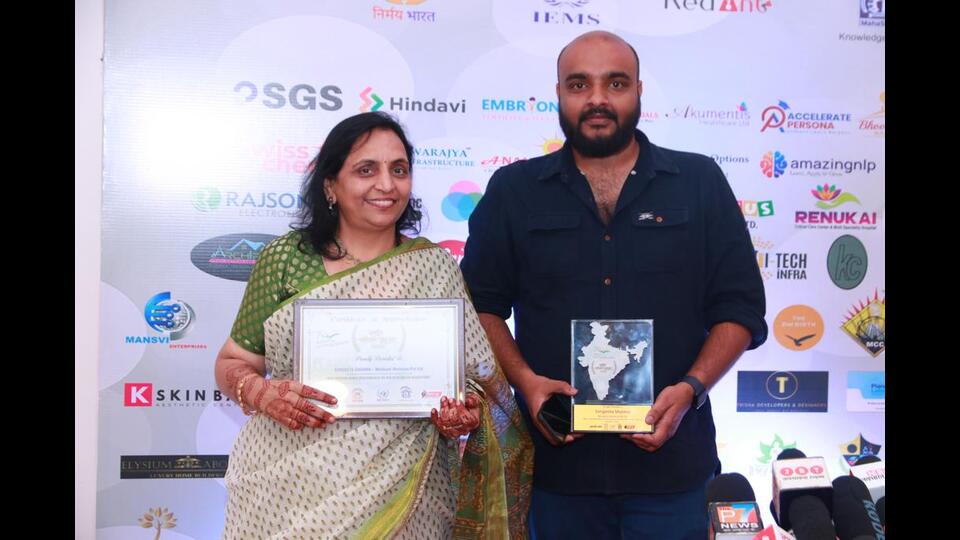
Sangeeta Sharma, a school teacher in Pune, set up her D2C business Sharmaji Ka Aata after her family's health issues led to the realization that there was no good flour mill nearby. The brand, which produces healthy and high-quality flour, gained popularity and expanded during the pandemic-induced lockdown. Sharma's commitment to quality and health earned her a spot on a popular business reality TV show, where she successfully pitched her business to investors.


Each year, we read or see new reports about people falling ill due to the consumption of contaminated or adulterated wheat flour. People in states like Maharashtra, Madhya Pradesh, Uttar Pradesh and Haryana have suffered because of unhygienic practices at the local flour mills or even at the packaged flour provider’s facilities. Inconsistent quality, limited variety, lack of hygiene, and inconvenience are also problems faced by consumers. But often these problems are ignored in almost all households unless some medical emergency knocks at the door. The same was the story with 53-year-old Sangeeta Sharma, a school teacher, who along with her family settled in Pune in 2013. Two incidents just ten days apart – her younger son suffering intestinal problems and her husband suffering from a cardiac arrest – changed her life in 2016. In search of healthy food alternatives, Sangeeta realised that there is not a single ‘good’ flour mill nearby her residential township at Wagholi. With healthy food options weighing on her mind, Sangeeta had to also support her family monetarily and that’s when she decided to set up her D2C business Sharmaji Ka Aata and scale it up. The quest for success landed her on a popular business reality television show and the rest is all history.
In the beginning…
The Sharma’s settled in Pune in 2013 when their son Pranav decided to pursue his engineering in printing technology and graphic communication. Sangeeta worked as a school teacher while her husband had a transferable job. After his graduation, Pranav decided to start his own tech company. His company got acquired and Pranav was content in the startup ecosystem.
Says Pranav, “In 2016, my family went through a difficult time when my younger brother suffered an intestinal injury that required surgery and was kept in the ICU for 10 days to recover. Before we could recover from that traumatic experience, my father suffered a cardiac arrest and was hospitalised for two months. It was a challenging time for us. After getting discharged from the hospital, the next important and sensitive task before us was to look for healthy food alternatives.”
“We started with aata, which is a type of wheat flour that is commonly used in Indian cuisine. My mother decided to prepare multigrain aata at home, for which we purchased 1.5 kg of grains locally. One day, we had guests over, and they commented on how good the aata was. Word quickly spread, and my mother saw that people would be interested in buying healthy aata. We lived in a township with around 15,000 people, and there were no good flour mills nearby. Most people were consuming packaged aata and other unhealthy FMCG goods. My mother realised that there was an opportunity to start a flour mill to cater to the needs of health-conscious individuals in our community,” Pranav added.
Sangeeta managed to purchase two machines having 10HP power capacity and started her work. She said, “Initially, we catered to 10-15 families in our vicinity. As word spread, we gained popularity. We had a small shop near our house and we named it ‘Annapurna Flour Mill.’ It started as a small operation, but it quickly gained popularity due to our commitment to quality and health.”
Brand building
“At first, we operated with a small inventory and sourced raw materials on an as-needed basis. However, as our popularity grew within our township, we expanded our business and acquired two additional machines. Then, the pandemic-induced lockdown occurred, and a local e-commerce company approached us to provide aata for home delivery. Thanks to their app’s visibility, our orders spiked, and we started delivering aata to neighbouring areas like Wagholi, Kharadi, and Magarpaata. However, we still lacked a unique identity,” added Sangeeta.
Sangeeta discussed this with Pranav and they both agreed that they needed to create their own brand that people could recognise and associate with their story. “So, during the lockdown in 2020, we started our brand called “Sharmaji ka Aata”. Our aim was to let people know where their aata was coming from and share our story of providing healthy and high-quality flour,” stated Sangeeta.
“At first, some people belittled us for operating a small flour mill, viewing it as an insignificant venture. However, I have always embraced hard work and was willing to tackle any task that came my way. Despite objections and criticism from near and dear ones, we persevered and ran our flour mill as a professional business,” she added.
First big order
Pranav said, “We received our first major order during the lockdown itself and that too from Mumbai. It was an order for 1,500kgs of aata. We had only one employee to help us. We did not even have an automatic packing machine at the time. We had to pack the aata manually and I told my mother that me, my younger brother, and the staff would complete it in time. And we did that much to the satisfaction of the customer.”
“Once we began branding our product, our visibility increased. We reached out to retail stores and they agreed to display and sell our products. By 2021, we had expanded our services to nearly all areas of Pune city. My mother had to deal with unprofessional behaviour and experience at some of these stores, but she carried herself with great dignity and honour throughout the entire experience,” Pranav recalled.
Reality show fame
Sangeeta saw an advertisement for the business reality television show and she expressed her desire to participate in it. However, Pranav was not inclined to participate in it as he felt that their business was already profitable and doing well at that scale. However, Sangeeta went ahead and scanned the QR code during one television commercial advertisement, filled out the application form and submitted it.
Pranav said, “The application process consisted of three rounds. In the first round, we had to submit a self-created video about our business, which focused on our story. If the judges liked our story, we would advance to the next round. The second round involved a business evaluation, and the third round was a studio round. We eventually cleared all three rounds and reached the final audition stage.”
“Before the auditions, other participants were rehearsing and practising their pitches. My mother was nervous, as we had not rehearsed. I reminded her that we had revenue and profitability, which was something that none of the other start-up founders and participants had. Our story was also powerful and unique. That gave her the much-required confidence to present before the investors,” Pranav added.


