
 E-Paper



Junnar forest division conducts training to manage human–leopard conflict
The training was organised as villages in Junnar, Ambegaon, Shirur and Khed talukas continue to report frequent leopard movement and attacks

 Prefer HTon Google


With incidents of human–leopard conflict rising in parts of Pune district, the Junnar Forest Division organised a special training programme for Emergency Response Teams (ERTs) at Ghodgaon on January 27, 2026, to strengthen preparedness and ground-level response.
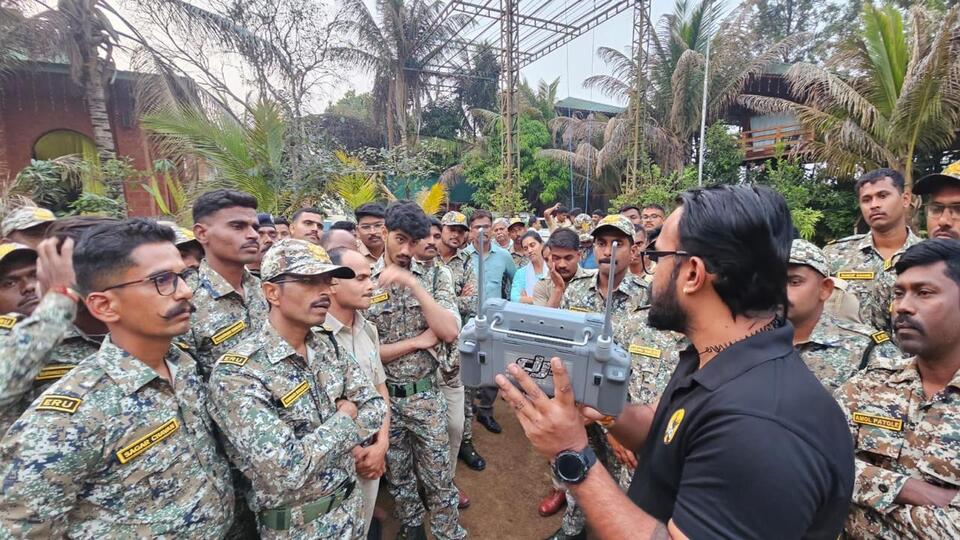
The training was organised as villages in Junnar, Ambegaon, Shirur and Khed talukas continue to report frequent leopard movement and attacks. Officials said the programme focused on equipping frontline responders with practical skills to manage emergencies swiftly while ensuring public safety and humane wildlife handling.
Experts from Pune-based RESQ Charitable Trust conducted hands-on sessions on leopard tracking, control measures, installation of cages and use of trap cameras. Emphasis was placed on advanced tools, including thermal-camera drones for night-time searches, to locate leopards in dense sugarcane fields and on hilly terrain.
Sessions also covered the role of ERTs during leopard attack incidents, including rapid deployment, coordination with the forest department, police and health authorities, securing affected areas, providing immediate medical assistance, and maintaining vigilance until situations are brought under control.
A total of 51 ERT members and 28 forest department staff from Junnar, Otur, Manchar, Ghodgaon, Khed, Chakan and Shirur forest ranges participated in the training.
In June 2024, 233 villages across Ambegaon, Junnar, Shirur and Khed talukas were declared “disaster-prone” due to frequent leopard attacks. A Wildlife Institute of India study has reported a leopard density of six to seven animals per 100 square kilometres in Junnar and surrounding areas.
The programme was initiated by the Junnar Forest Division under the concept of Ashish Thakre, chief conservator of forests, Pune Circle, and the guidance of Prashant Khade, deputy conservator of forests, Junnar Forest Division.
“This training will help teams respond swiftly, coordinate better and ensure public safety while managing wildlife situations scientifically and humanely,” said Amrut Shinde, assistant conservator of forests, Junnar Forest Division.


