The Space Technology Research Group (STeRG) at MIT World Peace University (MIT-WPU), Pune, has successfully launched its first-ever space payload, STeRG-P1.0. Launched aboard the PSLV-C60 in collaboration with the Indian Space Research Organisation (ISRO), this pioneering payload marks a significant milestone for the university and contributes to India’s space exploration endeavours.
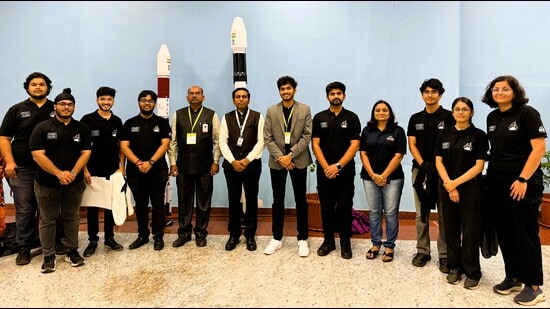
The payload, developed entirely by students and faculty from the department of electrical and electronics engineering, represents a breakthrough in cost-effective space technology.
The STeRG- P1.0 payload is designed to test the performance of COTS MEMS-based 9-axis IMU sensors and ARM-based microcontrollers for attitude determination, employ advanced data filtration techniques, and utilize high-resolution data acquisition and storage for optimal performance.
“The system has been developed without purchasing any pre-made circuits. The ruggedized system provides an affordable alternative for attitude (orientation of satellite) determination and innovative filtering,” said Parul Jadhav, program director of electrical and electronics engineering.
Prof. Dr. Murthy Chavali Yadav, Dean of R & D at MIT-WPU, commended the student-led effort, stating, “This payload, testing COTS-based avionics on PSLV-C60, is a testament to the ingenuity and dedication of our team.”
Achintya Chaware, project founder STeRG1.0, university student, said, “As the founder of STeRG and this project, it’s a moment of great pride to see our first mission come to fruition. This payload will serve as our pilot mission for further research and development in the area of space technology.”
{{/usCountry}}Achintya Chaware, project founder STeRG1.0, university student, said, “As the founder of STeRG and this project, it’s a moment of great pride to see our first mission come to fruition. This payload will serve as our pilot mission for further research and development in the area of space technology.”
{{/usCountry}}