
 E-Paper



PMC launches ‘Clean Air Portal’ to monitor pollution at major construction sites
The portal will collect real-time pollution data from sites spread over 5,000 square metres and above

 Prefer HTon Google


In a bid to curb the rising air pollution caused by construction projects, the Pune Municipal Corporation (PMC) on Wednesday, February 25, launched a dedicated ‘clean air portal’ to monitor air quality at major construction sites across the city. The portal will collect real-time pollution data from sites spread over 5,000 square metres and above. However, officials clarified that the data will not be available in the public domain presently.
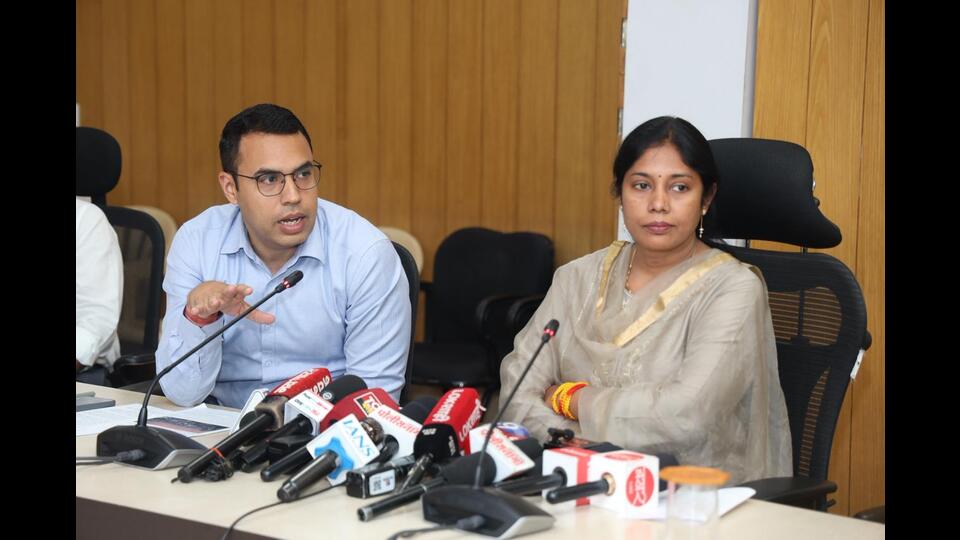
Announcing the launch during a press conference at the PMC headquarters was mayor Manjusha Nagpure. Also present on the occasion were additional commissioner Prithviraj B P and environment officer Kishori Shinde.
About the initiative, Prithviraj B P said that construction activity is a significant contributor to particulate pollution in urban areas. He noted that the Maharashtra Pollution Control Board (MPCB) has issued directives to civic bodies, asking them to take concrete steps to reduce pollution caused by construction activities. “Considering the contribution of construction activity to air pollution, the MPCB has directed the PMC to initiate measures to mitigate the impact. In consultation with various agencies and NGOs, the PMC has been working on multiple efforts. As part of these initiatives, we have developed this clean air dashboard,” he said.
Under the new system, air quality sensors will be installed at construction sites spread over 5,000 square metres and above. According to PMC records, there are at least 350 such large construction sites across Pune. So far, sensors have been installed at 153 of these locations. Once installed, the sensors continuously monitor air quality parameters at the specific site. If pollution levels exceed permissible limits, the system automatically generates an alert via email. These alerts are sent to PMC officials, particularly the environment department, as well as to the concerned developer.
“If the developer does not take immediate corrective measures to bring down pollution levels, the PMC will initiate action against the concerned developer,” an official said, indicating that non-compliance could invite penalties or further regulatory steps.
Shinde said that the project is being implemented with the support of the World Resources Institute (WRI). She explained that the sensors will monitor multiple parameters that significantly contribute to air pollution, including particulate matter (PM) 2.5, PM 10 and nitrogen oxides, among others.
Each sensor unit costs approximately ₹60,000 to ₹70,000. The PMC has shortlisted seven manufacturers for supplying the devices. These manufacturers have calibrated their instruments at the Indian Institute of Tropical Meteorology (IITM), Pune, to ensure accuracy and standardisation of data.
Shinde added that the PMC is open to considering more manufacturers, provided their instruments are properly calibrated and meet the required technical standards. “If more applications are received from manufacturers, we are ready to assist them,” she said.


