
 E-Paper



PMC to survey 60 km of city roads amid mounting traffic chaos and public anger
The initiative, led by Municipal Commissioner Naval Kishore Ram, aims to identify and eliminate key bottlenecks that cripple daily commuting

 Prefer HTon Google


In response to growing traffic congestion and public frustration, the Pune Municipal Corporation (PMC) has launched a detailed survey of 60 kilometres of the city’s most clogged roads. The initiative, led by Municipal Commissioner Naval Kishore Ram, aims to identify and eliminate key bottlenecks that cripple daily commuting.
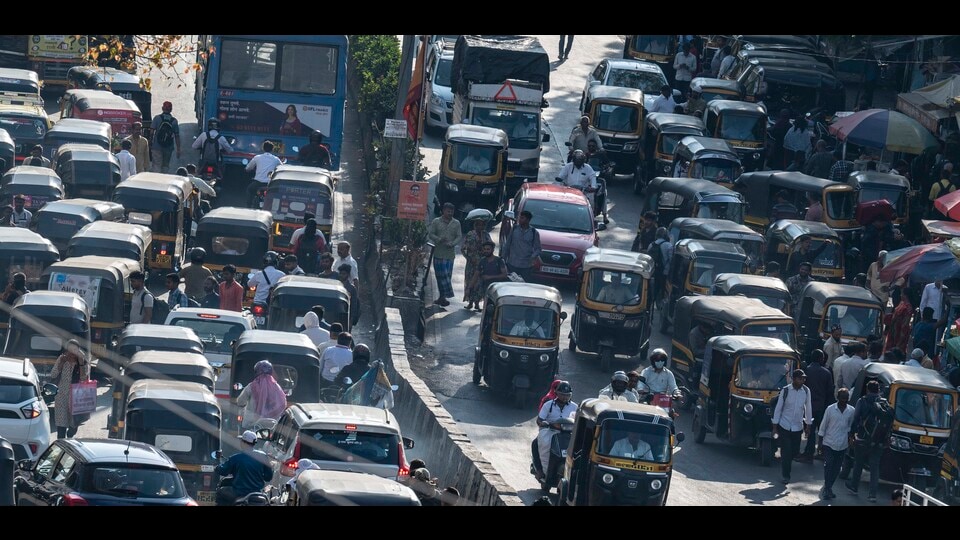
A joint task force comprising traffic police, roadworks, encroachment removal teams, drainage departments, and ward offices has been formed to implement immediate, low-cost interventions across 32 major roads, which together handle over 85% of Pune’s daily traffic.
Commissioner Ram has directed officials to take swift action by removing roadside encroachments, synchronising traffic signals, cracking down on illegal parking, and clearing electric poles and feeder pillars obstructing traffic flow. “These are low-cost measures that can yield immediate results,” he said.
In parallel, a broader 208-km road survey will assess the extent of potholes, broken surfaces, clogged intersections, missing dividers, and hazardous crossings. The civic body has four days to complete the survey and submit actionable recommendations.
This urgency follows a February 2025 ruling by the Bombay High Court, which held PMC legally accountable under Section 63(18) of the Maharashtra Municipal Corporations Act, 1949, for ensuring that roads remain safe and usable. The court linked this responsibility directly to citizens’ right to life under Article 21 of the Constitution.
Civil rights activist Qaneez Sukhrani said the PMC is under both legal and moral obligation to implement the recommendations of the Standing Technical Advisory Committee (STAC) and the Road Development and Road Maintenance Committee (RDRMC).
“Despite judicial oversight and repeated assurances, road conditions continue to deteriorate. Potholes are left unattended for weeks, and quick-fix repairs often fail within days, making roads even more dangerous,” she said.
Activists allege that photographic evidence reveals poor-quality repairs and substandard materials being used. Instructions issued during the fifth RDRMC meeting have reportedly gone unheeded, and a lack of uniform technical guidelines for field engineers has led to inconsistent and unsafe road work.
Activist Shashikant Mehendale said, “It is shocking to see influential people occupying roads through hawker stalls, office setups on footpaths, and haphazard parking. Faulty planning has crippled traffic. The commissioner’s directive is a step in the right direction, but it must lead to real change, not just another report.”
Pune currently ranks fourth in the country for worst traffic congestion. According to civic data, travelling just 10 km during peak hours can take nearly an hour. With long-term infrastructure projects like the ‘missing links’ road network still years from completion, activists say the PMC must prioritise practical, short-term solutions.
Citizen forums have repeatedly pointed to a gap between PMC’s promises and actual on-ground conditions. Arterial roads remain potholed, encroachments are rarely cleared, and repair quality is often subpar. Residents also claim that field staff reports frequently misrepresent the true condition of roads.
“The initiative is welcome, but its success depends on execution, transparency and citizen participation. The next few days will be crucial as survey results come in. For Pune’s weary commuters, the question is: will this be a turning point, or just another pothole-filled promise?” asked Jaymala Dhankikar, an activist from NIBM Annexe.


