On World Bicycle Day, Pune city – which was once known for its sheer number of bicycle users – now has only a clutch of people using them. Not only that, the Pune Municipal Corporation’s (PMC’s) ambitious plan to reintroduce bicycles as an alternative to two-wheelers and four-wheelers has ground to a halt as well.
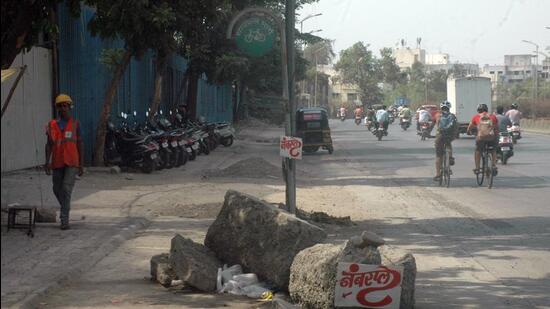
The Pune cycle plan was initiated back in 2016 only to be launched as a comprehensive bicycle master plan, approved by the general body of the PMC in December 2017. A policy for public bicycle sharing was approved, and a citywide network of bicycle tracks and lanes was planned. The urban cycling design guidelines were also approved as part of the cycle plan but none of it has been implemented till date.
Narendra Salunkhe, who then helmed the Pune comprehensive bicycle plan department and has since retired, said, “I am still looking after the cycle club for the purpose of spreading awareness but I am unaware of the status of the bicycle plan.”
A now defunct page of the PMC’s comprehensive bicycle plan department reads, “Among the responsibilities of the Pune comprehensive bicycle plan department are implementing the cycle plan; preparing the budget; coordinating with various departments, ward offices, other stakeholders and external sources for implementation of the budget; developing convenient infrastructure for cyclists and pedestrians, and involving them in the monitoring and maintenance of infrastructure; encouraging citizens to use bicycles as means of transport and increasing the number of bicycle users; and promoting the use of bicycles over other automatic vehicles.”
Salunkhe recalled, “During my time, we had signed memorandums of understanding (MoUs) with various vendors where we had close to 4,000 bicycles and had marked about 800 bicycle parking locations across the city.”
{{/usCountry}}Salunkhe recalled, “During my time, we had signed memorandums of understanding (MoUs) with various vendors where we had close to 4,000 bicycles and had marked about 800 bicycle parking locations across the city.”
{{/usCountry}}Meanwhile, environmentalists and activists are stressing on the revival of bicycles to save the city from pollution. Vehicular emissions are a major source of air pollution in Pune, especially particulate matter (PM) pollution. According to a recent emission inventory by IITM released in 2021, PM2.5 emissions have increased by 70% in the last seven years, and there has been a 61% increase in PM10 emissions during the same period. Shweta of NGO Parisar, said, “The bicycle plays a very important role in reducing air pollution in our cities, and Pune being a nonattainment city, where pollution levels are higher than the national standards, must start looking at cycling from an air quality management perspective. While the air action plan speaks of making cycle tracks and implementing the Pune bicycle plan of 2016, actual implementation leaves a lot to be desired.”
NGOs Parisar and Save Pune Traffic Movement (SPTM) conducted an experiment to find out how bicycles fare as a mode of transport when compared to cars. Simultaneous trips spanning around 100 km across the city were made by cars and bicycles during peak hours on three days to find out how bicycles fared when compared to cars. It was found that on an average, a bicycle needed just 45 seconds to one minute more than a car to travel a distance of 1 km. So if one’s commute is 6 km, a car doesn’t save one more than five to six minutes as compared to a bicycle.
Avid bicycle enthusiasts like Abhijeet Kupate, an IT professional who has been commuting by bicycle for more than five years to encourage people to use bicycles for their daily commute, said, “Cycle to work is a mission to promote the use of bicycles for commuting. Being a bicycle enthusiast, I promote the use of bicycles in all ways possible through blogs, vlogs and community workshops. There is a lack of utilisation of cycling tracks and roads by people. Daily commuters need to leverage this facility. The biggest challenge is the lack of respect towards fellow cyclists by car and motor vehicle drivers. Additionally, people on a daily basis do not follow traffic rules which is extremely dangerous.”