
 E-Paper



Pune gets smart traffic system on 30 signals
Pune Smart City Development Corporation Limited has completed the first phase of ATMS by installing 30 signals with traffic system in the city

 Prefer HTon Google


PUNE: The Pune Smart City Development Corporation Limited (PSCDCL) has completed the first phase of its much talked about ‘Adaptive Traffic Management System’ or ATMS; installing the system on 30 signals in the city so as to regulate traffic effectively and reduce travel time.
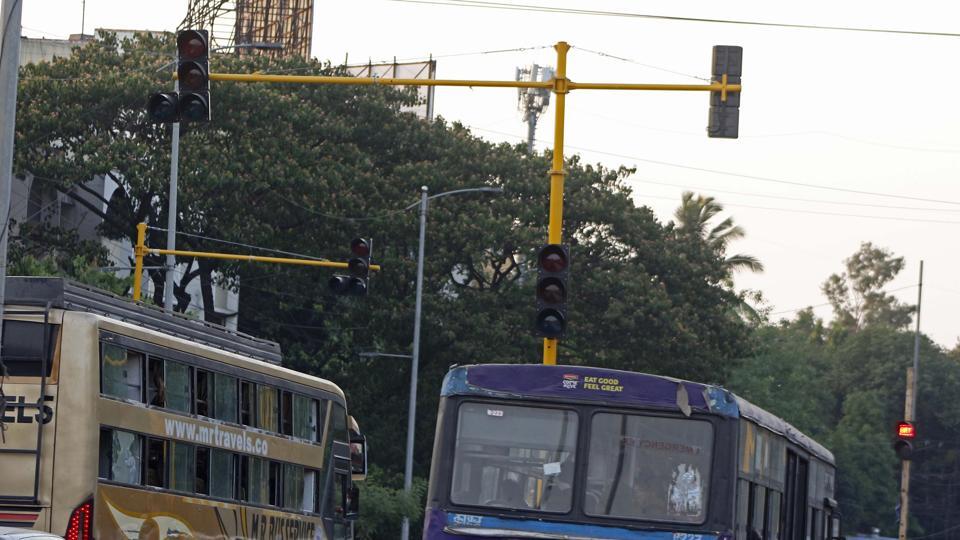
In 2017, the then chief executive officer (CEO) of PSCDCL, Kunal Kumar, had proposed ATMS for the Pune and Pimpri-Chinchwad municipal corporations at a cost of Rs320 crores. However, it did not work out and PSCDCL then decided to introduce the system in Pune city alone. After almost six years, PSCDCL has finally completed the first phase covering 30 signals. The second and third (last) phases of the project will cover 46 and 49 signals, respectively. PSCDCL has set a deadline of the end of June to complete the entire project, the estimated cost of which is Rs171 crores.
Dinesh Girkar of PSCDCL said, “The tender was sanctioned in 2018. Due to the Covid pandemic, actual work started in November 2022. We have installed a system on 30 major and busy signals in Pune city. The system has operations on Karve Road, Tilak Road, Swargate and Fatima Nagar areas. It helps to reduce traffic congestion on this route.”
“The system analyses the traffic data. There is a provision for collection of traffic violation data but it will operate after discussion with the traffic police as the latter is an enforcement agency. We have also installed the system on 12 signals as part of the second phase. However, it takes a little time to adjust, collect traffic data and adjust the signal timing. The project will be completed as per the set deadline,” Girkar said.
According to Girkar, ATMS is the most advanced traffic-monitoring system directly measuring travel time using non-intrusive roadside technology. It provides an interactive and real-time speed map along with enhanced origin and destination studies used for alternative route planning and congestion mitigation. The project is aimed at improving travel time by reducing stoppage time and optimising time cycles to ensure free flow. ATMS will provide a green corridor for emergency vehicles, using BlueTOAD as one of its key components, Girkar said.
ATMS is based on feedback which counts the number of vehicles (demand) and the supply resources (green cycle time for availability of road). It decides the best suited model based on the real time demand at a location, real time situation in an area/corridor, and historical data based on day and time.
Vijay Magar, deputy police commissioner (traffic), said, “The system will help us to decongest traffic. It is too early to say that there will be no need for traffic police at the junction. It will take time to comment on the performance of the system after its execution.”
Shrinivas Kandul, chief superintendent of the electrical department of the PMC, said, “We are supporting PSCDCL to install systems in different parts of the city. There are 250 signals in Pune city which are operated and maintained by the PMC. At present, PSCDCL has covered only the main roads. If a system is introduced across the city, it will be more beneficial in solving traffic problems of the entire city.”
Operational signals
Karve Putala, Mrityunjay Temple, Karishma Chowk, Paud Phata, Khandoji Baba Chowk and Shelar Mama Chowk on Karve Road; Alka Talkies Chowk, S P Chowk, Jedhe Chowk and Vega Centre on Tilak Road; Seven Loves Chowk and Fatima Nagar Chowk on Shankarsheth Road; and Sopan Baug on Solapur Road.


