
 E-Paper



Pune start-up pioneers new cancer treatment
That experience exposed a stark contrast between academic theory and the harsh reality of cancer. It also deepened their understanding of the disease

 Prefer HTon Google


Swastika Paul and Abhishek Dutta began their journey as PhD researchers studying cancer stem cells and the role of exosomes in tumour progression. Their work often took them to hospital operation theatres, where they collected tumour samples amidst questions from patients’ families curious about the purpose of their research. This close encounter with cancer’s realities sparked a mission that would soon move beyond the lab and into real-world therapy development.
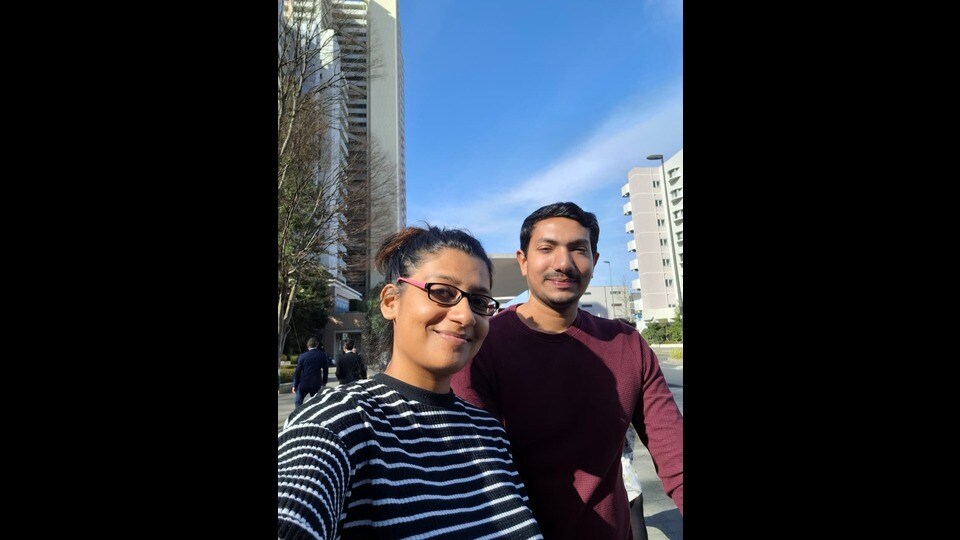
“Our PhD research was focused on relapse-causing cancer stem cells and the role of exosomes in tumour progression. For this, we’d have to go to hospitals and wait outside the OT to collect the tumour samples for our study,” Swastika says.
That experience exposed a stark contrast between academic theory and the harsh reality of cancer. It also deepened their understanding of the disease. “Patients undergo chemotherapy or radiation to destroy tumour cells,” Swastika explains. “But these treatments often damage vital organs and still fail to eliminate cancer stem cells, which are responsible for recurrence.”
Then the pandemic hit. “COVID gave us the time and clarity to reflect,” she says. “We realised our research would likely end up as just another published paper. But we had seen the anguish of patients and their families—and we wanted to do something more meaningful.”
Swastika left her PhD in the final year and, along with her husband Abhishek, began exploring how exosomes could be used to help cancer patients. In 2021, they registered their start-up, Exsure, in Odisha.
“There’s extensive research on the role of exosomes in oncology, dermatology, and other areas. But in cancer treatment, patients mostly undergo chemotherapy or radiation, which harms healthy organs too. We wondered—could exosomes change this?”
At the time, both were 34-year-old PhD students. When they heard about a biotech incubator in Bhubaneswar, they moved there to build a proof of concept (PoC). Their goal evolved from studying relapse-causing stem cells to using exosomes for targeted drug delivery—minimising damage to healthy organs while preventing recurrence.
How does ‘Exsure’ help fight cancer?
“Exosomes are nano-sized vesicles of biological origin—unlike synthetic nanoparticles, they come from the body itself,” Swastika explains. “They act as messengers. When cancer develops, exosomes transmit signals that promote tumour growth. We aim to reverse this by using exosomes as drug delivery vehicles.”
Here’s how it works: Exosomes are extracted from the body, loaded with a chemotherapy drug, and sent back to specifically target cancer cells. “Normally, cells reject foreign substances,” Swastika says. “But since exosomes are nano-sized and come from the body, they can bypass the cell’s defence mechanisms. They carry the drug straight into the tumour while leaving healthy organs untouched.”
The challenge was complex: how to isolate exosomes, load them with drugs, prevent rejection, and ensure they target only the tumour. “In the beginning, there were many errors,” Swastika admits. “We had to design the exosome source, control the conversion rate, and address immune rejection.” After a year of rigorous trial and error, they finally established a Standard Operating Procedure (SOP).
“Our in-vitro and in-vivo data show that our platform, ExoDS, has no off-target effects,” she says. “Unlike conventional chemotherapy, it doesn’t harm healthy cells or organs—it only kills tumour cells through site-specific drug delivery.”
Animal testing results are promising, with over 90% efficacy and no damage to vital organs. Their studies also show that ExoDS significantly targets cancer stem cells, which are responsible for recurrence. Swastika adds, “While some treatments use liposomes for drug delivery, those often come with toxicity issues. Our exosome-based approach avoids that.”
The duo credits bio-incubators in Bhubaneswar and Mandi for mentorship and helping secure grants.
International recognition
In 2024, Exsure was selected for the Innovation Accelerator Program at the Okinawa Institute of Science and Technology (OIST) in Japan. There, they explored the regulatory landscape for clinical trials and assessed the product-market fit. They also established a Japanese subsidiary of Exsure.
Back in India, they relocated to Pune to set up a Research & Development unit at NCL’s Venture Center. “Bhubaneswar remains our head office,” Swastika says, “but we moved to Pune for its rich biotech ecosystem. Venture Center houses several biotherapy start-ups and has a cleanroom facility that supports our work.”
They are currently mapping out their regulatory pathway to begin clinical trials in India. Manufacturing is also on the horizon. “Some founders advised us to initially rent a Good Manufacturing Practice (GMP) facility for clinical trials, rather than invest in our own. We’re considering that approach.”
Funding journey
Exsure began in November 2021 with a ₹48.22 lakh BIG BIRAC grant and a ₹3.5 lakh grant from VIGNAN TBI. After establishing their PoC, they secured ₹25 lakh from the HDFC Parivartan Social Innovation Smartup Program, in collaboration with IIT Mandi Catalyst, to initiate non-clinical trials using mice models. They also received ₹10 lakh from the Startup India Seed Fund via AIC Nalanda, Bhubaneswar.
Marketing plans
Exsure has three plans for marketing. Says Swastika, “As of now, we have a patent for our EXODS granted in India. We are planning to expand our patent into South Africa and Japan. Plan A is to stick to our product ExoDS till Phase 1 and Phase 2 trials in India. Plan B is to license our technology to a pharma company. Big pharma can swallow your small start-up, and many such companies are doing that, moving on to their next technology. As the headache of marketing and finance becomes that of big pharma.
If we see the results, we will be able to raise funds and take it to the end, entering the market on our own. And Plan C is that, in case we cannot market it ourselves, then license it out at a better price.
Future plans
Swastika says, “Currently, we are in the non-clinical trial phase. By December, we expect to complete this and move into toxicology studies. Within six months, we’ll have the data ready to submit to DCGI to begin Phase 1 clinical trials. All of this will happen at Venture Center, Pune.”
For patients and their families who once questioned their presence outside hospital OTs, Exsure’s journey is the answer: this work is no longer just for journals, it’s for saving lives.


