Pune’s air quality continues to deteriorate, with fine particulate matter (PM2.5) and nitrogen dioxide (NO₂) levels showing a steady rise over the past five years, particularly in traffic-heavy areas such as Shivajinagar and Lohegaon, according to the Pune Municipal Corporation’s (PMC) Environmental Status Report (ESR) 2025-26 presented before the General Body on Wednesday.
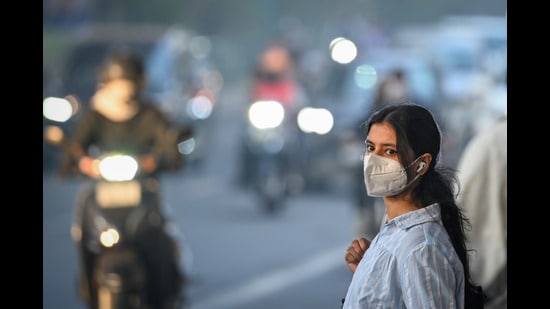
The report identifies vehicular emissions, fuel combustion and rapid urbanisation as the primary drivers of the worsening air quality. Shivajinagar and Lohegaon consistently recorded annual PM2.5 levels above the National Ambient Air Quality Standards (NAAQS) limit of 40 µg/m³, while Katraj remained close to the threshold. PM2.5 levels at Savitribai Phule Pune University briefly exceeded the standard in 2024 before improving in 2025, while Pashan largely remained within permissible limits.
A similar trend was observed for NO₂, a pollutant closely linked to vehicle exhaust. Shivajinagar exceeded the annual standard in recent years and Lohegaon remained close to the limit, whereas Pashan, Katraj and the SPPU campus largely stayed within permissible levels. The report notes that rising NO₂ concentrations mirror Pune’s growing vehicle population.
The ESR warns that PM2.5 poses one of the biggest public health risks because the microscopic particles penetrate deep into the lungs and bloodstream, increasing the risk of asthma, chronic respiratory diseases, heart ailments, stroke and premature deaths. Higher NO₂ levels aggravate respiratory illnesses and contribute to the formation of secondary particulate matter and ground-level ozone.
{{/usCountry}}The ESR warns that PM2.5 poses one of the biggest public health risks because the microscopic particles penetrate deep into the lungs and bloodstream, increasing the risk of asthma, chronic respiratory diseases, heart ailments, stroke and premature deaths. Higher NO₂ levels aggravate respiratory illnesses and contribute to the formation of secondary particulate matter and ground-level ozone.
{{/usCountry}}While annual ozone and carbon monoxide levels remained within prescribed limits across all five monitoring stations, the report cautions that short-term ozone spikes during hot weather can trigger breathing problems and damage vegetation.
To curb pollution, the PMC has proposed stricter dust-control norms at construction sites, a ban on open waste burning, mandatory use of cleaner fuels by commercial establishments and greater adoption of electric mobility. The report highlights that registrations of pure electric vehicles rose by 62% during the year, while PMPML’s electric bus fleet expanded to 535 buses.
The findings come against the backdrop of a broader decline in Pune’s air quality. The previous Environmental Status Report showed the number of “good air” days in the city had dropped from 79 in 2023-24 to 52 in 2024-25, while “moderate” air quality days increased from 140 to 174.
“The Environmental Status Report serves as a roadmap for sustainable urban development. While the city has made significant progress in electric mobility and environmental management, the rising trend in PM2.5 and NO₂ levels underlines the need for stronger emission control, cleaner transport and continued enforcement of pollution mitigation measures,” a senior PMC official said.