
 E-Paper



Researchers observed the most robust greening trend over the Western Ghats
The study was led by the scientists from the Indian Institute of Tropical Meteorology (IITM) Pune, Ministry of Earth Sciences, and supported by the Institute of Environment and Sustainable Development at Banaras Hindu University, Aryabhatta Research Institute of Observational Sciences


Pune
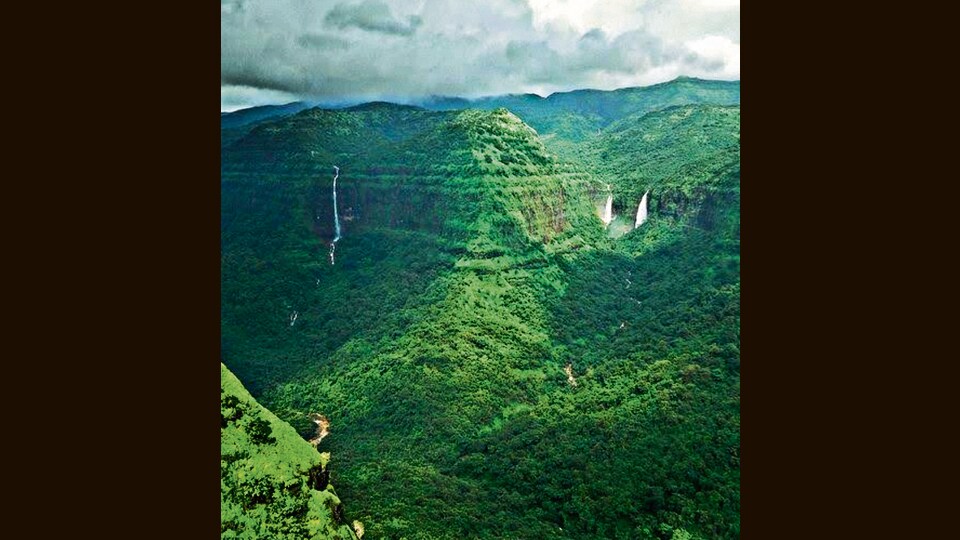
Western Ghats has experienced the most robust greening trend in the last two decades compared to the other regions in the country, a study about ‘carbon sequestration variability in different ecosystems of India’ has revealed.
The rising temperature trend in the Western Ghats may have a positive impact on vegetation in the region, according to researchers who contributed in the study.
The study was led by the scientists from the Indian Institute of Tropical Meteorology (IITM) Pune, Ministry of Earth Sciences, and supported by the Institute of Environment and Sustainable Development at Banaras Hindu University, Aryabhatta Research Institute of Observational Sciences, Nainital and Faculty of Science, University of Technology Sydney.
Published in Nature Springer, an internationally acclaimed journal on August 25, researchers participated in the study included Smrati Gupta, Pramit Kumar Deb Burman, Yogesh K Tiwari, Umesh Chandra Dumka, Nikul Kumari, Ankur Srivastava, and Akhilesh S. Raghubanshi have participated in the study.
Speaking about the possible cause of vegetation increase in Western Ghats, Smrati Gupta, scientist from IITM said that vegetation growth and primary productivity in a biosphere depend on the region’s climatic conditions, like temperature, moisture availability, etc.
“The data shows an increasing trend in temperature in the Western Ghat area, which may positively impact the green cover,” Gupta said.
“We need a surface observation network at different climatic zones over India to study further. IITM Pune has already established carbon flux monitoring at a few locations in India (IITM Metflux project). Also, CO2 concentration observations have been underway at Sinhagad mountains (outside Pune) since 2009,” said Yogesh Tiwari, senior scientist at IITM, and lead author of the research paper.
According to Tiwari, a 72-meter tower was recently installed to monitor the CO2 and other greenhouse gas concentrations in Silkheda, Madhya Pradesh, which is part of Central India.
“This is under the IITM Atmospheric Research Testbed (ART) project. All these observations will be very crucial for understanding future carbon sequestration trends in India,” said Tiwari.
The study used various scientific datasets, such as Gross Primary Productivity (GPP) derived from an AI-based technique and satellite-derived vegetation indices like the Normalised Vegetation Index (NDVI), Enhanced Vegetation Index (EVI), and Leaf Area Index (LAI) during 2001-2019. GPP denotes the rate of photosynthetic activity on a unit area, providing an idea about CO2 fixation by the terrestrial biosphere. Vegetation indices are often studied as vegetation activity indicators of the terrestrial biosphere and, hence, proxies for GPP.
Four areas extending over 0.5°×0.5° latitude x longitude from different climatic zones over India with distinct characteristic biome types were selected for this study. These zones included central India, a semiarid region in the core monsoon zone, northeast India region, deciduous forest of Northeast India, and western Ghats, which is rain forest- region receiving southwest monsoon heavy rainfall, and western himalayan region of north India.
While all the pockets are experiencing an increasing trend in vegetation, the trend in Western Ghat region is significantly higher.
Is temperature rise beneficial for vegetation increase?
While there are lot of debate over global warming and its regional negative or positive impact on the environment, this study revealed that temperature rise has impacted the Western Ghat positively.
Speaking about this, Smrati Gupta who participated in the study said some studies highlighted that an increase in temperature to some extent is helpful as it boosts the photosynthesis process among trees and plants. There are numerous studies globally about the green cover increase in areas where temperature rise has been experienced in limited amounts.
However, conditions like heatwaves, where the temperature is recorded beyond a threshold limit, affect the vegetation adversely. In the presence of excessive heat, the photosynthesis capacity of trees and plants is reduced, and it could decrease carbon uptake in those areas, said Yogesh Tiwari.”


