Pune:
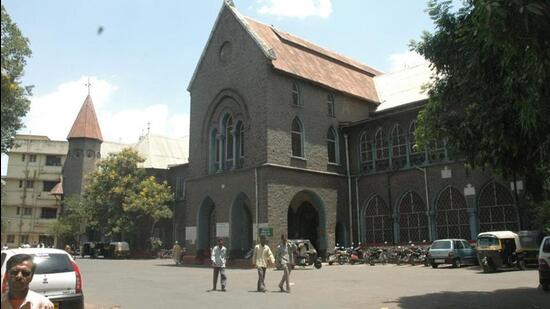
Doctors at B J Medical College (BJMC) and Sassoon General Hospital (SGH) have successfully performed a complex spine surgery using the hospital’s newly-installed, O-Arm 3D imaging and navigation system, enabling them to stabilise a severely fractured spine with high precision free-of-cost; officials said.
The surgery was performed on a 42-year-old woman, originally from Jamshedpur and currently working as a labourer in Pune. She was admitted after falling from a height; and sustaining multiple injuries, including fractures to her lower spine, thigh bone, and both heels. While doctors first operated on her heel and femur fractures, treating the unstable spinal injury posed the biggest challenge, read a statement released on Wednesday.
Doctors found that the fourth lumbar vertebra (L4) had suffered a severe fracture and the pedicle or bony bridge used to anchor spinal implants was also broken. Additionally, the injury had placed significant pressure on the spinal nerves, leaving the woman with severe back pain, weakness in both legs, and an inability to walk.
The surgical team used the hospital’s newly-acquired, O-Arm surgical imaging system, which provides real-time 3D images of the spine during surgery and works with a computer-guided navigation system similar to GPS. The technology enabled the surgeons to place the spinal screws with millimetre-level accuracy despite the fractured pedicle – a procedure that would have been extremely difficult using conventional methods.
{{/usCountry}}The surgical team used the hospital’s newly-acquired, O-Arm surgical imaging system, which provides real-time 3D images of the spine during surgery and works with a computer-guided navigation system similar to GPS. The technology enabled the surgeons to place the spinal screws with millimetre-level accuracy despite the fractured pedicle – a procedure that would have been extremely difficult using conventional methods.
{{/usCountry}}The surgery was performed on June 16 under the guidance of dean Dr Eknath Pawar by Dr Shrinivas Shintre, professor and head of the department of orthopaedics; and spine surgeon Dr Mohit Mutha; along with resident doctor Dr Aditya Kumar. The anaesthesia team was led by Dr Surekha Shinde, head of the department of anaesthesia.
Dr Mutha said, “The fractured pedicle made screw placement extremely challenging. The O-Arm technology allowed us to visualise the patient’s anatomy in real time and accurately position the implants while protecting the nerves. This significantly improved the safety and precision of the surgery.”
Hospital officials said that the patient is recovering well. Her back pain has subsided completely, she has started walking with assistance, is undergoing physiotherapy, and will be discharged soon. The entire treatment was provided free-of-cost at the government-run hospital.
Doctors said that the O-Arm system marks a major advancement in spine surgery at SGH. Besides spinal fractures, the technology can be used for scoliosis correction, spinal fusion, tumour surgeries and revision procedures. It also allows smaller incisions, reduces blood loss, lowers radiation exposure, and helps patients recover faster.
Dr Shintre said, “The availability of this advanced technology in a government hospital ensures that patients from economically weaker sections can access world-class spine surgery without the financial burden associated with private hospitals.”
Hospital authorities have appealed to patients with spinal disorders to visit the orthopaedics OPD (number 35) on Thursdays between 9 am and 1 pm for evaluation and treatment using the new technology.