
 E-Paper



Startup Mantra: Transforming waste to save environment
Medha Tadpatrikar and Shirish Phadtare founded Rudra Blue Planet to convert waste plastic into fuel, inspired by a deer that died from ingesting plastic.

 Prefer HTon Google


While almost everyone will berate the use of plastic and how it damages the environment, not many will get down to doing something about it. But for Medha Tadpatrikar and Shirish Phadtare, founders of Rudra Blue Planet Environmental Solutions India Limited, who while on a safari holiday, found a deer that died because it had ingested plastic bags, the problem of plastic stayed in their heads for years, till they found a solution for it.
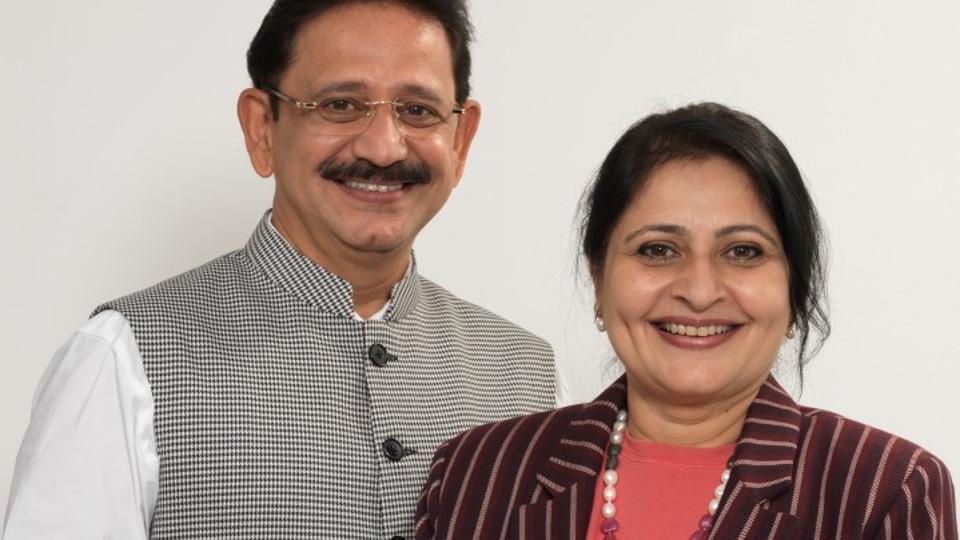
Says Medha, “The sight of those dead deer haunted us. And that became the topic of discussion whenever we met. After some time we realised just venting out about the plastic problem was going to do nothing, so we decided to look for a solution.”
Discovery of a solution
Medha and her co-founder Shirish began hunting for a solution assuming that they would fail. Says Medha, “We both do not have an engineering background but I think it was the curiosity, determination and eagerness to find a solution that made us ask experts. Our common phrase in those days was ‘Can you please explain this to us?’ They chased some “wild’ ideas with no success. Says Medha, “One day we were at a party and saw ice cubes melting in the glass with some drink. We realised that water turns to ice when it’s cooled and melts to water when heated.” They thought why not apply this same principle to plastic? “Plastic is made from crude oil so can we turn it back to its original state if we heated it? This line of thinking was the basis of our experimentation from thereon.
“The first place was the kitchen. We heated some plastic bags in a pan but then it got stuck. Then we thought why not try the pressure cooker? But using a pressure cooker to convert plastic to fuel just ended in the blowing up of several cookers because of the pressure build up inside.
But burning up cookers gave them an insight. “We noticed that whenever we heated the plastic bags in a cooker, it would let out some gas. That gas had a certain kind of smell but it burned. Also, we saw that we had some oil-like substance floating in the water. We had that ‘oil’ tested and it turned out to be usable fuel!”
Buoyed by this discovery, the duo realised that they needed more than just kitchen experiments. “So we built our first machine that managed to turn waste plastic into fuel.” However, their joy was short-lived.
“A friend pointed out that while we were managing to convert plastic to fuel we were polluting the atmosphere by emitting gas.”
Money matters
Realising that they were creating another problem to solve and that they needed to invest more time and money into this venture. “We both went back to our business (they both were partners of a market research firm) and for the next two years saved up money to once again invest in our bid to solve the problem. In the meantime, we also studied the characteristics of the gas that was being emitted whilst converting plastic to fuel.”
With ₹30 lakh that the duo had saved up, they developed a second machine in 2013. “This machine was capable of using the gas that was being emitted to fuel itself. The process is quite simple really. The machine reverses the plastic production process where the Thermo Catalytic Depolymerisation cracks the long chains of polymer to produce usable fuel. The exact ratio and even the characteristics of the fuel depend on the type of plastic received.”
The cost of building this second machine was ₹5 crore which was funded by their savings as well as the mortgage they took on their house. But in 2018 we got an equity investor Blue Planet of Singapore.
They have a Non-Disclosure Agreement (NDA) and so cannot reveal the amount. “Today we can convert a ton of plastic to give 600 to 650 litres of usable fuel. We also get 20-25% synthetic gas that we reuse in the process and 5-10% moisture. “There is some residual char that can be used as a road filler with bitumen. This fuel can be used directly for burning in kerosene stoves, boilers, furnaces and certain types of gensets.”
To the market
What started in 2009 with a desire to do something about plastic resulted in a machine that was capable of solving the problem in 2013. But now that they had a solution that had this potential, how would they get it to the market? Says Medha, “Our solution is for the traditional waste plastic such as bags, wrappers, packaging material and so on. This is typically waste and has no value. But now we could use this end-of-life plastic waste to create a valuable product.”
Since Medha uses waste plastic to convert to fuel her raw material is the waste. “But getting segregated plastic is the main challenge. While some people give us their waste, we have to incur costs for collecting it and this costs us about ₹13 to ₹15 per kg. And we sell our fuel at ₹50 per litre Rudra Blue Planet has two business models; one where they sell their machine and the other where they sell their services.”
“So far we have sold nine machines and provide our services to multinational corporations (MNCs). However, the biggest customer is the municipal corporation which remains a challenge as they do not float tenders. However, we are making small inroads to offer them our service. After all the city is burdened with 160 tons of waste plastic every single day!”
Medha and Shirish look at competition as almost a partner in their attempt to clean up the plastic. Says Medha, “We are happy to see more and more companies come up with similar technology like ours. The plastic problem is too huge for any one company to solve. We need more such companies to be active in this space.”
Future plans
“We working on a few innovations, that include a plug-and-play model. Also, we have along with Keshav Sita Trust established a first-of-kind “integrated waste management initiative called Project Vasudha, in one of the villages. Under project Vasudha our plastic-to-fuel TCD plant along with the biogas plant has been installed. We want to create smart villages. Also, we are working on to take this technology worldwide.”
Hopefully, we won’t have any more deer deaths due to plastic.


