
 E-Paper



Startup Mantra: VR tech to enhance education sector
Pune-based immersive technology solutions startup FirebirdVR is setting up VR libraries in colleges to enable access for students to higher education at affordable cost

 Prefer HTon Google


Imagine college or university teachers using virtual reality (VR) headsets to explain to students the difficult concepts of most dreaded subjects. Soon, this imagination would turn into a ‘reality’ as Pune-based immersive technology solutions startup FirebirdVR is setting up VR libraries in colleges around Pune to enable access for students to higher education at affordable cost.
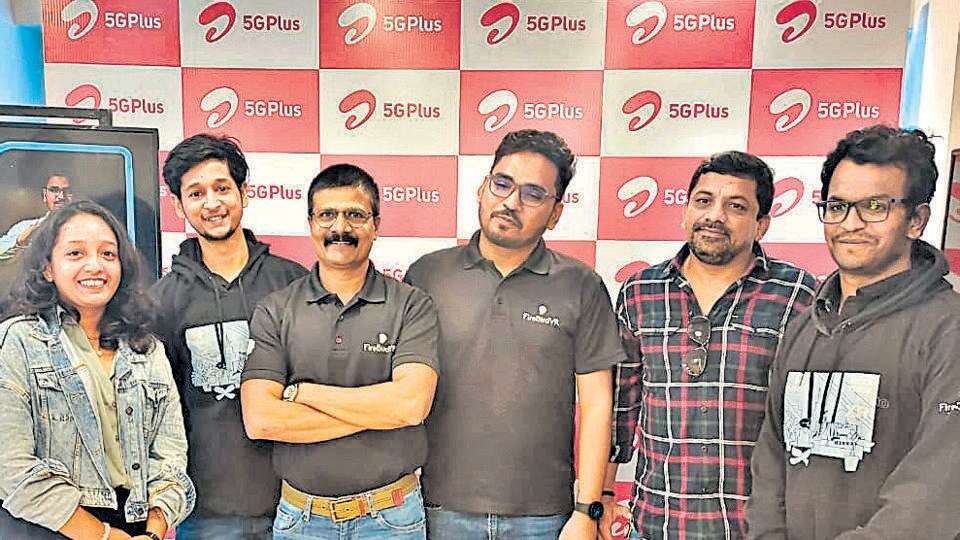
FirebirdVR CEO Founder Akshay Rathod and co-founder COO Yogesh Surwase say that VR technology will not just disrupt education sector, but also the retail and banking sectors in the next few years. The startup is also collaborating with prominent retail brands to introduce a virtual shopping experience for their customers.
Initial steps
Hailing from a small village near Latur, Rathod got exposure to virtual reality (VR) and augmented reality (AR) technology during his engineering college days in 2015 at the Vidyalankar Institute of Technology, Mumbai. He says, “As a student, I always explored the upcoming technologies and then I got to know about a cardboard VR viewer introduced at the Google I/O 2014 developers conference. VR technology was new and not easily accessible, but it was a revolutionary concept as anyone could create a VR viewer and experience VR. Inspired by this, I made a Google Cardboard Viewer and personally experienc.ed VR and it was an eye-opener for me. I realised that this would be the next revolution in spatial computing.”
“We created Made in India VR viewers based on the Google template and sold around 400 sets in the Mumbai market including online and offline mobile shops. As a student, it was a success for me, but it was not my innovation. So, I started moving towards software development around AR-VR. I also started conducting workshops for ARVR in Mumbai colleges which further increased my interest in this technology. Being a capital-intensive business, I decided to shut down MyMadBox as I could not see much growth in it. That was my first business experience and I was left with only ₹ 9,000 profit,” recalls Rathod.
Serendipity
Rathod worked with a lot of people from the ARVR technology industry and was recommended to the Boston Consulting Group by one of his acquaintances. With BCG, Rathod got to know various business aspects and how Mumbai works.
He said, “We were keen on spreading awareness about VR technology and building our company along with people. Since I had no prior business experience, working with BCG helped me a lot. Although we had no idea then how ARVR would turn out on a larger scale, we decided to develop anything that came our way. Education was close to my heart as I personally experienced the challenges of pursuing higher education. We were searching for the right time and till then building our technical expertise around it.”
Team building
Rathod met his co-founder Yogesh Surwase in 2018 through a client. An alumnus of MITSOM, Surwase had rich experience in various industries like pharmaceutical, manufacturing, etc and had quit his job to start his own VR Gaming Zone in Pune.
Surwase says, “When I met Rathod, we discussed various topics related to VR industry and got along well. I left my job in 2016 and ran the VR gaming zone for two years, prior to joining FirebirdVR as COO. During the service years, FirebirdVR had done a lot of firsts in India like the first virtual reality (VR) fashion show in Mumbai. The technology was not evolved then and hence there were few challenges. Now the industry has grown and there is validation that it will grow further.”
Pivot
With Surwase joining the company and considering the evolving ecosystem, Rathod later decided to pivot from services to a product company.
Says Rathod, “The Indian ARVR ecosystem is yet not evolved and it was clear to me that if we want to make something sustainable, it must be a product. When we brainstormed about VR applications in the education sector, we considered several aspects including the failed attempt of Google to launch the ARVR glasses. Indian market was not ready for such products which were ahead of its time. The technology was amazing, but hardware and software support was not available. Also, we deliberately kept away from the K10 segment in education. Although VR can be exciting and entertaining to school students, it can be harmful if used for a longer duration and the eyes are not mature.”
“Another consideration was that understanding VR technology has a bit of a learning curve. So, we decided to focus on technical diploma holders, ITI and engineering students who have a bit of inclination towards technology. The tipping point came after 2019 and we started giving demonstrations to students from various parts of Maharashtra. We know that this will be a long journey for us, but we are on it. We want to make everyone’s life better around us.”
VR Libraries
The VR industry faces early challenges like lack of exposure and accessibility to hardware. Education is also a tough market to crack as a business. Considering these factors, Rathod and his team decided to launch GuruVR Library in educational institutions.
Rathod explains, “Similar to traditional libraries which provide infrastructure and access to books, GuruVR libraries will also provide VR headsets to students. The earlier strategy of offering courses on a subscription basis was not working out as educational institutes were not willing to invest in VR hardware. So, we decided to invest and develop the hardware ourselves. Now the educational institute’s management are in favour of installing our hardware on their campus as they do not have to bear additional cost. Soon we will have GuruVR libraries around Pune colleges first and then expand to other cities and states in India.”
“Our present strategy is to experiment with students in Pune since it is our operations base, and we are in touch with more than 25 colleges for collaboration and setting up GuruVR libraries. Our sole focus is to enable access for students to higher education at an affordable cost. At present, we have about 1,380 students enrolled for four years and we will be giving access and exposure to these students about AR-VR technology,” he said.
Live lectures
India has more than 3,300 engineering colleges and universities and we still we are not producing skilled engineers on a global scale, says Rathod. According to him, the problem lies in the rudimentary style of teaching wherein teachers are unable to demonstrate and students are unable to visually grasp the concepts.
Rathod states, “We are not replacing teachers. Teachers will get better tools to explain difficult topics or concepts like quantum physics by combining the power of VR and visualisation tools. If teachers can bring in simulations in VR classrooms, then students can experiment repeatedly. Similarly, for ITI students, advanced robotics is one topic where robotic arm machine procurement would cost more than eight crore rupees. Companies having costlier machines also prefer skilled candidates instead of training fresher students on those machines. VR can help simulate and visualise such topics at very low cost.”
Creator programme
For the engineering curriculum, each semester has 390 hours of content worth, which is mandated by the universities. To create this content, the FirebirdVR team is coming up with a creator program. Elaborating on this, Rathod said, “Whenever we interact with students and teachers, they come up with new ideas and hence we like to work with them to keep content relevant and in sync with the latest trends. Students also benefit by working in the AR-VR technology domain. Students get curriculum-based knowledge and value-added courses in addition. Corporates can also conduct campus interviews of potential students using VR headsets and from any location.”
Metaversity in the making…
FirebirdVR is now a 14-member strong team. Rathod along with his team has an aspiration of making GuruVR libraries as accessible as any UPI payment. Rathod says, “The real challenge today is the affordability of higher education. We want to eliminate this barrier and help students learn practically and online. We want to create a Metaversity and hopefully, we will get support from AICTE in future. We wish to onboard more than 50,000 students in the coming 1.5 years and set up GuruVR libraries in more than 50 colleges across India.”
“We have also deployed a small business team to work on XR banking but it is in stealth mode. XRetail is a major space we are working with big brands to provide AI and immersive shopping experiences to all customers. We will soon come up with hardware solutions to reduce the overall application cost. We are waiting for the Indian ecosystem for headsets and manufacturing to mature to a certain extent,” he said.


