
 E-Paper



State’s proposal to transfer Empress Garden land for judicial use faces opposition
Agri-Horticultural Society of Western India which manages Empress Botanical Garden has opposed the state’s decision to allot portion of the garden land for construction of court-related infrastructure

 Prefer HTon Google


PUNE: The Agri-Horticultural Society of Western India which manages the historic Empress Botanical Garden in Pune, has strongly opposed the state government’s decision to allot a portion of the garden land for construction of court buildings and related judicial infrastructure.
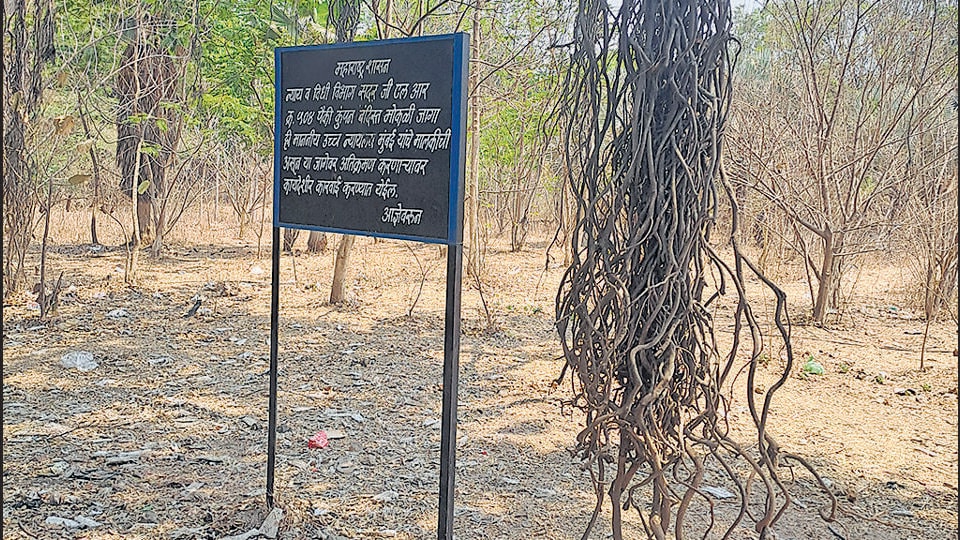
As per a government resolution (GR) issued by the revenue and forest department on March 6, 2026, nearly 4,000 square metres (approximately one acre) of land inside Empress Garden has been proposed to be transferred for judicial use. The allotment has been cleared under provisions of the Maharashtra Land Revenue Code, 1966; and norms governing the allocation of government land. According to the resolution, the land will be transferred in the name of the principal district judge, Pune; and will be strictly used for judicial purposes. Any change in land use, transfer, or commercial utilisation will require prior approval from the revenue and forest department. The transfer is aimed at strengthening court infrastructure in Pune, where the caseload has been rising steadily.
However, the proposal has drawn sharp criticism from the garden’s managing body. Addressing a press conference on Friday, society- president Pratap Pawar and honorary secretary Suresh Pingle raised environmental concerns, stating that the move will lead to the loss of nearly 100 to 150 fully grown trees.
“The society has been managing the garden since 1892, for over 130 years. With public participation, we have nurtured hundreds of old and native trees. Today, the garden is not only a green zone but also holds significant botanical importance due to its diverse species,” Pawar said.
What’s more, the area proposed to be transferred is currently being developed as a biodiversity park, Pingle informed. “The proposed land transfer and construction will adversely impact the biodiversity of the garden and result in the felling of a large number of native trees. Today, it is one acre but we fear that more land may be demanded in future,” he said.
As a result, the society has appealed to Punekars to come forward and support efforts to protect the green space. “We will communicate with the concerned authorities to oppose the proposal but past experience suggests that public participation will be crucial to create pressure on the government,” Pingle said.
Furthermore, Pawar pointed out that despite maintaining such a green space rich in biodiversity, the society does not receive financial support from the government. “Instead of appreciating efforts to conserve such spaces, this decision makes our work more difficult. The government should explore alternative locations rather than using garden land,” he said.


