
 E-Paper



Study suggests correlation between high levels of pollution and Covid-19 deaths
From 16 cities across 36 states, Pune and Mumbai were the two cities picked from Maharashtra (falling under zone 6) for the study

 Prefer HTon Google


A study involving various experts from across the country found a correlation between high levels of pollution and Covid-19 deaths. The study shows that Maharashtra has recorded the second-highest annual particulate matter 2.5 emission loads in India and has also recorded the highest number of Covid-19 related deaths which indicates a link between air pollution and Covid-19, both of which directly impact the respiratory system.
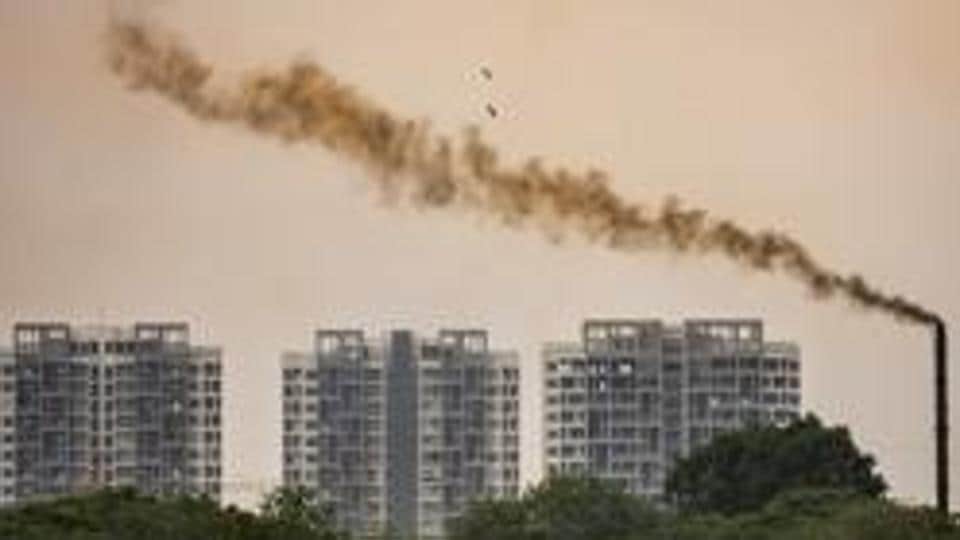
The study titled ‘Establishing a link between fine particulate matter (PM2.5) zones and Covid -19 over India based on anthropogenic emission sources and air quality data’ also provided the first evidence about how people living in highly polluted areas are vulnerable to Covid-19 infection.
It is authored by Dr Saroj Kumar Sahu, PG environment sciences and Poonam Mangaraj, PG environment sciences from Utkal University, Bhubaneswar; Dr Gufran Beig, senior scientist; Suvarna Tikle, a scientist from IITM-Pune; Bhishma Tyagi, National Institute of Technology, Rourkela and V Vinoj, IIT-Bhubaneswar.
In the study, Covid-19 cases were observed between March 2020 to November 2020, while national PM 2.5 emissions load were estimated from the base year 2019.
For the study authors divided specific areas into different hotspot zones across India. From 16 cities across 36 states, Pune and Mumbai were the two cities picked from Maharashtra (falling under zone 6) for the study. Also, Pune and Mumbai are among the Covid-19 hotspots in the country, where high air pollution from the transport and industrial sectors are having a visible relationship with a higher number of Covid-19 cases and casualties.
Dr Sahu said, “Our findings suggest a significant correlation between the district level air pollution data and Covid-19 cases. We found that regions with huge amounts of fossil fuel such as petrol, diesel, and coal among others. combustion in transport and industrial activities, also experiences a lot more Covid-19 cases, PM2.5 are small-sized particles affecting the upper respiratory system, and Covid-19 too has shown similar health impacts.”
Air has suspended particulate matter (PM) of different sizes. Many of these are a complex mixture of dust, pollen, soot and smoke and they are hazardous. Of this, PM 2.5 is the smaller kind, with a diameter, not more than 2.5 micrometres (fine particles). PM2.5 is considered to have a very significant health impact as it can stay in the air for days or weeks, and is small enough to invade the lung airways.
The study found that out of the 16 cities captured in the study, Pune and Mumbai recorded the third and fourth highest ‘bad air quality days’ respectively. Pune saw a total of 117 bad air quality days. Similarly, Mumbai saw 165 bad air quality days out of the total.
Parallelly, Pune recorded 3.38 lakh Covid-19 cases and 7,060 deaths, while Mumbai recorded 2.64 lakh Covid-19 cases and 10,445 deaths during this period, which was the highest in the country.
Dr Sahu highlighted that the study revealed that while Maharashtra was one of the leading industrialised and developed states with a high quantity of PM2.5 emissions, district-level emission estimation showed Mumbai was experiencing more pollution than Pune.
Apart from Mumbai and Pune, the study also presented two other hotspots - Nagpur and Chandrapur - in Maharashtra that witnessed high pollution as well as higher Covid-19 cases and casualties.
“Though these cities were not directly part of our study, both locations have the presence of industrial units and power plants that aggravate air pollution making them hotspots in Maharashtra,” said Dr Sahu.
The study identified that Maharashtra has emerged as a dominating polluting state where the road transport sector plays an important role followed by industrial, thermal power plants and biomass burning among others.
Dr Sahu added, “Through our analysis, it has become clear that rising pollution load is becoming more of a catalyst to aggravate the Covid-19 cases.”
Dr Beig, senior scientist and founder project director, System of Air Quality Weather Forecasting and Research (SAFAR) and co-author of the paper, said that at hotspots within Maharashtra exposure to daily air pollution can make a person’s lungs weak.
“When human-induced emissions are added combined with the double impact of the Covid-19 virus, the damage to lungs will be much faster and worsen health conditions,” he said.
Ashok A Shingare, member secretary, Maharashtra Pollution Control Board (MPCB), said, “By and large we are aware that if there are more pollutants in the air, there is a predominance of more pneumatic diseases in those regions. Considering the coronavirus impacts the pulmonary system, there has to be and is a clear correlation for health ailments emerging out of both air pollution and Covid-19. Keeping the transport sector as the major source of air pollution in Mumbai and Pune, we have leapfrogged from BS-IV to BS-VI but implementation and adoption of these new vehicles are lacking. There is a need for building more awareness and to keep economics in mind for faster adoption of BS-VI.”
KEY CONCLUSIONS FROM THE STUDY
1) Higher numbers of Covid-19 cases are found in states like Maharashtra, Uttar Pradesh, Delhi, Gujarat amongst others where exposure to the prolonged high concentration of PM2.5 is relatively high.
2) Major cities such as Pune, Mumbai, Delhi, Ahmedabad and others experienced the highest number of Covid-19 cases. The PM2.5 emission loads are also higher over these areas due to fossil fuel-based human-induced activities.
3) The results demonstrated that Covid-19 and PM2.5 emission load are indicating a significant correlation with reported cases and with resulting deaths.
4) Transport and industrial sector was the major PM2.5 contributor in Maharashtra and correlated with the rise in Covid-19 cases.
5) Present finding is crucial to frame further preparedness under the current situation to tackle the Covid-19 pandemic in densely populated states like Maharashtra. The results are helpful to slow down the spread of the virus by providing more preventive steps and resources in areas with high pollution levels for present situations as well as for future possibilities.
6) Among solutions, the study highlighted that there was a need to go in for cleaner technology, better transport emission norms like Bharat Stage VI at the earliest, and ensure better coal technology like ultra-supercritical power plants to reduce particulate emissions.


