
 E-Paper



Tackling Cholera: Unsung Healthcare efforts during the Pandharpur Wari
Cholera is an acute diarrhoeal disease transmitted primarily by ingestion of faecally contaminated water


The “Ashadhi wari”, the pilgrimage to Pandharpur, epitomises collective devotion and personal spirituality. It fosters social bonds across communities and encourages the sharing of cultural values and traditions.
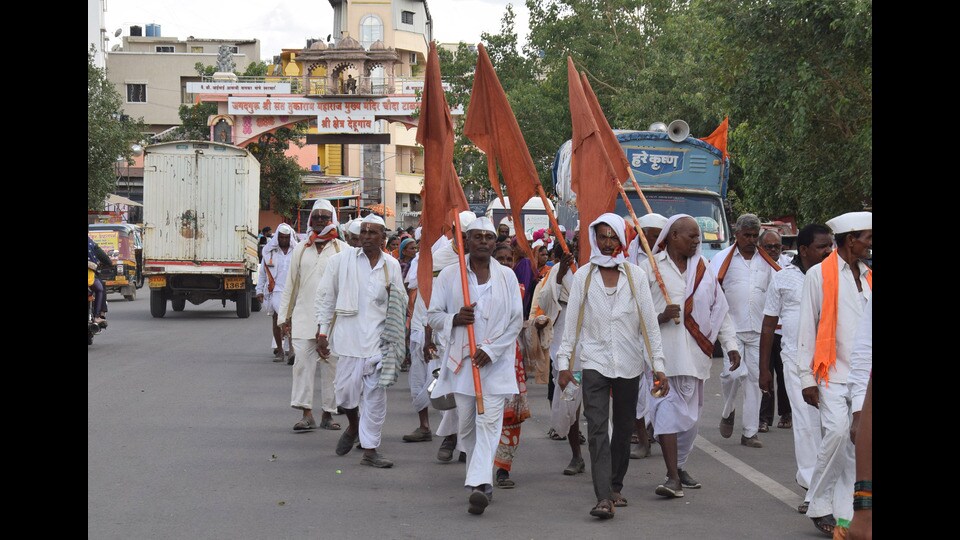
On June 22, 1924, HV Chinmulgund, Neelkanth Sahasrabuddhe, Dattatray Hari Bhat, and Vithhal Shankar Gulve spent the day inspecting the arrangements for the stay of the palkhis of Sant Dnyaneshwar Maharaj and Sant Tukaram Maharaj in Pune, scheduled to arrive two days later. They were members of the “Arogya Mandal,” a voluntary organisation that strived to maintain sanitation and hygiene in the city by communicating and working actively with the citizens and the municipal authorities.
That day, the members visited the dharamshalas, temples, and other places where the pilgrims travelling to Pandharpur from Alandi and Dehu, along with the palkhis, would stay. They found that the arrangements were far from complete. The dharamshalas were in a bad state, and there were no taps for fresh water at several locations. The designated places where the pilgrims came together to have food were dirty. There were no facilities for the disposal of food and other waste.
The following morning, they met with Bhausaheb Lawate, chairman of the Poona City Municipality, and presented him with a list of urgent improvements needed before the palkhis arrived. Understanding the seriousness of the situation, Lawate, along with Mr Tambolkar, the municipality’s chief engineer, and Dr Khambata, the health officer, worked tirelessly over the next two days to ensure that no pilgrim was at risk of injury or diseases like cholera.
Cholera is an acute diarrhoeal disease transmitted primarily by ingestion of faecally contaminated water. Besides water, foods have also been recognised as an important vehicle for transmission of the disease. Colonial rule in the nineteenth century blamed Indians’ lack of a sense of sanitation and hygiene for periodic outbreaks of not only cholera, but also plague, smallpox, and malaria.
By the late nineteenth century, it was understood that the movement of infected people from one place to another spread the disease. No wonder pilgrimages, especially the one to Pandharpur, were considered breeding grounds for epidemics.
The pilgrimage to Pandharpur attracted pilgrims from all corners of Maharashtra. People came from as far north as the Narmada River valley, as far west as Bombay and Sindhudurg, and as far east as Bhandara and Chandrapur. Most pilgrims travelled in organised groups, called dindis, which were often divided by caste, family, or village, and in some cases, even by gender. These groups often maintained separate dining arrangements as well, owing to caste considerations. Larger palkhis were divided into dindis; smaller ones were most often not.
The cholera epidemics of 1900, 1906, 1912, and 1919 were of great severity. All were years of abnormal monsoon. The year 1927 was also a “bad cholera year”, as the Department of Public Health preferred to call it.
Although the disease appeared to have subsided after 1924, cases did occur during the next several years, and these cases were not confined to any one part of the Presidency.
The Health Department of the Bombay Presidency had resolved to tackle cholera during the Pandharpur pilgrimage in the early 1920s. Palkhis had a prescribed route that they followed. The stopping points and times were determined and rigidly stuck with. This made the job of doctors and officials a bit easier.
Since the early 1920s, Dr A da Gama, assistant director of Public Health, ascertained the itineraries and sent out the lists of halting places, with dates, to the surgeon general and collectors and native state authorities through whose areas palkhis were to travel. Medical supervision by dispensary medical officers along the routes was thereby secured.
Dr A da Gama also inspected the Dnyaneshwar Maharaj and Tukaram Maharaj palkhis at their halting places up to Kapurhol, the Tukaram Maharaj palkhi at Akurdi, Pune, and Saswad, and Sopandev’s palkhi at Saswad. All the palkhis were again inspected at Wakhari.
The inspector of sanitation, Poona District, accompanied the Alandi palkhi to Nira, at the end of his jurisdiction, where he handed it over to the inspector of sanitation, Satara, ND, who accompanied this palkhi from Lonand to Dharmapuri. The inspector of sanitation, Satara, SD, accompanied the Machhindranath palkhi throughout its march in the Satara District. The inspector of sanitation, Ahmednagar district, accompanied the Nivrittinath palkhi throughout its march in the Ahmednagar District. From 1926, the inspector of sanitation and vaccination, Poona district, started accompanying the Alandi palkhi to Pandharpur.
The pilgrim was treated with respect and veneration by everyone. The inhabitants of the village or town where the palkhi happened to cross its way believed that it was their sacred duty to feed the pilgrims and provide them with lodging.
The Health Department and members of the “Arogya Mandal” visited temples, schools, grounds, and houses where the pilgrims were served food. They took care that the ground was sprinkled with water, there were dustbins to dispose of plates made of leaves, and that clean water was provided for drinking.
The Poona Municipality Health Department placed an advertisement every year from 1915, a little before “Devashayani Ashadhi Ekadashi”, cautioning citizens about the importance of drinking clean water to avoid cholera. By then, it was recognised that as the disease spread within the community, secondary transmission via food and food handlers and person-to-person increased.
Water received from tanks and wells was first treated with alum and then permanganated twice. The water supplies at camping grounds throughout the palkhi route from Alandi and Dehu to Pandharpur were disinfected after the departure of palkhis.
From 1925, all the wells in and around Pune and Pandharpur were permanganated regularly before the palkhis arrived. Some pilgrims bathed in the Mutha River. The riverbed was guarded day and night to avoid contamination of the water in which the pilgrims bathed and sipped.
At Pune railway station, officers made sure that clay pots used to store water for the passengers were cleaned daily and that the water stored in them was collected from a clean source.
In Pune, Wakhri, and Pandharpur, all the hotelkeepers were made to clean and lime-wash their premises. The hotels and markets were frequently inspected. Two specially qualified Sanitary Inspectors were in charge of the vegetable and fruit markets in Pune. Rotten vegetables and fruits were not allowed in the markets from the week preceding the arrival of the palkhis. Import of mangoes was frequently prohibited in Pune and Pandharpur during those days.
Businesses thrived during the “wari”. Vendors selling puffed rice, jaggery, and sweetmeats came to Pune from towns and villages nearby when the two palkhis passed through the city. Foodstuffs exposed for sale were regularly inspected, and when found unfit for human consumption, they were destroyed.
Till the 1940s, cholera killed around half the people who became sick, and no one knew how to cure it. It symbolised native vulnerability in the face of poverty and underdevelopment. The efforts of “Arogya Mandal”, the municipal bodies, and the Health Department, hence, deserve applause.


