
 E-Paper



Taste of Life: Europeans love for hill stations set foot on Mahabaleshwar
Mahabaleshwar was known for its sanatoriums. It also boasted of a church, clubs, library, hotels, post and telegraph office, etc, with a centrally located bazaar where “supplies of every description” were available in the late nineteenth century

 Prefer HTon Google


The Ladies of Mahabaleshwar
Have strawberries for tea.
And as for cream and sugar,
They add them lavishly;
But Poona! Oh, in Poona,
Their hearts are likely to break
For while the butter’s melting
The flies eat up the cake.
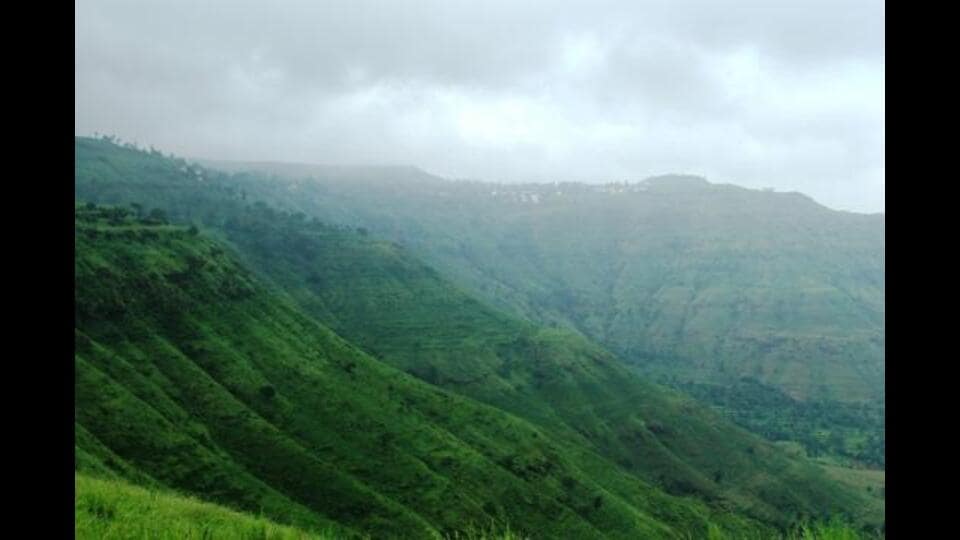
Mahabaleshwar was the summer headquarters of the Bombay government. The rolling spurs of the hill station, crowned by flat-topped summits, commanded magnificent views of deep valleys and possessed natural advantages surpassed by few.
During the season (March to June and October), Mahabaleshwar received an influx of Europeans as well as rich Indians from Bombay and Poona, considerably increasing its resident population. Even if Matheran was closer to Bombay and Panchgani was better connected to the railways, Mahabaleshwar was the preferred destination of Europeans and Indians alike.
Mahabaleshwar was known for its sanatoriums. It also boasted of a church, clubs, library, hotels, post and telegraph office, etc, with a centrally located bazaar where “supplies of every description” were available in the late nineteenth century.
The routine of society proceeded at Mahabaleshwar and Matheran very much as in other hill stations in India - morning visits and “at homes”, picnics to a waterfall or the river or other picturesque spot in the neighbourhood, fancy-fairs, balls, tiffin parties, dinner parties, and visits to the clubs.
In the evening, about sunset, the whole society turned out to enjoy the evening air and to see and to be seen. The gentlemen were mostly mounted, and the greater part of the younger ladies, whether married or unmarried, were also on horseback.
The hill stations in India were part of the imperial design. Shimla, Darjeeling, Ootacamund, and Naini Tal were the favoured destinations of the officialdom and acted as summer headquarters of the respective Presidencies.
The lives led at the hill stations replicated the social experiences of the elite Europeans and the upper-class Indians at home. A seemingly endless series of social calls, teas, picnics, dinners, balls, fetes, races, amateur theatricals, and other festivities dominated the daily routine of residents. The pursuit of relaxation and recreation attained eminence at these hill stations. This was strikingly similar to the spa towns and seaside resorts of England.
European families, while at Mahabaleshwar, did not fail to follow the imperial code of domesticity. They had to take with them a certain number of servants – a cook, a table-servant, a water bearer. They also carried a tent for the servants if the bungalow they were renting did not have a quarter for the servants. They carried a table, a chair, a bed, bedding, cooking utensils, crockery, and knives and forks. Bread, flour, condiments, tea, sugar, sheep and fowls, and wines were purchased from Poona to be carried to Mahabaleshwar. Some families of better means bought tinned and canned provisions from shops like the Treacher & Co and Philips & Co in Bombay and Poona.
Mahabaleshwar had a branch of Treacher & Co in the early 1870s that stayed open during the summer months. It stocked exquisite china, wines, sherbets, jams, and canned fruit imported from Europe.
Till the late nineteenth century, hill-porters were hired to carry the provisions up the hills. Those travelling very lightly needed ten to fifteen men; if they were more amply supplied, they might require twenty or thirty.
The first Briton to set foot in Mahabaleshwar was Sir Charles Malet in 1791. However, General Peter Lodwick, who arrived in 1824, was the first to try to popularise the hill as a sanatorium. The Raja of Satara, encouraged by a series of British residents, began to develop the site and invited the governor of Bombay, Sir John Malcolm, there.
Malcolm visited the hill in 1828, and the same year it was officially announced that a sanatorium would be built. The next year, a treaty transferred the hill to British territory. The Raja insisted that the new station be named after the governor, and for some years it was known as “Malcolm Peth”, a name later restricted to the bazaar.
Malcolm was Mahabaleshwar’s greatest enthusiast. In June 1830, he wrote to his friend Sir Walter Scott, “the air in these hottest of our months is such as to give a spring to both body and soul, and were it not for my occupation and absence from those I love, I would be content to dwell amid such scenes as those by which I am surrendered, for the remainder of my existence”.
During the next many years, roads were built, and the resort developed quickly. Bungalows with names like “Lily Cottage”, “Dingy Dell”, and “Barchester” were constructed.
In the mid-nineteenth century, the nearest hotel to travellers coming from Satara was Langholm Lodge and Langholme House, or the Mahabaleshwar Hotel, kept by Mr Dorabji Sorabji. The Fountain Hall Hotel, kept by Mr C Kowasjee, was 400 yards from there. It charged ₹6 per diem for boarding and lodging for a lady or gentleman. The meals were at the table d’hôte at a fixed hour. Breakfast cost ₹1. European or East Indian “servants”, male or female, were provided by the hotel for ₹1 per day. Accounts were settled weekly.
The hill station also had the Mahabaleshwar Club where men talked office over drinks and European dishes, a polo ground, and a racecourse.
The Club was the place for the Europeans to fraternise and reinforce the bonds of the colonial administration. Roula Christou, married to an English officer of the Indian army, described the Mahabaleshwar Club as “the British Raj in all its pomp and glory”. She wrote – “The club building was in a magnificent example of colonial architecture, surrounded by wide covered terraces with deep cane chairs and low tables, and by magnificently maintained lawns and flower beds. It was built on a rise with steps sweeping down to the carriageway, flanked by tall Victorian gas lamps. There was married accommodation and servants’ quarters. Meals were served in the grand manner. Waiters wore starched uniforms, “pugris” – elaborate turbans – and white gloves. The tables were set with white crockery, immaculate cutlery and glassware. The club had a reputation for the quality of the wines in its large cellar.”
Meanwhile, the open prison experiment was a success where Chinese and Malay convicts built roads, ground corn flour, and cultivated potatoes and strawberries during the day, and went to the bazaar at night to buy groceries.
Europeans were fond of Mahabaleshwar potatoes. The Mahabaleshwar Club was famous for its potato scallops. Stewed potatoes were a popular dish at dinner parties in Mahabaleshwar. It was a cosy and comforting dish in the summer months.
Potato salad was made using new potatoes. Mahabaleshwar had an easy supply of milk and cream from Satara and was generously used in various dishes, including salads and stews.
The hill station came alive during the scorching summer. As soon as the monsoon struck, it was evacuated. Officials raced to Poona, and hotels and clubs were shut down for a few months.
When Indians became more visible and influential at Mahabaleshwar and other hill stations, the Europeans became less so. The First World War made the Europeans take refuge in the hill stations, and many sent their families back home after the war was over. Reduced shipping fares from India helped them visit Europe for vacations. By the 1930s, governments had stopped their annual visits to hill stations.
Europeans no longer needed Indian hills to keep them better.
Chinmay Damle is a research scientist and food enthusiast. He writes here on Pune’s food culture. He can be contacted at chinmay.damle@gmail.com


