
 E-Paper



Taste of Life: How Poona developed a taste for potato
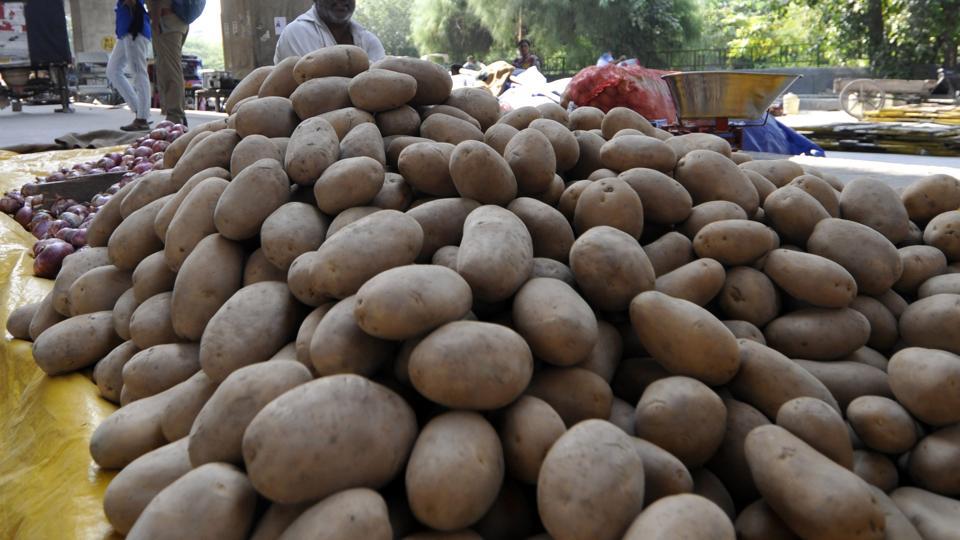
Two varieties of the potato were available in Poona – one with a smooth light brown peel was the best, being mealy when cooked and fetching a higher price; the other had rough dark skin, and both in size and the quality was inferior to the smooth-skinned variety

 Prefer HTon Google


On a hot summer evening in 1883, BG Tilak and GG Agarkar, along with a few others, had assembled at Justice MG Ranade’s residence to listen to Narayan Ramchandra Gogte who had come to Pune from Dapoli in Konkan to speak at the “Vasant Vyakhyanmala” (Spring Lecture Series).
Gogte had leased a huge chunk of land from the British at Dapoli and had been experimenting with crops like tapioca, coffee, cocoa, and arrowroot. Some of his experiments had met with partial success. That evening, he told the leaders of Pune that he wanted to introduce potato in Konkan. A couple of months later, the newspaper “Kesari” wished him luck with his experiments with the potato.
The potato is the single most cultivated and consumed vegetable in the world. No other vegetable is as versatile as the potato: it can be boiled, fried, sliced, diced, mashed, scalloped, and baked. Potatoes are easily grown and hence are usually cheap.
All 4,500 named varieties of potatoes trace their ancestry to the Americas. The potato travelled around the world as part of the “Columbian exchange”, the worldwide transfer of plants and animals began in 1492 with Columbus’s arrival in the West Indies.
While there was tremendous resistance to its spread in Europe during the 17th century, European sailors, traders, soldiers, missionaries, explorers, and colonial officials introduced this crop in several countries in the Asia–Pacific region. It is a widespread belief that the potato was introduced to India by the Portuguese during the early 17th century. But this assumption is doubtful owing to linguistic confusion. The potato might also have arrived overland, from Turkey. The agents of the transfer are difficult to identify. The first mention of potatoes is in Edward Terry’s description of a banquet at Ajmer given by Asaph Khan to Sir Thomas Roe in 1615, but it is unclear whether this refers to the sweet potato, which most likely arrived first, or the common potato.
Historical evidence suggests that potato was a moderately established garden crop in Surat as early as 1675. Judging from the name “Batata Surrata” (potato of Surat), by which the potato was called in Goa, it may be concluded that it reached Goa from Surat. In any case, it could be said with certainty that the potato was a minor vegetable grown in the kitchen gardens of some British colonials in the eighteenth century.
In England, Scotland, and Ireland, potatoes were mainly grown in gardens until the early eighteenth century. Potatoes required little effort to grow, harvest, cook, and consume, and were mainly grown by so-called “lower classes”. The rich considered potato–eaters lazy and irresponsible. But potatoes supported large families, and population explosions occurred wherever potatoes became a major crop. While the potato was hated by the English as a “poor man’s food”, they made sure that the Irish accepted the potato as a safeguard against famine.
Even though the British claimed that they wanted to “improve” and “rationalise” agriculture in India, the drive for profit was always present. They took it upon themselves to popularise crops like tomato, okra, papaya, cashew nut, and potato in India. Although introduced by the Portuguese traders in the sixteenth and the seventeenth centuries, these crops were perceived as “exotic” by Indian cultivators. The popularisation of these crops was considered a sign of modernity by the British. They also wanted to create a sense of belonging for the coloniser in the colony.
The missionaries of Sreerampore started awarding cultivators ₹50 for planting plums, cherries, potatoes, cauliflowers, and peas. The colonial Agricultural and Horticultural Society of India, formed in 1820 to effect the “general amelioration of the agricultural condition of India”, made a sustained effort to encourage the cultivation of “this salutary and useful root”, that was potato, while rubbishing local agricultural practices.
By 1830, the potato had been successfully introduced in the hills of northern India, some districts of the Bengal Presidency, and in Nilgiri hills in the Madras Presidency. The introduction of the potato into Poona was chiefly due to the efforts of Dr Alexander Gibson. He was a Scottish botanist who came to India in 1827 as a surgeon in the East India Company. Three years later, he was given the responsibility of the vaccination drive in Gujarat, Konkan, and Deccan. He learned to speak Marathi and Gujarati to carry out his duty efficiently. While interacting with the locals, he felt that they lacked knowledge about modern agricultural practices. He also noticed that deforestation was rampant owing to the growing demand for timber. He was deeply influenced by the works of Alexander Humboldt which linked deforestation and temperature change. Upon Gibson’s insistence, the Bombay Presidency established a forest conservancy. He was appointed as the conservator of forests, perhaps the first in the world to hold such a position. He started an experimental farm in village Hiware near Junnar where he introduced crops like tapioca and sugarcane to the local villagers.
In 1836, he was appointed as the superintendent of the Dapuri botanical gardens. Two years later, he brought potatoes from the Nilgiris and distributed them in Poona for seed. He also planted the seed in the experimental garden at Hiware. The seed brought by Gibson was mostly planted in Junnar, Khed, Pabal, and Poona. Within a few years, potatoes grown in and around Poona in sufficient quantities were exported to Dhulia, Aurangabad, Hingolee, and Bombay. They were sold at the rate of twenty pounds (10 shers) of the first sort, and thirty to forty pounds (15 – 20 shers) of the inferior quality to the rupee. In 1844, the potatoes of north Poona supplied a very large portion of the Bombay market. In 1845, Gibson obtained a supply of good Irish potatoes.
Two varieties of the potato were available in Poona – one with a smooth light brown peel was the best, being mealy when cooked and fetching a higher price; the other had rough dark skin, and both in size and the quality was inferior to the smooth-skinned variety.
Two potato crops were raised in the year. One was planted in dry–crop lands in July and dug in late September; the other was planted in December and dug in February. Owing to the ready sale it met in the Poona and Bombay markets, and the large profits it yielded, the cultivation of potatoes increased considerably, having in some instances entirely superseded that of sugarcane. In the absence of a cold store, the cultivators stored potatoes in “kothas” (in-house storage in ordinary dwelling rooms, or in pits dug in their farms).
The Bombay Gazetteer noted in 1884 - “Though it was at first viewed with suspicion the potato is now a favourite food with Brahmans, and the Kunbis also eat the smaller and less saleable roots.” Shankarrao Joshi in his book “Alu ki kheti” wrote how the potato was first welcomed by the Muslim and the Christian community, after which the Hindus started eating it.
This story is for some other time.
Chinmay Damle is a research scientist and food enthusiast. He writes here on Pune’s food culture. He can be contacted at chinmay.damle@gmail.com


