
 E-Paper



Taste of life: How Women’s Day began in Pune & what issues were discussed
Two thousand delegates attended the conference held at the Fergusson College. On the last day of the conference, Margaret Elizabeth Cousins and feminist leaders like Amrit Kaur and Kamaladevi Chattopadhyay decided to form the All India Women’s Conference


In the afternoon of March 1, 1935, a small group of women assembled in the hall of a “wada” in Rasta Peth. Most of them were in their early twenties. They lived nearby and were told by a woman they knew that the gathering was meant to educate them about their domestic duties. They were being a part of such a gathering for the first time in their life. None of them had ever been to a school. The event was part of the Women’s Day celebrations in the city. The women, of course, did not know what Women’s Day was.
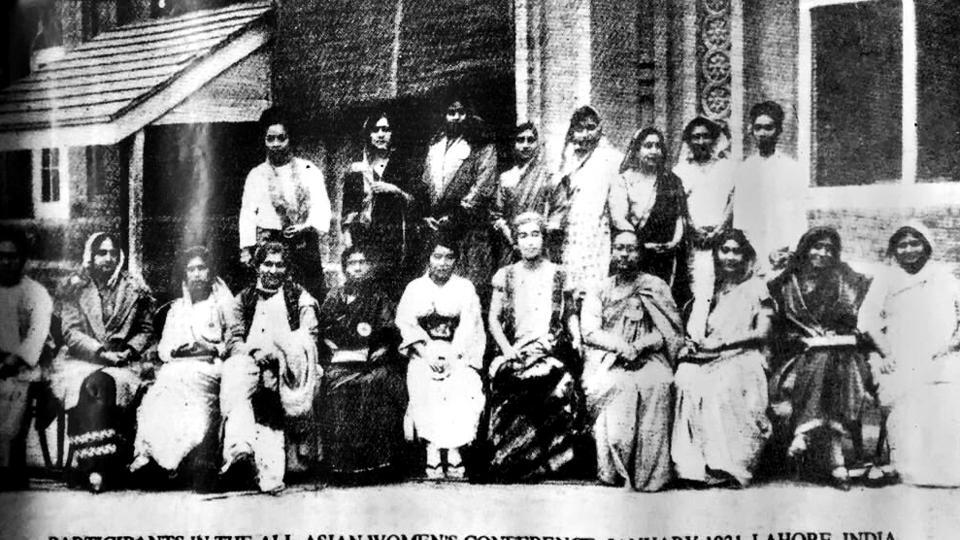
The Women’s Day celebrations on a large scale in India were started by The All India Women’s Conference (AIWC) in the late 1920s. It was the brainchild of Margaret Elizabeth Cousins, the Irish-Indian educationist, suffragist, and theosophist, who is credited with preserving the tune of the Indian National Anthem “Jana Gana Mana” based on the note provided by Rabindranath Tagore himself.
In 1925, Cousins wrote to several women’s groups in India to come together to discuss compulsory education for women. She desired to build a countrywide network of women’s organisations. The first meeting was held in Pune two years later to promote women’s and children’s education and social welfare. Two thousand delegates attended the conference held at the Fergusson College. On the last day of the conference, Cousins and feminist leaders like Amrit Kaur and Kamaladevi Chattopadhyay decided to form the AIWC.
Compulsory female education and a complete ban on child marriages were the only issues discussed during the first meeting in Pune. The report of the conference indicates that the delegates agreed that better education meant better nutrition for the family.
Subsequent sessions widened their scope and included other issues like giving women the right to divorce, to inherit, to carry arms to protect themselves and to vote. It was at the fifth session held in Lahore, that it was decided that March 1 be celebrated as Women’s Day in India. It was also decided that regular meetings and conferences would be held in different parts of the country to involve more women in the cause.
Before the AIWC started celebrating Women’s Day on March 1, some organisations celebrated it during the “Gandhi Week” in the 1920s. Social leaders like Dwarakabai Gujar, Satyabhamabai Kuvalekar, and Lakshmibai Thuse were actively involved in the organisation of the event in Pune. Speeches would be made endorsing education and better nutrition for women.
At these and many events organised by the AIWC till the early 1930s, the call for better nutrition for women was often linked with the well-being of the country - the woman had to eat better to produce strong children who would serve the nation.
A large number of pedagogical texts written in and after the late nineteenth century constructed a normative discourse on family that framed rules and guidelines for an ideal housewife for proper home management, scientific nurturing of children, regulation of dietary habits, creating of hygienic environment, etc. This new model of domesticity treated women as agents of national welfare and made them believe that lack of knowledge about cooking and nutrition caused harm not only to their families but also to the nation. Women were advised to go to schools and educate themselves so that they could read and follow expert instructions regarding the rearing of children, nutrition, and health. The educated woman had to be a “good wife” – a “sugruhini” who was a manager of the house, cook, doctor, and the producer of children, all at the same time. Ignorant and weak women gave birth to weak and deficient children, they were told.
While this nationalist restructuring of the family made many women believe that they were awarded an augmented, special status, the bourgeois domesticity paid no heed to women’s health and bodies. They were supposed to eat better for their family and the nation, not for themselves.
Until most of the early twentieth century, the inclusion of women’s rights into the human right to adequate food and nutrition was systematically overlooked. The invisibility of structural violence against women and the absence of freedom to choose how to live their lives were the barriers to food and nutrition.
It could be argued that the links between the violation of the rights of women and hunger and malnutrition were not apparent. The acknowledgement of these links would have made it easier to confront violations of the right to adequate food. That the lack of inclusion of women’s right to food and nutrition could have drastically negative consequences was not understood till feminist leaders like Lakshmibai Abhyankar vocally advocated nutrition as a woman’s human right.
Abhyankar was the granddaughter of “Lokahitawadi” Gopal Hari Deshmukh. She had fought a consistent battle against the custom of tonsuring widows. Later, as a part of the AIWC, she toured several towns and spoke against the evils of child marriage, adolescent pregnancy, and tonsure. Women were the primary caretakers and empowering them by enhancing their access to better nutrition, productive resources and creation of better economic opportunities was crucial, she believed.
While the early feminist activists in India were European medical missionaries, wives of colonial bureaucrats, or women belonging to the royal families, the twentieth century saw educated Indian women belonging to the colonized middle class become part of women’s organizations. These women were awake to their intellect and talents and wanted to realize their social responsibilities. They tried to marry received ideas from the West with the indigenous socio-cultural practices.
Organisations like “The Women’s Council” in Pune became part of the AIWC network and celebrated Women’s Day in different parts of the city. According to the Marathi newspaper “Jnanaprakash”, in 1934, seventeen women from the council volunteered to organise the Women’s Day programmes. Dr Krushnabai Sathye who presided over one of the events asked whether economic self-sufficiency of women meant better access to nutrition.
Janakibai Bhat who headed the Poona Seva Sadan, on Women’s Day in 1937, lamented that women’s health and nutrition were never mentioned without child-rearing. This was a clear shift from her earlier speeches where she urged women to eat better to produce healthy offspring for the country.
“Women demand that there should be the same standard of sex purity and sex morality for men as for women. Women, therefore, claim the right to get a woman to choose when they will undertake motherhood and the call for the raising of the age of consent. They claim equal rights of legal separation and demand the introduction of an equal Divorce Law for both men and women, the abolition of the Deva Dasi system, and immediate effective legislation for the prevention of commercialised vice” – the AIWC had declared. But more significantly, the delegates of AIWC understood that the health and nutrition of women were significantly compromised through customs like child marriage. Child brides were among the most nutritionally vulnerable groups and the right to divorce was related to the right to adequate nutrition, they believed.
In 1938, the first All India Conference of Medical Women met in Delhi. The delegates asserted that maternal health was neglected in India and that the state-funded medical research did not involve the subject despite it being important to millions of Indian women. Margaret Balfour of the Women’s Medical Service showed that maternal mortality in India was much higher than in most European countries. Poor nutrition was a leading cause of maternal mortality in India.
The AIWC in 1928 endorsed the Maternity Benefits Bill and continued to campaign for better nutrition for pregnant women. It was particularly vocal about the “training and registration of midwives”. Newspaper reports indicate that organizations like the Seva Sadan encouraged untrained midwives to undertake scientific training and learn more about nutrition during pregnancy.
That afternoon on March 1, 1935, the women had gathered to listen to Ambutai Patawade who was a nurse at the Sassoon Hospital. Patawade belonged to a profession that was considered “lowly” by the so-called “upper castes”. She told the women that they had to eat better – for their children, their families, and most importantly, for themselves.
Women like Patawade, Abhyankar, and hundreds of delegates of the AIWC initiated a process of reconfiguration of arenas of domesticity, conjugality, child-bearing, and child-rearing practices. This was a small, but vastly significant attempt to reclaim the female bodies from the authoritative control of the male-dominated society. Their efforts need to be remembered forever.


