On August 1, 1920, enormous crowds thronged the streets in front of the Sardargriha. On the balcony, the mortal remains of Bal Gangadhar Tilak were placed on a raised chair in a sitting posture for the people to have a last glimpse. Thousands of men and women rushed to his residence at Sardargriha to get a last glimpse of the departed leader. Never before in India’s recent history was such nationwide grief witnessed.
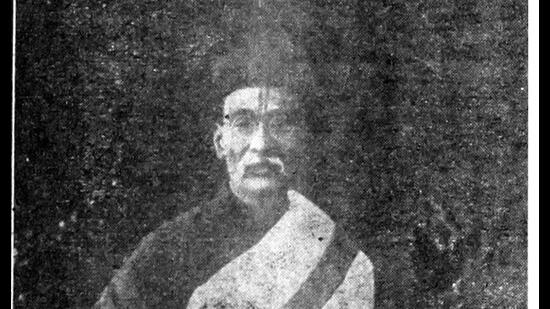
Contrary to popular belief that Sardargriha, where Tilak stayed while in Mumbai and breathed his last, was some mansion or a palace, it was a boarding house in South Mumbai established by Vishwanath Keshav Salvekar in 1898. What is more interesting is that the origins of “Sardargriha” in Mumbai could be traced to “Annapurnagriha”, most likely the first boarding house in Pune. “Annapurnagriha” was established by Salvekar in 1892 in Budhwar peth in Pune.
Born on September 2, 1862, at Wai in a reputed but poor family, Salvekar was sent to Satara for education. But his interest lay elsewhere. He wanted to start a business of his own. Realising that his son could never pass the matriculation examination, Salvekar’s father allowed him to travel to Pune to earn a living. With some money loaned from relatives, Salvekar started a shop selling silverware, books, and silk in Budhwar peth. The shop did not do well and was soon shut down.
Several advertisements appearing in “Kesari” between 1888 and 1890 tell us that Salvekar purchased “imported” watches from Mumbai and sold those in Pune. It is not known how long this venture lasted, but it could be deduced from an ad appearing in “Kesari” in June 1892 that he opened “Annapurnagriha” that month in “Mankeshwaracha Wada” (where Vasant theatre stands today) in Budhwar peth. It was the only boarding house in Pune at that time. It occupied two floors in the wada. The first floor comprised the dining area while the second had eight rooms for boarders.
{{/usCountry}}Several advertisements appearing in “Kesari” between 1888 and 1890 tell us that Salvekar purchased “imported” watches from Mumbai and sold those in Pune. It is not known how long this venture lasted, but it could be deduced from an ad appearing in “Kesari” in June 1892 that he opened “Annapurnagriha” that month in “Mankeshwaracha Wada” (where Vasant theatre stands today) in Budhwar peth. It was the only boarding house in Pune at that time. It occupied two floors in the wada. The first floor comprised the dining area while the second had eight rooms for boarders.
{{/usCountry}}Traditional India possessed no enduring tradition of restaurants or boarding houses. Commercial establishments of dining were discouraged by the rules of Indian social life. The notions of what constituted “pure” foods were rigid, and the Brahminical tradition emphasised that food was to be consumed in a private place. Hence, the problem of obtaining food prepared outside the domestic hearth was primarily faced by travellers.
The cultural and religious desire to insulate commercial dealings and food transactions had created several hurdles in the commercial prospering of the nineteenth-century cities governed by the Raj. The opening of “Pune Bhojanagriha”, the first restaurant in Pune city established in 1881, tried to solve the problem, principally faced by travelling merchants, pilgrims, and students, of obtaining food prepared outside the domestic hearth. But it was shut down in 1885. From then till 1892, when “Annapurnagriha” was established, Pune probably did not have any restaurant or a boarding house.
Travellers coming to Pune had to stay at a relative’s or acquaintance’s house. The newfound prosperity and the notions of privacy made it difficult for travellers and students to find lodging in the city. Sure, there were a few “hotels” in the Poona Cantonment area, like The Poona Hotel, The Royal Family Hotel, and the Napier Hotel. But they served food only to the European guests who stayed on the premises. They did not have restaurants where anybody could walk in and order food at any time of the day. Also, Poona Cantonment was a different world in itself, out of bounds to most of the “natives.” It had almost no contact with Pune city.
Salvekar hoped to attract Indian travellers to stay at “Annapurnagriha”, and the elites of Pune to partake in their meals at the eatery. He offered huge discounts to students travelling to the city for their education, and examinations. The advertisements in “Kesari”, unlike those of “Pune Bhojanagriha” did not mention that the establishment catered exclusively to Brahmins.
Men of importance like NC Kelkar, SM Paranjapye, and VK Rajwade dined at “Annapurnagriha” daily. According to Kelkar, “Annapurnagriha” was much superior to the “khanavals” in Pune. Rajwade, the historian par excellence, edited his periodical “Bhashantar” from the premises of the boarding house.
But owing to the taboo concerning eating in a boarding house, Salvekar ran into loss and had to shift “Annapurnagriha” to Dhamdhere Wada in Budhwar peth in 1895. He tried his best to make his boarding house profitable till the plague arrived in the city the next year. That was the year when the famine too made life miserable in a large part of Maharashtra. Salvekar found it difficult to sustain under such conditions. He decided to take a loan and shift to Mumbai.
Mumbai, then, was perhaps the most cosmopolitan city in India. It was a mecca for people seeking work and money. It had very few boarding houses catering to Indians, and very few were suitable for families.
Salvekar’s new boarding house, which opened near Topiwala chawl on Grant Road in 1898, was named “Sardargriha.” To maintain uniformity, “Annapurnagriha” in Pune was renamed “Sardargriha” too. The Mumbai branch quickly gained popularity owing to clean rooms and food. Salvekar shut down the Pune branch in 1900. But “Sardargriha” in Mumbai continued to prosper. In 1902, it shifted to Seetaram Building near Victoria Terminus. It soon became the most well-equipped and well-managed “hotel” of its time in Mumbai that catered to Indians.
Tilak would stay at his friend Dajisaheb Khare’s residence whenever in Mumbai. He knew his staying and the ensuing chaos would often cause a lot of inconvenience to the Khare family. Salvekar, upon hearing this, went to meet Tilak while he was in Mumbai and requested him to stay at “Sardargriha”. Tilak agreed. Room no. 198 on the fourth floor was permanently reserved for him. It became his residence whenever he visited Mumbai. Not far from there is Keshavji Naik chawl where Tilak started Sarvajanik Ganeshotsav. In 1908, Tilak was arrested on sedition charges from “Sardargriha.”
Chhatrapati Shahu Maharaj too would often stay at “Sardargriha.” It was he who encouraged Salvekar to run the boarding house on a grander scale and helped Salvekar construct a four-storeyed building in front of the busy Crawford Market. Chhatrapati Shahu’s association with the “Sardargriha” attracted other Maratha chiefs to it. Leaders such as Mahatma Gandhi, and Sardar Patel also lived there during their visits to the city. Kanji Dwarkadas, a close friend of MA Jinnah in Mumbai, noted – “The two great political centres in Bombay at that time (c. 1916) were “Sardargriha”, where Tilak lived, and Jinnah’s chambers in the High Court. All political roads led to these two places for organisation, consultation, and decision.”
Till the 1960s, it was a matter of pride to stay at “Sardargriha.” Weddings and send-offs to students travelling abroad were held in their reception halls. The rates were still low to be affordable to the common traveller.
It was indeed difficult in the 19th and 20th century Maharashtra to run a boarding house. The social stigma surrounding the transaction of food discouraged almost everybody to carry on the business. It was due to Salvekar’s grit and determination that “Annapurnagriha” and “Sardargriha” became such important institutions in erstwhile India. Credit should also be given to Salvekar’s wife Banutai who would personally supervise the kitchen daily and look after the guests.
“Sardargriha” shut down a few decades ago. “Annapurnagriha” exists only in the yellowish pages of “Kesari”. All that remains now is a bust of Tilak at the entrance of the decrepit building.