
 E-Paper



Taste of Life: When prickly pear was used to ward off demons
Though prickly pear was sometimes used to protect farms from wild pigs and as barriers against the ravages of forest fires, the Poona municipality had prohibited its citizens from planting it

 Prefer HTon Google


The process of categorisation of food and non-food is complex. The ability to classify is essential for survival and requires the integration of multisensory information and semantic memory with varying contextual information.
On March 21, 1902, the Marathi newspaper “Kaal” reported that a forty-eight-year-old man from Poona’s Shukravar Peth had died of poisoning. The cause of his death was quite unusual. It was found that he had consumed large amount of a supposed aphrodisiac given by a quack. The man had recently married a sixteen-year-old girl. The newspaper blamed the prickly pear fruit, one of the ingredients of the “medicine” the man had consumed. I could not find further reference to the incident in any other newspapers.
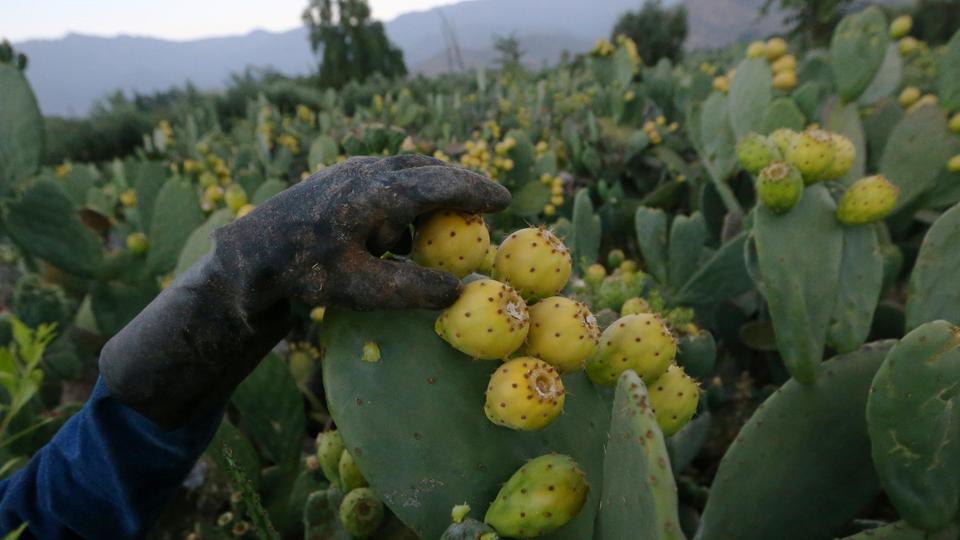
Prickly pears or opuntias (“nivadunga” in Marathi) of more than one kind were spiny pests of agricultural and pastoral lands in several countries, including India. They belonged to the natural order of cacti and were native to Brazil. It was believed that a few seeds of a variety of the prickly pear plant were brought to Poona from Delhi by a nobleman named Dubharlie in his palanquin in the mid-eighteenth century. The rapid spread of the prickly pear was due to birds being very fond of its seeds. In the Bombay Presidency, the species found were exclusively Opuntia nigricans and Opuntia dillenii. They were considered to be noxious weeds.
Though prickly pear was sometimes used to protect farms from wild pigs and as barriers against the ravages of forest fires, the Poona municipality had prohibited its citizens from planting it. But it was present everywhere in Poona. Large thickets could be found in the peths and near the railway station in the 1860s. It was largely used as a hedge plant; it generally formed dense jungles about villages. Railway companies considered it to be an excellent fence plant in dry areas or for preserving embankments from the effects of heavy rains.
It was thought that the prickly pear could yield no return, but this was a mistake. During the years of the Great Famine, starting from 1868, it was thought to be a good famine food for humans and cattle. But men and women refused to eat the fruits of the prickly pear. It usually fruited abundantly and the children loved eating the fruit. The ripe fruit was sweet and juicy but was considered unwholesome by the elders who admonished and forbade the children from eating it.
The fruit of certain species of prickly pear was used as human food in many parts of the world, but more specifically in Mexico and the Mediterranean littoral. In the former, various food products such as “miel” and “queso” were derived from these edible fruits, which contained high percentage of sugar. The government of the Bombay Presidency thought that this abundant source of nutritious food, availed of in many other countries, had been entirely lost sight of in India. It instructed the Collectors of Poona and certain districts in the Madras Presidency to teach the famine-affected people to eat prickly pear fruits. But the efforts were unsuccessful.
The “Rast Goftar”, on October 15, 1876, stated that food grains had risen doubly in price due to famine and the ryots in Poona, Sholapur, Nasik, and Khandesh and commenced to subsist on prickly pear and other wild vegetation. But the famine reports indicated otherwise. People stayed away from the plant.
While the sensory properties of foods guide choices and intake, other social and religious factors play an important role in deciding what to eat. The prickly pear was held as “spirit-scaring” in the Konkan as well as the Deccan. Sir James MacNabb Campbell noted in 1885 that in Konkan, during Diwali, people made several lamps of the prickly pear, put oil and wicks in them, and lit them in front of houses. In Poona, some communities put a branch of the prickly pear at each foot of the cot on which a lying-in woman thought to be “possessed” by a demon lay. The prickly pear harboured snakes and scorpions and hence did not possess godly, or even human, qualities, it was believed. Houses and neighbourhoods with prickly pear hedges were considered dirty and disreputable, and even possessed by the demon.
The government tried to use prickly pear as livestock fodder by removing the large thorns and the small tufts of fine hairlike thorns at their roots in 1877 onwards. One Mr Sabapathi Mudliar from Bellary had during the famine of 1876 kept his cattle alive by feeding them prickly pear. The authorities in the Bombay Presidency decided to replicate his experiments. Tehsildars and deputy tehsildars were instructed to erect sheds where the cattle of all who were unable to support them could be collected, and “gangs of coolies” were sent to collect prickly pear and therewith feed the cattle. Enough prickly pears for two cattle could be prepared by one person in a day.
Very few animals took readily to prickly pear unless they were starving. They had to be trained requiring considerable patience and care. As the pear contained a great deal of water, animals fed on it felt less thirsty. The dung of cattle fed on pear was thinner and of a much darker colour than that of animals fed on grass. According to a report prepared by Prof JB Knight and AM Macmillan, personal assistant to the Collector of Poona, in 1919 on the results of experience gained in previous ten years in Poona district on the use of prickly pear as fodder for cattle, it was mentioned that this dung was favoured by proprietors of establishments like boarding houses that needed frequent covering of the floor with it.
The discussion surrounding the use of prickly pear during famine made Mr Wallinger, Deputy Conservator of Forests, Poona, find out what a valuable fertiliser the prickly pear was in the early twentieth century. It was discovered that babul-seed sown in the ashes of prickly pear germinated very quickly, and that plants manured with the ash grew vigorously and strong. A series of successful experiments were tried by him in the use of prickly pear as manure, by crushing it and then applying it to the roots of plants and shrubs.
However, by then, the world had decided to get rid of the prickly pear. Scientists, agriculturists, and officials from several countries were trying to find its novel uses. The various methods of utilisation of the prickly pear were meant to destroy it, and its uses as food for cattle and humans were looked upon by the governments as a means by which the cost of clearing might be lessened.
The ground occupied by the cactus would be more profitably used in growing grass or other crops, it was widely believed. In Poona district, prickly pear largely occupied barren land which would grow very poor grass. But it had quickly spread in good or fairly good areas. The government did not find it economical to preserve it for its utility in a famine year. “Dnyanaprakash” and “Kesari” ran continued campaigns against the prickly pear till the 1940s.
Interestingly, in the 1920s, the enterprising men of Poona used prickly pear fruits to make alcohol. This was done earlier too, during the famines. The government was quick to put an end to the practice then. However, according to a report published in “Dnyanaprakash” on May 22, 1928, prickly pear fruits were being sought by distillers.
A report published by the “Standing Committee on Prickly-Pear” in 1932 shed more light on the issue. The report suggested that even though the prickly pear fruits yielded little alcohol, it was considered to improve virility in men and hence fetched a high price.
Poona also witnessed the fruits being fed to children in the 1930s, as reported by “Dnyanaprakash”. I suspect this might be due to a medicine named “Baby Juvenol” that was marketed as the “national product of Hindustan”. Its ingredients like Conessi Bark, Calcium Lactophosphas, extracts of Vitamin A, Vitamin B, Vitamin C, Vitamin D, Moonseed, Prickly pear, and some “Himalayan roots”, were routinely advertised in Marathi newspapers. Manufactured by Paragone Laboratories, it quickly gained popularity. Those who could not afford to buy it fed their children the fruits that were easily available.
On a side note, the prickly pear is associated with an important landmark in Poona. “Nivdungya” Vithoba’s temple in Nana Peth was built by a “Gosavi” and rebuilt in 1830 by a Gujarati banker named Purushottamdas Ambadas. The deity was called “Nivdungya” because it was found among prickly pear or “nivadunga” bushes. Author and socio-political leader Acharya PK Atre renamed the God “Jayhind Vithoba” because he thought that the association with the prickly pear was inauspicious. He also thought that people would chant “Jayhind” while mentioning the god.
Chinmay Damle is a research scientist and food enthusiast. He writes here on Pune’s food culture. He can be contacted at chinmay.damle@gmail.com


