Food intake surveys help understand the consumption of food by collecting data and also cover food availability in a particular region or country.
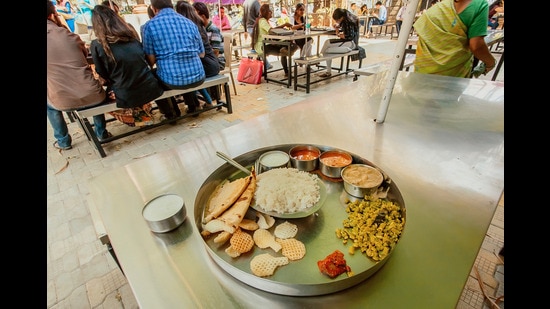
These surveys include information on factors influencing food intake patterns such as socioeconomic criteria, food perceptions, and beliefs. It tells us whether people like to eat out, how healthy they eat, and even their food budget.
In the nineteenth-century India, a few food surveys were conducted by the British. The investigation of food habits became necessary to identify inadequate and insufficient diets in parts of the population. This was important among industrial workers in Bombay for whom mass production of food was needed. But such mass production was difficult to achieve owing to prevalent religious and caste-based taboos, notions based around food.
The first small–scale surveys were carried out in the cantonments of the Bombay and Bengal presidencies. Later, the surveys included certain health issues related to food.
One of the most important, and probably the largest and one of its kind, dietary surveys in India was conducted in the Bombay Presidency between 1858 and 1861 to understand and improve the diet given to jail convicts. The survey aimed to study the dietary habits of native population living in different regions of the Presidency, and use the data to standardise and improve the quality and quantity of food given to jail inmates.
The results of this survey were compiled by CG Wiehe with the help of data sent by medical officers and jail officials in the Bombay Presidency. The data for Poona collectorate was gathered by Gilbert Maitland, civil surgeon, Poona.
{{/usCountry}}The results of this survey were compiled by CG Wiehe with the help of data sent by medical officers and jail officials in the Bombay Presidency. The data for Poona collectorate was gathered by Gilbert Maitland, civil surgeon, Poona.
{{/usCountry}}The survey comprised a detailed list of articles and the average amount of food supposed to be consumed daily by the sixty-five different castes and classes of natives living in the Bombay Presidency. The principal classes were Hindus, Muslims, Parsees, Jews, Native Christians, Indo-Europeans, and Europeans. The Hindus were subdivided into castes which were under a religious obligation to abstain from flesh and those otherwise, and which did in fact habitually partake of meat. The former included Brahmins, Jains, Lingayats, and Bhatias; the latter Marathas, who formed a large proportion of the population, the artisan castes, and the so-called “Hindu out-castes”.
The nature of food consumed by individual was determined by their place of birth, and the relative abundance of several kinds of food there.
In Poona, of the various kinds of grain in India, only three, viz. Bajree, Jowar, and Nachani (foxtail millet) were used as food by the “industrious classes”. These grains were all more or less cultivated throughout the Poona division, but for its cheapness, foxtail millet was mainly consumed by the poorer classes. Wheat, barley, and rice, being expensive, were mostly consumed by the rich.
In addition to the above, toor dal, moong, mussoor, and peas were consumed by the well-to-do population.
In those days, the nutritious property of grains was considered to be dependent on gluten they contained. Toor was considered to be nourishing owing to its “large proportion of gluten”.
In the Maval region and other hilly tracts near Poona, the soil was poor and only fit for cultivation of rice and foxtail millet. Rice was considered to be the least nutritive of all grains grown in and around Poona because it was considered to contain “half the quantity of gluten found in other grains”. It was likewise very deficient in fat. The rice-eating population of India, however, was in the habit of mixing ghee with its meals, so, in that way, not only was the food made more wholesome and nutritive but, as put forth by Maitland, it counteracted the binding effect of the rice when partaken in large quantities.
The chief vegetables eaten in and around Poona were brinjal, pumpkins, and gourds of various kinds.
Wheat flour being more expensive was seldom used by the labouring class, and even when so employed, it was never mixed with yeast or leaven and converted into bread, but simply made into cakes and baked.
The survey mentioned how the natives made “cakes” out of flour – “two pounds of flour of one of the three grains mentioned before if mixed with water and kneaded, the dough is then spread out into four or five cakes, each of about ten inches or a foot in diameter, and one-fourth of an inch in thickness, placed in an iron pan and baked”.
One such “cake” was usually eaten in the morning, two at 12 noon, and one and a half or two in the evening. The survey mentioned that each young make consumed 2 pounds of flour in 24 hours.
These “cakes” were generally eaten with some kind of curry or chutney. The former consisted of various kinds of pulses. The “curry” was usually made by boiling pulse in water and mixing it with salt, red pepper, and garlic.
According to the survey, in the kitchens of some Muslim and Maratha families, if they were able to afford it, either dried fish or coarse mutton (usually goat) was added, but few of the labouring classes were able to afford themselves meat.
This survey helps one deduce the geographical, socioeconomic, and religious conditions in those areas. On one hand, it tells us about the diversity in food habits, on the other, it narrates a story of deprivation, poverty, disparity, and lack of individuality in terms of everyday food.
For example, while the markets of Bombay boasted of vegetables and fruits of various kinds, such variety was unavailable in Poona markets. The irony was that these greens sold in Bombay were cultivated in and around Poona where they did not find many buyers.
While fish was consumed more in Konkan, poverty did not allow the natives there to eat as many vegetables as the people in Poona ate, even when they were available in local markets. People of the same caste would sometimes have different dietary habits, depending on the region where they lived. This survey also provides a pedestal to make one understand how the homogenisation of grains and dietary habits started in the twentieth-century India.
Wiehe’s recommendations were implemented on an experimental basis in 1861 and followed throughout most of the twentieth century while the British were in India.
In 1882, Lokmanya Tilak and Gopal Ganesh Agarkar spent four months in jail at Dongri. Agarkar later wrote about their experiences in the jail while particularly mentioning half-baked “bhakaris” and rice infested with worms. They both lost significant weight due to the substandard jail food. These and several other such instances helped create discontent in the minds of common people.
This story is for some other time.
Chinmay Damle is a research scientist and food enthusiast. He writes here on Pune’s food culture. He can be contacted at chinmay.damle@gmail.com