Pune: Ajit Pawar was among the rooted to the ground political leader Maharashtra has seen in the last three decades. On the ground, he was difficult to defeat and even harder to sideline. He built networks, controlled resources, managed elections and had the ability to get his colleagues elected or even defeat rivals in their own strongholds.
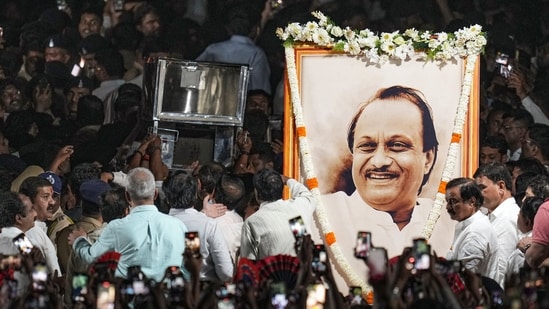
Yet, despite repeated victories, firm control over numbers and unmatched administrative experience, his long-cherished ambition of becoming chief minister remained unfulfilled.
Ajit Pawar’s political strength came from his deep understanding of grassroots politics and agrarian economy. Rustic in nature and direct in approach, he had a strong connect across regions of Maharashtra. He understood how rural politics was changing as urbanisation pushed villages towards semi-urban character, while political behaviour continued to remain largely rural. Ajit Pawar mastered this transition. Pimpri-Chinchwad and Baramati stood as clear examples of how he combined development with tight political control, transforming these regions in ways even his political opponents acknowledged. “In the 1990s, urbanisation gained momentum in Maharashtra. Rural areas began tilting toward semi-urbanisation, yet the tone of politics there remained rural, even as the nature of their issues started turning somewhat urban. Ajit Pawar had a complete grasp of this kind of politics and the skill to handle it adeptly. Pimpri-Chinchwad and Baramati are two excellent examples of that. Whether it was Pimpri-Chinchwad or Baramati, Ajit Dada transformed these regions in ways that even his political opponents would acknowledge,” said MNS chief Raj Thackeray in his condolence message after Ajit Pawar’s demise in place crash on Wednesday.
This ground strength translated into institutional power. Ajit Pawar served as deputy chief minister six times and handled some of the most powerful departments across different governments. As finance minister, he presented the state budget 11 times, giving him significant control over spending, projects and priorities. This administrative grip helped him consolidate loyalty within the party and ensure electoral success for leaders aligned with him.
{{/usCountry}}This ground strength translated into institutional power. Ajit Pawar served as deputy chief minister six times and handled some of the most powerful departments across different governments. As finance minister, he presented the state budget 11 times, giving him significant control over spending, projects and priorities. This administrative grip helped him consolidate loyalty within the party and ensure electoral success for leaders aligned with him.
{{/usCountry}}The limits of his rise became evident as early as 2004. In the assembly elections that year, the newly formed Nationalist Congress Party (NCP) won more seats than its ally Congress. By numbers, the NCP had a clear claim to the chief minister’s post. Ajit Pawar later said this was the moment he should have parted ways with his uncle Sharad Pawar. However, Sharad Pawar chose to allow the Congress to take the top post, citing multiple claimants within the Congress and broader alliance considerations. For Ajit Pawar, the decision marked a missed opportunity that shaped the rest of his political career.
Despite this, he never hid his ambition. Ajit Pawar openly stated his desire to become chief minister, while repeatedly stressing the importance of numbers and political timing. In a 2024 while speaking at Indapur ahead of Lok Sabha polls, he said there was nothing wrong in aspiring for the top post but added that one had to be practical about political realities. He also acknowledged that staying within the party framework after 2004 limited his chances.
Even when internal trust deficits and alliance politics worked against him, Ajit Pawar’s grip on his constituency of Baramati remained intact. In the 2024 assembly elections, despite an all-out effort by Sharad Pawar and the NCP (Sharad Pawar faction) to defeat him from Baramati, Ajit Pawar emerged victorious with a margin of over one lakh votes. The result reaffirmed his unmatched hold over the seat, where he had earlier won by a margin of 1.65 lakh votes in the 2019 polls.
Moments of political risk also defined his career. In 2019, he briefly served as deputy chief minister for three days alongside Devendra Fadnavis as chief minister in a dramatic early-morning swearing-in. The episode ended abruptly, reinforcing perceptions of his unpredictability and deepening trust concerns among allies.
Even after the NCP split in 2023, Ajit Pawar once again proved his relevance by retaining a substantial number of MLAs and securing a place in government. Yet, the chief minister’s post continued to elude him.
Ajit Pawar’s political life came to be defined by this contradiction: a leader who dominated the ground, delivered results and shaped governments, but never crossed the final barrier. His career underlines a central truth of Maharashtra politics — control, numbers and victories do not always translate into the highest office when trust, timing and strategic choices stand in the way.