Using four telescopes including the Giant Metrewave Radio Telescope (GMRT) in Pune, astronomers have discovered the biggest explosion seen in the universe which is believed to be bigger than the big bang explosion and is estimated to release five times more energy than the previous record holder and came from a supermassive black hole at the centre of a galaxy hundreds of millions of light years away.
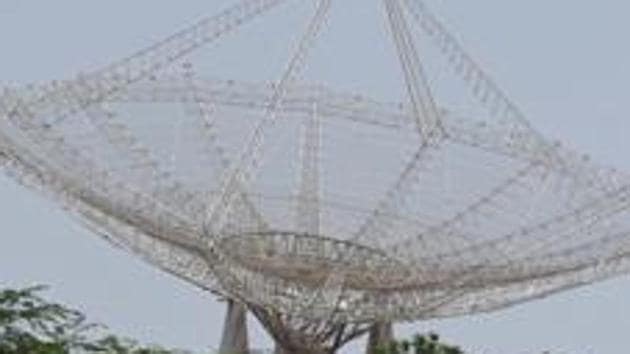
The other telescopes used for the discovery included NASA’s Chandra X-ray Observatory, European Space Agency’s (ESA) XMM-Newton and the Murchison Widefield Array (MWA) in Western Australia.
The National Centre for Radio Astrophysics (NCRA) said in a statement on Friday that radio data from the GMRT played an important role in helping to unravel the mystery about the nature of this explosion.
The data were taken in 2008 and were available in the observatory archive and were re-analysed by the international team of researchers to get an improved radio image of the radio source, as seen by the GMRT. It complemented very nicely with the frequency coverage of the Australian MWA telescope, while providing higher resolution for a more detailed look at the cluster.
Prof. Yashwant Gupta, Centre Director of NCRA, said “This is a great example of how archival data from the GMRT can be mined for interesting new finds and justifies the efforts and resources NCRA has put in to preserve every bit of interferometric data taken with the GMRT since its inception in 2002.”
{{/usCountry}}Prof. Yashwant Gupta, Centre Director of NCRA, said “This is a great example of how archival data from the GMRT can be mined for interesting new finds and justifies the efforts and resources NCRA has put in to preserve every bit of interferometric data taken with the GMRT since its inception in 2002.”
{{/usCountry}}The GMRT data are from 2008, taken with a modest bandwidth of 8 MHz using the old, legacy system of GMRT. “Today, with the upgraded GMRT, offering upto 200 MHz bandwidth in the same parts of the radio spectrum, we can do much better with observations of this kind”, said Prof. Gupta.