
 E-Paper



Jharkhand Assembly passes 1932-based domicile and reservation bills
The opposition BJP, however, described the development as political drama by the state to deflect attention from their failures and the possible ED action against the chief minister for his alleged involvement in an illegal mining case

 Prefer HTon Google


The Jharkhand assembly, during a special session on Friday, cleared two bills, one fixing 1932 land records determining people’s domicile status and another increasing reservation to 77% from 60% in various categories.
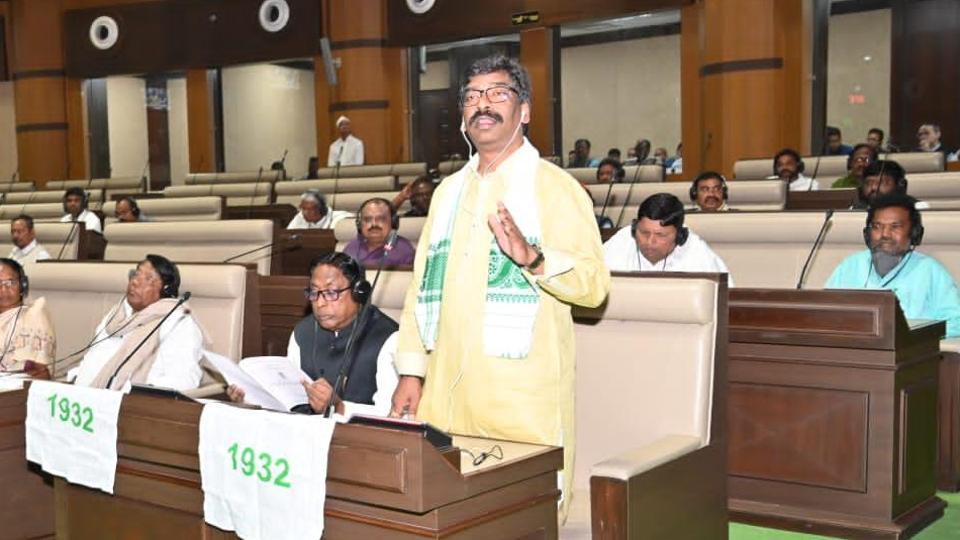
The bill was passed unanimously with the support of the Bharatiya Janata Party (BJP) and the All Jharkhand Students Union (AJSU) Party. However, it would only come into effect after the Centre includes them in the ‘Ninth Schedule of the Constitution’.
As per the first bill, people whose ancestors were living in the area before 1932, and whose names were included in land records will be regarded local residents of Jharkhand and will receive consequential, social, and cultural benefits including being entitled to grade 3 and 4 jobs in the state.
Also Read: No coercive action for feeding stray dogs, SC orders Nagpur muncipal corporation
The second bill, [Jharkhand reservation in vacancies of posts and services (Amendment) Bill, 2022], would increase reservation in state government jobs for the socially and economically weaker sections of society.
As per the bill, the reservation of the scheduled tribes (ST) would go up to 28% (from 26%), OBC would get 27% (up from 14%) and 12% for the scheduled castes (up from 10%). After including 10% reservation for EWS (economically weaker section), the total reservation would go up to 77% from the previous 60%.
Meanwhile, chief minister Hemant Soren, who laid them in the House, rejected the proposal to send the bill to a select committee saying that the bills have been drafted after detailed deliberations following an uproar from BJP MLAs who demanded a debate on the bill and accused the Hemant Soren government of unnecessary haste in order to gain political advantage.
The state however argued that they have decided to get these two bills in the Ninth Schedule to shield them from ‘judicial scrutiny’.
“Now it is up to the Centre to honour the sentiments of the state and include them in the Ninth schedule. If required, we will use all our might to get it done,” CM Soren said speaking to the media after the session.
Also Read: Aaditya Thackeray walks alongside Rahul Gandhi amid Bharat Jodo Yatra
The opposition BJP, however, described the development as political drama by the state to deflect attention from their failures and the possible ED action against the chief minister for his alleged involvement in an illegal mining case.
BJP chief whip Biranchi Narayan also hit out at the chief minister for not allowing discussion in the house on the two bills.
“We supported the bills but this is a political drama. The bills would come into effect only after they are included in the Ninth schedule, which is a very cumbersome process. Their intent is not clear. Such decisions could be implemented with a simple circular cleared by the cabinet. They have brought this just for vote bank politics after ED issued summons to the chief minister,” said Narayan.
In his closing remarks in the house, the chief minister, however, described the decisions as historic and challenged the BJP saying that the government’s move would decimate them in the next elections.


