Delhi education minister Manish Sisodia on Thursday said that the New Education Policy (NEP) endorses a “highly regulated” and “poorly funded” model of education, which is silent about the means required to reach the targets it aimed to achieve.
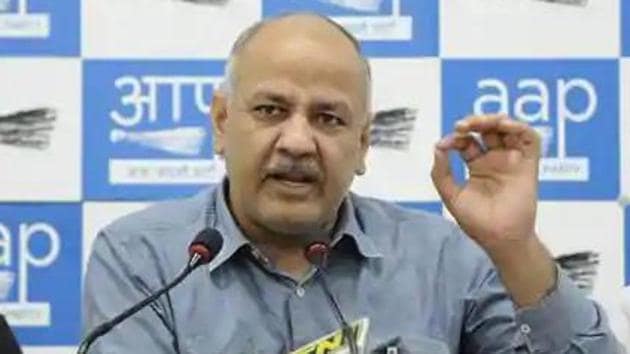
“The new education policy states that 6% of the total GDP will be spent on the education sector. However, it is silent on how this will be implemented. There should be a law ensuring mandatory 6% expenditure of the GDP on education. The government should bring the law. This was said in 1966 by the Kothari Commission but never implemented till date despite demands,” Sisodia said during a media briefing on Thursday.
Sisodia’s remarks came a day after the union Human Resource Development (HRD) ministry, which has now been renamed as the education ministry, introduced the policy to bring in wide-ranging reforms aimed at making the Indian education system more contemporary and skill-oriented.
The Union education ministry did not respond to requests for comment.
Sisodia said the NEP recognises the flaws in the current education system but was unable to break free of the pressures of traditions. “The nation was waiting for a new education policy for 34 years. It is here now. It is a forward-looking document, which accepts the flaws of today’s education system but has two issues with it — it was unable to break free of the pressures of education’s old traditions and does not say how the reforms that it aims to bring in will be achieved,” he said.
{{/usCountry}}Sisodia said the NEP recognises the flaws in the current education system but was unable to break free of the pressures of traditions. “The nation was waiting for a new education policy for 34 years. It is here now. It is a forward-looking document, which accepts the flaws of today’s education system but has two issues with it — it was unable to break free of the pressures of education’s old traditions and does not say how the reforms that it aims to bring in will be achieved,” he said.
{{/usCountry}}Sisodia said the NEP mentions setting up a regulatory body at every level but it can create a lot of “confusion” in the functioning of the education ministry.
The Delhi education minister said that the new policy is ambiguous about bringing classes up to 12 under the ambit of the Right to Education (RTE) Act that currently mandates free and compulsory education till Class 8. “In six years of deliberations, if you could not resolve the issue of funding and bringing entire school education under the Right to Education Act, how do you propose to implement the policy?” Sisodia said.
Expressing apprehensions over the two models of Early Childhood Education -- Anganwadi model and the pre-school model -- proposed in NEP, Sisodia said, “In such a situation, while one set of children will receive ECE through anganwadi workers another will be through trained Nursery teachers. What kind of equity are we securing if we have discrimination so early in the life of a child?”
Sisodia said the NEP does not touch upon how the central government is planning to improve the education system in its schools. “It is the responsibility of the government to provide quality education to children. The policy has no direct emphasis on the government school system. It rather seeks to encourage private philanthropists. The policy should have been explicit on committing to provide quality education by the government instead of encouraging private education,” he said.
Sisodia also said that the policy does not talk about the training of teachers and promotion of sports in educational institutions. “The policy talks about making the board examination easier but it misses the point by saying so. It is not about a hard or easy exam, it is about assessing the learning, understanding and application,” he said.