India’s banks have taken the government’s maxim of ‘Sab Ka Sath, Sab Ka Vikas’ as their own: They have used technology and ingenuity to bring millions of people into the banking fold, a key step towards achieving of a range of development objectives such as the efficient transfer of benefits and the propagation of small businesses.
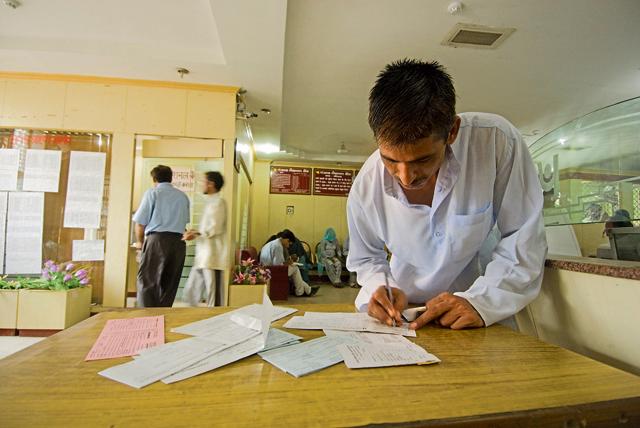
The next step is crucial: Boosting financial literacy among a fast-growing population of new clients, partly by setting up financial literacy centres and extending the highly successful Business Correspondents (BC) model.
Since opening brick and mortar branches is not viable in small villages, the Reserve Bank of India provided a major breakthrough in 2006 by allowing banks to set up the BC model. This low-cost model of delivering banking products has matured over the years and has gained the confidence of customers. Over 230 million bank accounts have been opened by the BCs of all banks and transactions volume in the current year is expected to cross Rs 1,20,000 crore.
The launch of the Pradhan Mantri Jan Dhan Yojana (PMJDY) in August 2014 provided a big boost to the banks’ financial inclusion drive. Over 190 million PMJDY accounts have been opened so far, and in that, SBI is the major player with a 24% share. Under the PMJDY, the mandate is not restricted to opening accounts, the aim is to provide easier accessibility through issuing RuPay Cards, which, incidentally, carry an inbuilt accident insurance cover of Rs 1 lakh. Providing small-value overdrafts based on satisfactory conduct of account, availability of low-cost life insurance (Pradhan Mantri Jeevan Jyoti Bima Yojana) and accident insurance (Pradhan Mantri Suraksha Bima Yojana) and pension scheme (Atal Pension Yojana) are also part of the PMJDY initiative.
A particularly encouraging development is the reduction in zero balance accounts to just under a third; usage of accounts is also increasing. For a mission of this size, all the stakeholders need to work together — banks, insurers, state governments, National Payments Corporation of India, State-Level Bankers Committees, Lead Banks and the Unique Identification Authority of India, apart from the RBI and the government. One of the big achievements of the PMJDY is that it has connected strongly with the masses and has convinced people of the need of maintaining a bank account. The demand side has been addressed to a large extent and all steps are underway to improve supply side by scaling up banking outlets and BCs in uncovered locations. The ultimate aim is to provide banking services as close as possible to the customers. For this purpose the banking network of branches and BCs is being expanded to cover all sub-service areas; the recent move of the government to provide a Financial Inclusion Fund to support the banks to instal very small aperture terminals for providing Internet connectivity in uncovered areas is a welcome step. The banks are also installing micro-ATMs at BC outlets to facilitate interoperable transactions by using debit cards.
{{/usCountry}}A particularly encouraging development is the reduction in zero balance accounts to just under a third; usage of accounts is also increasing. For a mission of this size, all the stakeholders need to work together — banks, insurers, state governments, National Payments Corporation of India, State-Level Bankers Committees, Lead Banks and the Unique Identification Authority of India, apart from the RBI and the government. One of the big achievements of the PMJDY is that it has connected strongly with the masses and has convinced people of the need of maintaining a bank account. The demand side has been addressed to a large extent and all steps are underway to improve supply side by scaling up banking outlets and BCs in uncovered locations. The ultimate aim is to provide banking services as close as possible to the customers. For this purpose the banking network of branches and BCs is being expanded to cover all sub-service areas; the recent move of the government to provide a Financial Inclusion Fund to support the banks to instal very small aperture terminals for providing Internet connectivity in uncovered areas is a welcome step. The banks are also installing micro-ATMs at BC outlets to facilitate interoperable transactions by using debit cards.
{{/usCountry}}Direct benefit transfers (DBTs) for liquefied petroleum gas (LPG) have been implemented successfully. DBT for 26 schemes is already functional and the government intends to expand DBT coverage to include fertilizer and food subsidy in the next phase, which will enable a higher flow of funds in the accounts and encourage account holders to save. We also expect that the government will release adequate remuneration to the banks for handling the DBT work. This will add strength to the BC model and make it more sustainable for banks and BCs.
We also need to keep up the effort to provide financial literacy to newly acquired customers. All products are enabled through technology and providing adequate information to a large pool of customers is a big challenge. Banks alone may not be able to handle this, other stakeholders need to pitch in as well. Here, Financial Literacy Centres can play an important role to carry forward this message. Further, BCs too need to be trained and encouraged to communicate well and take care of the banking needs of the population they serve. Their services should be used not only for account opening, but also for recovery and follow-up of loans by providing requisite training and enablement. This will improve their acceptability and also enable them to earn higher remuneration. Around 20% of PMJDY accounts opened by SBI pertain to minors on account of opening of scholarship accounts of students. Our bank has attempted to reach out to the youngsters by holding nearly 5,000 quiz contests for them.
With focus on Mudra loans, many small entrepreneurs, micro enterprises, artisans and other PMJDY customers have started availing of credit facility from banks. Since all such data is captured by credit bureaus, it becomes all the more necessary to communicate and apprise such customers about the utility and benefits of timely repayment of loans so that their track record is not adversely impacted due to their ignorance.
Going forward, I see more competition emerging in this segment with the entry of payment and small banks. Ultimately, it will be the efficiency of entities which determines sustainability of any business model. The recent RBI report on Mid-term Path on Financial Inclusion truly captures the market scenario, emerging opportunities and challenges. All banking players need to build on their existing strengths and capabilities to deliver optimally to the customers, who are at the centre of what we do.
Arundhati Bhattacharya is chairperson, State Bank of India
The views expressed are personal