United States (US) President Donald Trump has called rival women politicians plenty of names. On Thursday, a day after the vice-presidential debate, he unleashed a full range of them against Senator Kamala Harris: A “monster”, a “communist” and “unlikable”.
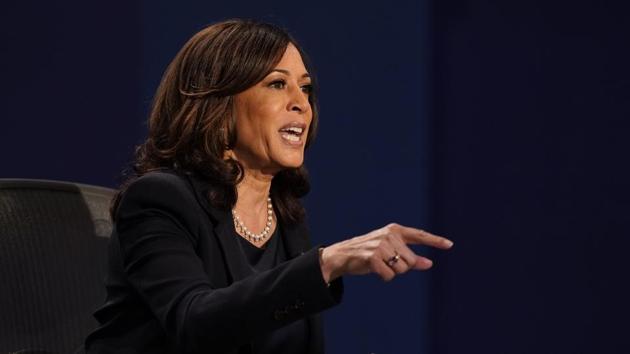
“Monster” was an outright insult even though too juvenile for a 74-year-old man, and “communist” was an outright lie in this context. But “unlikable” was politically more strategic, intended to hurt Harris — already a historic and transformational figure as the first Black woman and Indian-descent nominee of a major party for vice-president — with American voters. US voters have tended to base their support for women candidates for political office on their likability, a vague term that may have played an outsized role in preventing the US from electing a woman president, an embarrassing feat for a country that prides itself in its exceptionalism.
In a widely-cited 2016 survey by Barbara Lee Foundation, a non-partisan body that advances equality and representation for women in politics, an overwhelming number of respondents — 84% of men and 90% of women — said that it was important for them to like women candidates to support them. And what made women candidates and officeholders likable? “Presentation and track record. In other words, style and substance both matter.”
Though widely questioned and challenged in recent years, this notion of women candidates continues to be deployed, perhaps for the same reason that may have impelled Trump’s outburst, to damage and neutralise a potential threat. Hillary Clinton, the former secretary of state and Democratic nominee for president in 2016, had a book on her called “Unlikable”.
{{/usCountry}}Though widely questioned and challenged in recent years, this notion of women candidates continues to be deployed, perhaps for the same reason that may have impelled Trump’s outburst, to damage and neutralise a potential threat. Hillary Clinton, the former secretary of state and Democratic nominee for president in 2016, had a book on her called “Unlikable”.
{{/usCountry}}Examine the reactions from conservatives to Harris during and after the Wednesday debate: “Kamala Harris is unlikeable (Lauren Chen, Blaze TV)”; “Harris really has a likability problem … (Noah Pollak, a contributor to Free Beacon).
Harris did seem to have tried to be likable. She did not call Pence a clown when he interrupted her or asked him to shut up as Joe Biden had done to Trump in their debate. “I am speaking”, she had said to the vice-president politely a few times, but did not really press it. She also did not try and take him down as she had with Biden in their debate in the Democratic primaries. As a partly Black woman, Harris was also up against another stereotype of US politics — of angry and domineering Black women. She would have been branded one if she had challenged Pence for his repeated interruptions, mansplaining and lies — she did protest a few times, but did not push.
“Kamala could have decimated him, (Pence)” an Indian American texted me as the debate was winding down, wishing she had been more forceful and aggressive. Harris wasn’t. But only because, it appears, she was executing a well-planned campaign strategy: Do no harm. She did not need to waste her time rebutting Pence, who was on a plummeting ticket.