Mehar Alam, the chief suspect in Sunday’s serial blasts in Patna that killed six and injured 80, escaped from National Investigation Agency’s custody while he was being taken to the state Capital. When the team took a short break in Muzaffarpur, about 150 km from Patna, Alam smartly said he wanted to use the toilet. That was the last his captors saw of him.
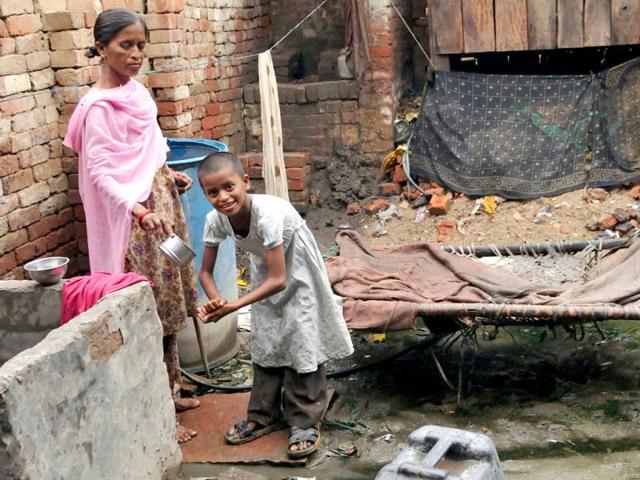
With 49.8% of its population using all of India as an open-air toilet, he could be anywhere. He may even be lost looking for a public toilet, which is far more difficult to spot than a tiger in Sariska.
So one of the facts prime-ministerial aspirant Narendra Modi got right was India needing “toilets before temples”. What he didn’t mention was neighbouring Nepal is already doing it.
In 2011, Nepal declared the country would be “open-defecation free” by 2017, and within two short years, 10 of its 75 districts have their great outdoors free of poop and stench.
Leading the charge against outdoor poop in Nepal are enthusiastic children blowing whistles and clanging pots and pans. These raucous children are among the most visible faces of the national campaign to persuade people to stop defecating in the open.
The strategy, as you may have guessed, is simple — to shame people to use toilets by blowing whistles, clanging pots and jeering when they are caught in the act of piddling or defecating outdoors.
{{/usCountry}}The strategy, as you may have guessed, is simple — to shame people to use toilets by blowing whistles, clanging pots and jeering when they are caught in the act of piddling or defecating outdoors.
{{/usCountry}}So phenomenal is their success that districts are now racing against each other to be declared open-defecation free.
India’s nowhere close. Only 46.9% of India’s 24.66 crore households have toilets, with 49.8% people defecating in the open and only 3.2% using public toilets, shows data from Census of India 2011. Less than one in three rural homes (31% ) have toilets, the Census found, a figure that is little different from the 35% that showed up in the National Sample Survey (NSS) 2009.
The NSS found that nearly 49% homes had no toilets, with the rural-urban divide being considerable. Two in three rural homes (65%) had no toilets compared to 11% of urban homes.
The Union Ministry of Rural Development’s Indian Rural Development Report 2012-13 put the numbers of households with toilets at a far more optimistic 73%. Jharkhand tops toilet-less list with 77% of homes with no toilet facilities, followed by 76.6% people in Odisha and 75.8% in Bihar.
India’s lags behind all its neighbours, with Bangladesh, Pakistan and Nepal showing significant improvement, said the UNICEF-WHO’s Progress on Sanitation and Drinking Water 2013 update 2013. In Bangladesh, open defecation fell from 32% in 1990 to 4% in 2011, an annual decline of 9.9%. Pakistan showed an annual decline of 3.9%, from 52% to 29% in the same period. Nepal’s decline was from 84% in 1990 to 43% 2011, which is an annual decline of 3.2%.
It’s not that India hasn’t been trying. The Centre rolled out the Central Rural Sanitation Programme in 1986, which failed to reach targets.
Next came the Ministry of Rural Development’s Total Sanitation Campaign (TSC) that, like Nepal, aimed to eradicate open defecation by 2017 through schemes like the Nirmal Gram Puraskar, which awards village, block and district governments that ensure all homes and schools have toilets.
In 2012, TSC was renamed Nirmal Bharat Abhiyan that had another target — full sanitation coverage for 50% villages by 2017 and for all of India (Nirmal Bharat) by 2022.
The problem lies in the way the Centre is going about it. What Nepal did right was not to build toilets and ask people to use them. Instead, what worked was creating demand. The catalyst was UNICEF’s low-budget “innovation” of supporting schools to play a leading role in the campaign.
They paid for supplies to build school toilets, which the villagers got together to build.
That, coupled with sanitation programmes at school, not only improved children’s health — they reported fewer infections such as worm infestations and diarrhoea — but also helped them take key messages back to their homes and communities, which helped change people’s behaviour.
Soon, people weren’t just asking for toilets, but building them on their own when they found the government not doing it.
India has similar stories — such as the new bride Anita Nare from Betul in Madhya Pradesh who walked out of her husband’s home when she found it did not have a toilet — but these are few and far between.
What India needs is a mass movement which, like in Nepal, will improve sanitation, being down infections, lower school absenteeism, and last but not the least, prevent crime suspects from running away in search of toilets.