The Supreme Court (SC)‘s judgment on the communications lockdown in the Kashmir Valley, delivered on Friday, has elicited mixed responses. It has been pointed out that even after five long months, the court returned no finding on the legality of the shutdown itself, but set out some abstract legal principles that it did not apply in the case before it. Thus, the whole raison d’etre of the case — the plight of Kashmiris deprived of essential access to the Internet for many months on end — remained unaddressed, with the court refusing to comment on it at all, and instead leaving the matter to be “reviewed” by a government committee under the 2017 Telecom Suspension Rules.
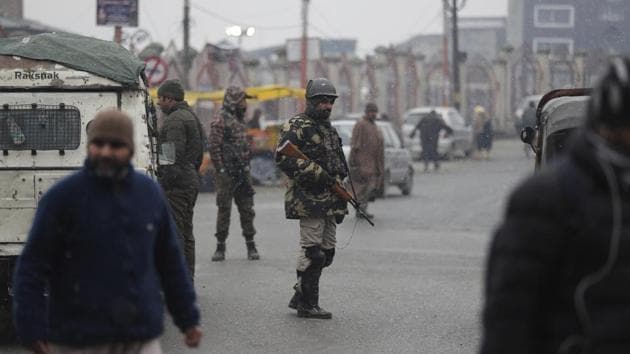
There is no doubt that the court’s statement of principles will offer cold comfort to Kashmiris, who continue to labour under the longest Internet shutdown in the history of any democratic country, and as was recently shown, have had to travel hundreds of kilometres just to access the Internet, and at exorbitant rates.
At the same time, however, Internet shutdowns are not unique to Kashmir. India is the world leader in Internet shutdowns (in sheer number, it exceeds those ranked 2 to 10 put together; these include countries such as Chad and China). Until the SC’s judgment, there had been no definitive verdict from the apex court on the constitutionality of such shutdowns.
In this context, the SC’s judgment sets out two crucial legal principles.
First, the court notes that freedom of speech and access to information on the Internet on the one hand, and the freedom of trade and commerce through the Internet on the other, are both “constitutionally protected”. There has been some debate on the fact that the SC did not expressly hold that access to the Internet is a fundamental right. That, however, is a distinction without a difference. If free speech and freedom of trade on the Internet are fundamental rights (protected by Articles 19(1)(a) and 19(1)(g) of the Constitution), then the deprivation of these rights, by shutting down the Internet, automatically attracts constitutional scrutiny. To all effects and purposes, thus, depriving a person of their access to the Internet amounts to depriving them of their fundamental rights.
{{/usCountry}}First, the court notes that freedom of speech and access to information on the Internet on the one hand, and the freedom of trade and commerce through the Internet on the other, are both “constitutionally protected”. There has been some debate on the fact that the SC did not expressly hold that access to the Internet is a fundamental right. That, however, is a distinction without a difference. If free speech and freedom of trade on the Internet are fundamental rights (protected by Articles 19(1)(a) and 19(1)(g) of the Constitution), then the deprivation of these rights, by shutting down the Internet, automatically attracts constitutional scrutiny. To all effects and purposes, thus, depriving a person of their access to the Internet amounts to depriving them of their fundamental rights.
{{/usCountry}}Secondly, the court makes clear that the constitutional validity of an Internet shutdown has to be adjudicated in accordance with the doctrine of “proportionality”. As the name suggests, the doctrine of proportionality requires the court to ask whether a violation of rights is “proportionate” to the goal or the purpose that the State wants to achieve.
The test has a number of factors. The State must demonstrate that the means it has implied (for example, shutting down the Internet) are rationally related to its goal (preserving public peace). Most importantly, however, the State must demonstrate that the method it has chosen is the “least intrusive” one. For instance, if you are pursuing a thief who has run into a neighbourhood, you do not burn down every house of the neighbourhood to smoke him out. Similarly, in order to tackle cross-border terrorism and online radicalisation, one does not place an entire people under a communications lockdown. The doctrine of proportionality ensures that it is not enough for the State to simply cite law and order concerns, and say that “anything goes”. Rather, in a constitutional democracy, even when there are law and order concerns, the State must demonstrate that it has respected rights to the maximum possible extent.
The value of the SC’s observations lies in the fact that it sets the ground for future — and indeed, present — challenges to the epidemic of Internet shutdowns that is taking place all over India. In the wake of the protests around the Citizenship (Amendment) Act, for example, the Internet was shut down in New Delhi, in Uttar Pradesh, and in Assam. In Assam, a constitutional challenge was filed against the shutdown, and the High Court of Gauhati — as an interim measure — directed the state government to restore the Internet until the case was finally decided. The SC’s judgment now sets out the constitutional framework within which the various high courts of the country can now examine — and bring to heel — state governments’ trigger-happy tendency to shut down the Internet at the drop of a hat.
What of Kashmir itself? The SC directed the government to make public all the orders on the bases of which the shutdown had been imposed, and to review them within a week. If the government elects to continue the shutdown, there is little doubt that the matter will soon be back in court. And on that occasion, the court will, hopefully, apply the principles that it has set out, and test the validity of this interminable shutdown on the touchstone of the Constitution.