From Monday elections are being held in four states, West Bengal, Assam, Tamil Nadu and Kerala, and one union territory, Puducherry.
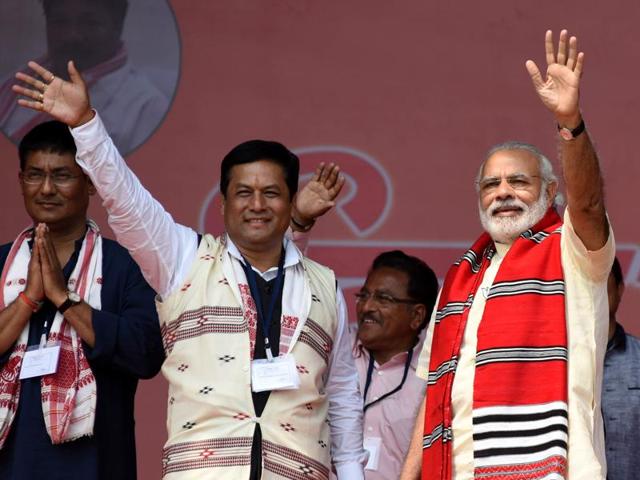
In all, nearly 170 million voters will be electing representatives for 824 assembly seats. Those numbers are big and so is their political significance. Yet, in sharp contrast to the hyped-up media focus during last year’s assembly elections in Delhi first and then Bihar, these have curiously received cursory attention.
In fact, they’ve been overshadowed by other things that have grabbed the headlines — such as the politics over the suicide of a Dalit student in Hyderabad; and charges of sedition against student leaders at another university in Delhi. Why, even Vijay Mallya, once a self-proclaimed ‘King of Good Times’ but now clearly facing rather bad ones, got more press and air-play than what the elections have got.
Read | Win or lose, Bengal polls will be historic for Left-Congress alliance
They deserve plenty more. Here’s why.
In each of the four poll-bound states, there are things that are out of the ordinary this time and that makes them noteworthy.
Let’s begin with West Bengal. For the first time in the history of the state, the Left parties, led by the CPI(M), have struck up an alliance with the Congress. The alliance is said to be informal but both parties are lending active support to each other’s candidates. Anyone who follows West Bengal politics knows how unthinkable that would have been even a few years ago. The Congress and the Left have been arch-enemies in the state and have always been at each other’s throats rather than in each other’s beds. Now that they are bound together against common enemies, the TMC and the BJP, it will, therefore, be interesting to see how their ‘alliance’ works. Or doesn’t.
{{/usCountry}}Let’s begin with West Bengal. For the first time in the history of the state, the Left parties, led by the CPI(M), have struck up an alliance with the Congress. The alliance is said to be informal but both parties are lending active support to each other’s candidates. Anyone who follows West Bengal politics knows how unthinkable that would have been even a few years ago. The Congress and the Left have been arch-enemies in the state and have always been at each other’s throats rather than in each other’s beds. Now that they are bound together against common enemies, the TMC and the BJP, it will, therefore, be interesting to see how their ‘alliance’ works. Or doesn’t.
{{/usCountry}}READ: Trinamool, Mamata to blame for Kolkata flyover collapse: Rahul Gandhi
In Assam, for the first time in that state’s history, the BJP has a fighting chance of getting its first chief minister. In a state where the AGP, a party that was born out of a student agitation, once got India’s youngest chief minister straight out of university, that same party is now playing a minor role to that of its alliance partner, the BJP. That’s no mean feat in a state where the BJP has at best played second (or even third) fiddle. How the BJP fares in Assam will be something that politics junkies should be keen to watch.
How it fares in Kerala should also be of interest. For more than 45 years, no party has ever won consecutive elections in Kerala. It’s always been a Leftist government alternating with a Congress one.
This time that pattern could be disrupted because the BJP has been actively wooing the backward classes, traditionally a vote bank for the Left. If it chips away some of that bank’s votes, it could become a spoiler for the Left, which, if you went by the old pattern, should replace the incumbent Congress-led government.
Could the Congress then make history and get a second term? That would be worth watching.
The same holds true for Tamil Nadu, where since 1989 the pendulum of power has oscillated between the DMK and incumbent chief minister J Jayalalithaa’s AIADMK. This time that pattern could change in Tamil Nadu as well with ‘Amma’, as the chief minister is popularly called, expected to break the jinx.
READ: State polls survey: Mamata to retain Bengal, hung assembly in Assam
Such singularities apart, what happens in the four states will matter for all the parties in the fray. Can the BJP, which failed to win Delhi and Bihar, win Assam? Can it gain vote-shares in Kerala and West Bengal? If it does it would boost the street-cred of the party, of course, but also of Prime Minister Narendra Modi and party chief Amit Shah.
Can the Congress, a junior partner in the pact that won Bihar, retain Assam and Kerala? If it does, it could be a shot in the arm for the party’s chief, Sonia Gandhi, and her son Rahul. For the Left, which is all but becoming irrelevant, how it fares in Kerala and West Bengal will be critical. And, for the TMC in Bengal, it would be chief minister Mamata Banerjee’s first assembly election while being in power, which is going to be wholly different from the agitprop campaign that got her there in 2011.
As I said, these state polls are well worth following.
The author is the editor-in-chief of Hindustan Times, and tweets as @sanjoynarayan
Views expressed are personal.