


 Live Score
 Cricket Teams
 Cricket Players
‘Am I a good ODI player?’: How Rahul Dravid made a comeback after being dropped from Team India in 1998
Rahul Dravid said he doubted himself as an ODI player and felt insecure when he was dropped from the Indian side in 1998 mainly due to his strike rate.


Former India captain Rahul Dravid is mentally one of the strongest cricketers that India have ever produced. You can’t play 164 Test matches and 344 ODIs scoring 13,288 and 10,889 runs respectively if you are not but where Dravid was different from the rest was the way he carried himself on and off the cricket field. Known as ‘the wall’ for his water-tight technique, Dravid in a recent chat with former India cricketer and current women’s team coach WV Raman, revealed that there were times when even he felt insecure despite being so strong mentally.
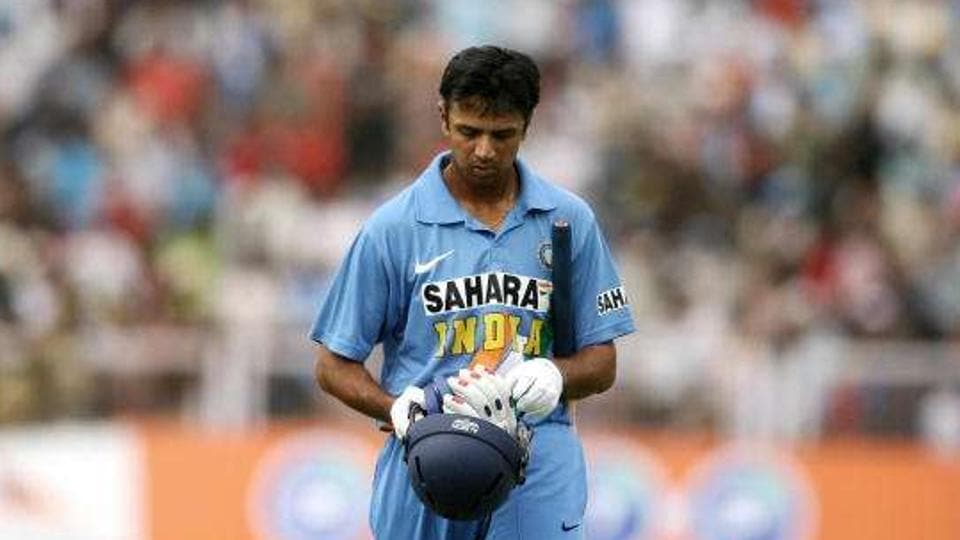
The former India captain, who played 93 Test matches on the trot – second-best for India after Sunil Gavaskar’s 106 - after making his debut in England in 1996, said he doubted himself as an ODI player when he was dropped from the Indian side in 1998 mainly due to his strike rate.
Also Read | Covid-19 aftermath: IPL 2020 all set to move out of India
“There have been phases in my international career (when I felt insecure). I was dropped from the ODI team in 1998. I had to fight my way back in, was away from the Indian team for a year. There were certain insecurities then about whether I’m a good enough one-day player or not because I always wanted to be a Test player, was coached to be a Test player, hit the ball on the ground, don’t hit the ball in the air, coaching like that. You sort of worry whether you had the skills to be able do it (in an ODI),” said Dravid when asked about instances when he felt insecure.
Dravid, however, made a strong comeback to the ODI side ahead of the 1999 World Cup in England and even ended up as the highest scorer (461) of the tournament with India not even making the semi-finals of the event. Dravid was also the highest scorer in ODIs in that calender year.
The right-hander would then go on to represent India in the 2003 World Cup and also captain the side in the 2007 World Cup.
Also Read | When Inzamam stood up for Azharuddin and confronted abusive fan in 1997
Dravid also highlighted the phases of insecurities while growing up as a budding cricketer in India.
“I have gone through many phases of insecurities. Growing up as a young cricketer in India is not easy, there’s a lot of competition and especially in the times I grew up there was only the Ranji Trophy and the Indian team, there was no IPL. Even the money in Ranji Trophy was so poor that there was always that constant challenge. You’ve given up a career in studies, I was not bad in it, so I could’ve easily done an MBA or something. I forego that for a career in cricket and if the cricket didn’t work out there was nothing much to fall back on. So there was a level of insecurity at that age. This kind of helps me when I interact with cricketers of this generation. I can understand some of the insecurities that they go through,” said Dravid.
Dravid then highlighted how controlling the controllable helped him overcome those insecurities.
“A lot of the ways to deal with the insecurities was to try and control the things I could control. Later on, I realised that the things you get insecure about are some of the things beyond your control. You start worrying about things that you can’t control. Sometimes even success and failure are not in your control. What is in your control is the effort, the hard work that you put in, your ability to concentrate, your ability to switch on and switch off, the ability to stay balanced, I think these are the things that you can control. Focussing on the things that I could control and ignoring what I couldn’t was something that definitely helped me,” Dravid said.


