


 Live Score
 Cricket Teams
 Cricket Players
Babar Azam admits Shan Masood's finger fracture catalysed their defeat against West Indies: ‘We definitely missed him’
Babar Azam said Shan Masood's fractured finger badly hurt Pakistan as batting collapses and failed partnerships sealed a 90-run loss to West Indies in Trinidad.

 Prefer HTon Google


Pakistan captain Babar Azam has confirmed that former skipper Shan Masood suffered a fractured finger during the opening Test against the West Indies, an injury that disrupted the visitors’ batting order in their 90-run defeat in Trinidad.
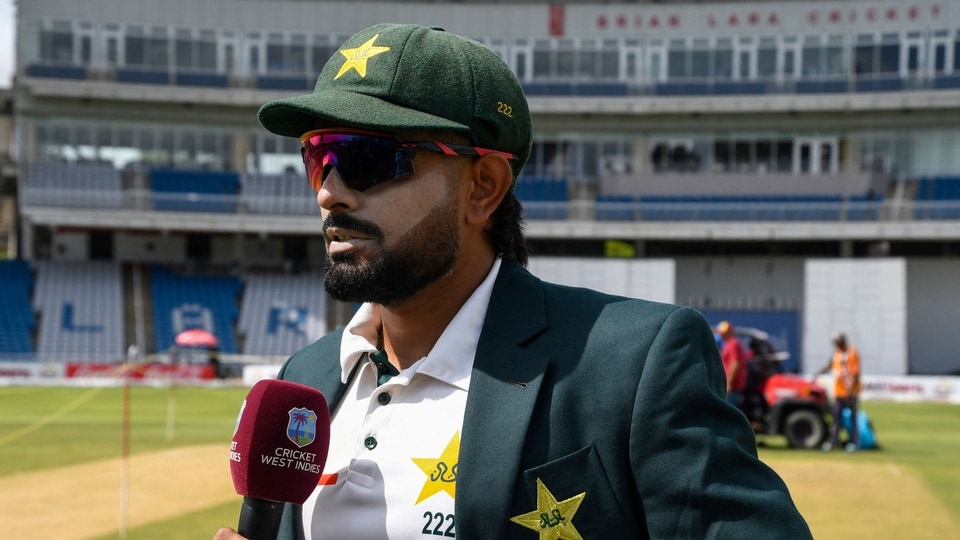
Masood sustained the injury while compiling 109 in Pakistan’s first innings at the Brian Lara Cricket Academy. Although he completed his century, the problem forced the left-hander to drop to No.8 in the second innings as Pakistan attempted to chase 211 for victory.
“Yes, Shan Masood’s injury affected us because, unfortunately, his finger is fractured, so we definitely missed him,” Babar said. Pakistan had appeared capable of taking control of the match when Masood’s century and Imam-ul-Haq’s 63 carried them to 244 for three in response to the West Indies’ first-innings total of 311. However, the visitors lost their final seven wickets for only 38 runs and were dismissed for 282, conceding a 29-run lead.
Justin Greaves triggered the collapse with his maiden Test five-wicket haul, returning figures of five for 27. His spell included five consecutive wicket-maiden overs as Pakistan’s strong position rapidly unravelled.
Babar laments Pakistan’s failure against the new ball
Pakistan bowled the West Indies out for 181 in their second innings, leaving themselves a target of 211 to win the Test and take the lead in the two-match series. Instead, their top order collapsed against Jayden Seales and the West Indies pace attack.
“At the same time, when you’re facing the new ball, you have to survive the first 20 overs, build partnerships, and then, as the ball gets older, the pitch becomes easier to bat on. We couldn’t put together those partnerships,” Babar said.
Pakistan slipped to 71 for nine before Babar, and Mohammad Abbas added 49 for the final wicket. Babar remained unbeaten on 58, his 32nd Test half-century, but Seales dismissed Abbas to complete figures of five for 20 and seal the victory.
Masood eventually came out to bat at No.8 despite his fractured finger but managed only three runs. His inability to occupy his regular position further weakened Pakistan's top order, already struggling against the new ball.
Also Read: West Indies thrash Pakistan by 90 runs in first Test despite Babar Azam unbeaten fifty
“We played good cricket in the last few days, but today we were not up to the mark as a batting unit,” Babar Azam said. “The surface is good and we expected the new ball to move for which we were prepared … but I think they bowled very well and used the conditions nicely. We’ll sit together and discuss these things because, while the result isn’t go our way, we can certainly address our mistakes. We’ll do our best to correct them and ensure we improve going forward,” he added.
The defeat was Pakistan’s eighth consecutive Test loss away from home and left them at the bottom of the World Test Championship standings. West Indies, meanwhile, took a 1-0 lead in the series. The second Test begins in Port of Spain on August 2, with Masood’s availability uncertain because of the fracture.


