


 Live Score
 Cricket Teams
 Cricket Players
Why ‘Clicky Ponting’ cuts so deep: Ricky Ponting’s infamous reputation of win-at-all-costs makes a savage return
‘Clicky Ponting’ is more than a rhyme: it draws on Australia's win-at-all-costs legacy and Ricky Ponting's reputation for pushing cricket's limits too far.

 Prefer HTon Google


The finger movement lasts barely a second. As the ball passes the outside edge, the fielder at first slip appears to click his fingers, manufacturing the sound the umpire is waiting to hear. The wicketkeeper gathers, the appeal rises, and the batter is given out even though the replay appears to show a visible gap between bat and ball.
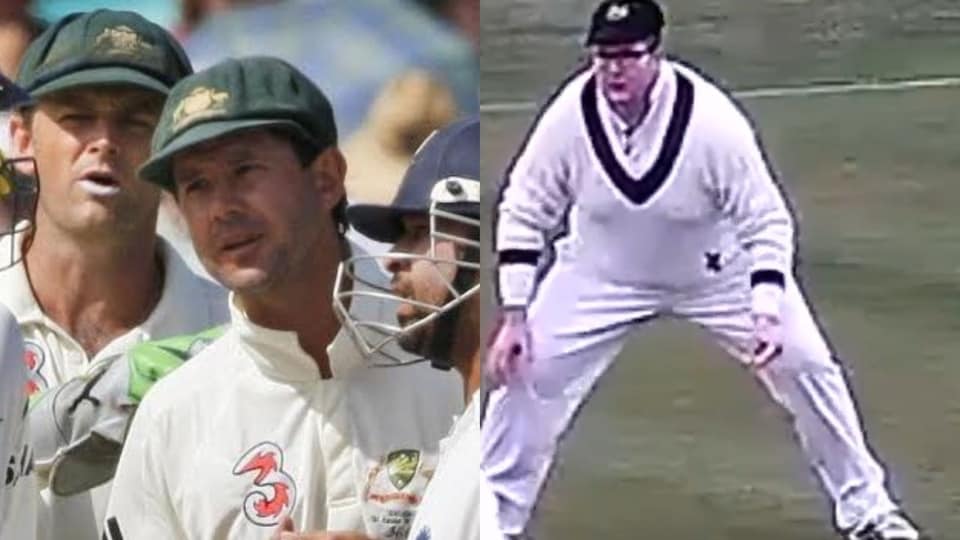
That alleged deception during Saltburn 2nd XI’s match against Norton 2nd XI has triggered an investigation by the North Yorkshire and South Durham Cricket League. It has also produced a nickname more damaging than “Clickgate”: “Clicky Ponting”.
On the surface, the construction is simple. “Clicky” rhymes with Ricky and describes the alleged trick. Yet English cricket could have attached the joke to any famous Ricky. It chose Ricky Ponting because the name carried the accusation before the punchline had even been explained.
Ponting remains, in the English cricketing imagination, the most recognisable face of Australian victory pursued without much concern for restraint or the opponent’s idea of fairness. His career supplied the required image: the domineering captain demanding every decision, claiming every advantage and treating indignation as a tactical resource.
Australia built the reputation before Ponting inherited it
Australian cricket’s uncomfortable relationship with the spirit of the game did not begin with Ponting. Its most infamous early exhibit came in 1981, when captain Greg Chappell instructed his brother Trevor to bowl the final delivery of an ODI against New Zealand underarm because New Zealand needed six to tie. The delivery was legal, but so nakedly designed to remove competition that it became a permanent symbol of winning stripped of sporting dignity.
The decades that followed added other layers: aggressive appealing, organised sledging and the insistence that behaviour condemned in opponents was merely “hard cricket” when practised by Australia. Ponting did not invent that doctrine. He became its most polished public representative.
His teams were magnificent, but their dominance came with an atmosphere of entitlement. Australia did not merely expect to win; they often appeared to expect the umpire, the opposition and even the moral vocabulary of the sport to accommodate the process.
The 2008 Sydney Test against India crystallised Ponting’s reputation. During India’s second innings, Michael Clarke claimed a low catch to dismiss Sourav Ganguly. Umpire Mark Benson looked towards Ponting, who signalled that the catch was clean, and Ganguly was sent on his way. The image was devastating: Ponting, captain of the fielding side, appeared to provide the ruling, which the umpire then accepted.
It came during a Test littered with disputed decisions and bitterness. India captain Anil Kumble’s judgment afterwards — that only one team had played in the spirit of the game — attached itself to Ponting’s Australia more permanently than the result. The captains’ agreement over accepting fielders’ words on catches was abandoned before the next Test.
Ponting’s confrontations with authority were not confined to India. During the 2005 Ashes, Gary Pratt, an England substitute fielder, ran him out at Trent Bridge. Ponting walked off directing an angry tirade towards the England balcony over the hosts’ use of substitutes and was fined 75 per cent of his match fee. The fury exposed a recurring Ponting trait: rules and tactics were acceptable until they worked against Australia. The moment they became inconvenient, his celebrated competitiveness frequently curdled into theatrical outrage.
At Melbourne in 2010, he argued at length with the umpires after a review found no evidence that Kevin Pietersen had edged the ball. Ponting was fined 40 per cent of his match fee. There had been another fine in Bangladesh in 2006 following an umpiring confrontation. When a decision resisted him, Ponting did not simply disagree. He attempted to overpower the moment, using his status, aggression and the force of Australia’s collective appeal to make acceptance appear unreasonable.
Why ‘Clicky Ponting’ lands so perfectly
That is why the English press embraced Ponting rather than another Australian great. Steve Waugh was colder. Shane Warne carried scandal of a different kind. Ponting was the captain most visibly associated with appeals, disputed catches, umpire pressure and the belief that competitive force could settle questions better left to officials.
Australian cricket later produced Sandpapergate in 2018, when Cameron Bancroft was caught using sandpaper on the ball in a plot involving captain Steve Smith and vice-captain David Warner. A subsequent cultural review found an organisation oriented towards winning without properly counting the cost.
That language could almost serve as the historical caption beneath Australian cricket’s worst episodes. From the underarm delivery to Ponting’s era of intimidation and eventually the sandpaper at Cape Town, the names changed while the central justification remained familiar: victory first, moral accounting later.
“Clicky Ponting” therefore compresses decades of cricketing resentment into two words. The “click” describes the alleged offence. “Ponting” supplies the manner, the mentality and the national stereotype surrounding it.
It is funny because it rhymes. It is brutal because everyone understands the insinuation: a tiny act of deception performed with complete confidence that the appeal will be loud enough, the umpire uncertain enough and the fielding side shameless enough to collect the wicket.
English cricket did not choose Ponting accidentally. It chose the Australian whose name had already become shorthand for treating the line not as a boundary to respect, but as something to pressure, negotiate, and, whenever possible, push out of sight.


