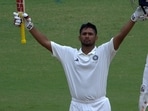
Born on October 17, 1970, in Bangalore, Mysore State (now Karnataka), Anil Kumble redefined the art of leg-spin bowling through relentlessly fiery accuracy, deceptive bounce, and unwavering competitive grit. Making his international debut in an ODI against Sri Lanka at Sharjah in April 1990, followed by his Test debut against England at Manchester in August 1990, he eschewed classical flight in favor of relentless trajectory and sharp top-spin.
Kumble's defining crucible moment arrived at Delhi's Feroz Shah Kotla in February 1999 against Pakistan, where he captured all ten wickets in a single Test innings for figures of 10 for 74. That historic bowling masterpiece solidified his status as India's premier match-winner, proving that sheer force of will could conquer any opponent.
His courage under extreme adversity reached legendary status during the Antigua Test against the West Indies in May 2002. Bandaged heavily after sustaining a fractured jaw from a bouncer earlier in the match, he famously emerged from the dressing room to bowl fourteen overs and dismiss Brian Lara. In white-ball cricket, his tactical precision was equally formidable, headlined by his sensational spell of six wickets for twelve runs against the West Indies in the 1993 Hero Cup final at Eden Gardens. Across 271 One-Day Internationals, he accumulated 337 wickets at an average of 30.89, serving as an indispensable pillar of India's attack across four World Cup campaigns.
Beyond his bowling heroics, Kumble was a fierce rearguard batter whose determination yielded 2,506 Test runs and five half-centuries. His finest moment with the willow came at The Oval in August 2007, where he struck an unbeaten 110 against England to record his maiden Test century. His gritty lower-order contributions regularly turned difficult situations into winning positions, embodying his refusal to give away his wicket cheaply.
Over a glorious red-ball career spanning 132 Test matches, Kumble claimed 619 wickets at an average of 29.65, setting monumental benchmarks for longevity and consistency in Indian Test history. Appointed Test captain late in his career, he displayed resolute leadership during the volatile 2007-08 tour of Australia, steering the team through controversy with immense gravitas and leading them to a memorable victory at Perth.
Recognizing his 956 total international wickets and sporting impact, he was honoured with the Arjuna Award in 1995, the Padma Shri in 2005, and induction into the ICC Hall of Fame in 2015. Retiring from international cricket in November 2008, 'Jumbo' left behind a legacy of a relentless warrior whose fierce determination elevated Indian cricket on all fronts.
…read more
Anil Kumble Statistics
Debut
India vs Sri Lanka on Apr 25, 1990
Last
India vs Bermuda on Mar 19, 2007
Debut
India vs England on Aug 09, 1990
Last
India vs Australia on Oct 29, 2008
Debut
Royal Challengers Bengaluru vs Rajasthan Royals on Apr 26, 2008
Last
Royal Challengers Bengaluru vs Deccan Chargers on Apr 24, 2010


 Live Score
 Teams
Teams Players
 INDIA
INDIA AUS
AUS WI
WI ENG
ENG PAK
PAK RR
RR India
India India
India Asia XI
 Royal Challengers Bengaluru
 India Under-19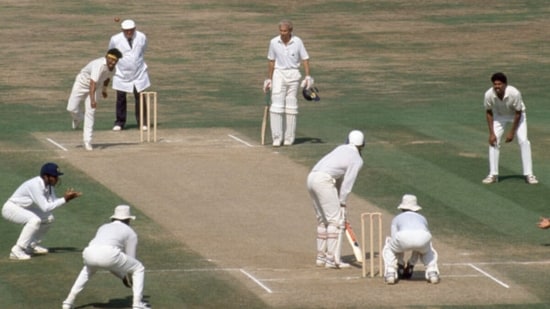


 Experience
 Very Bad
 Bad
Bad Ok
Ok Good
Good Excellent